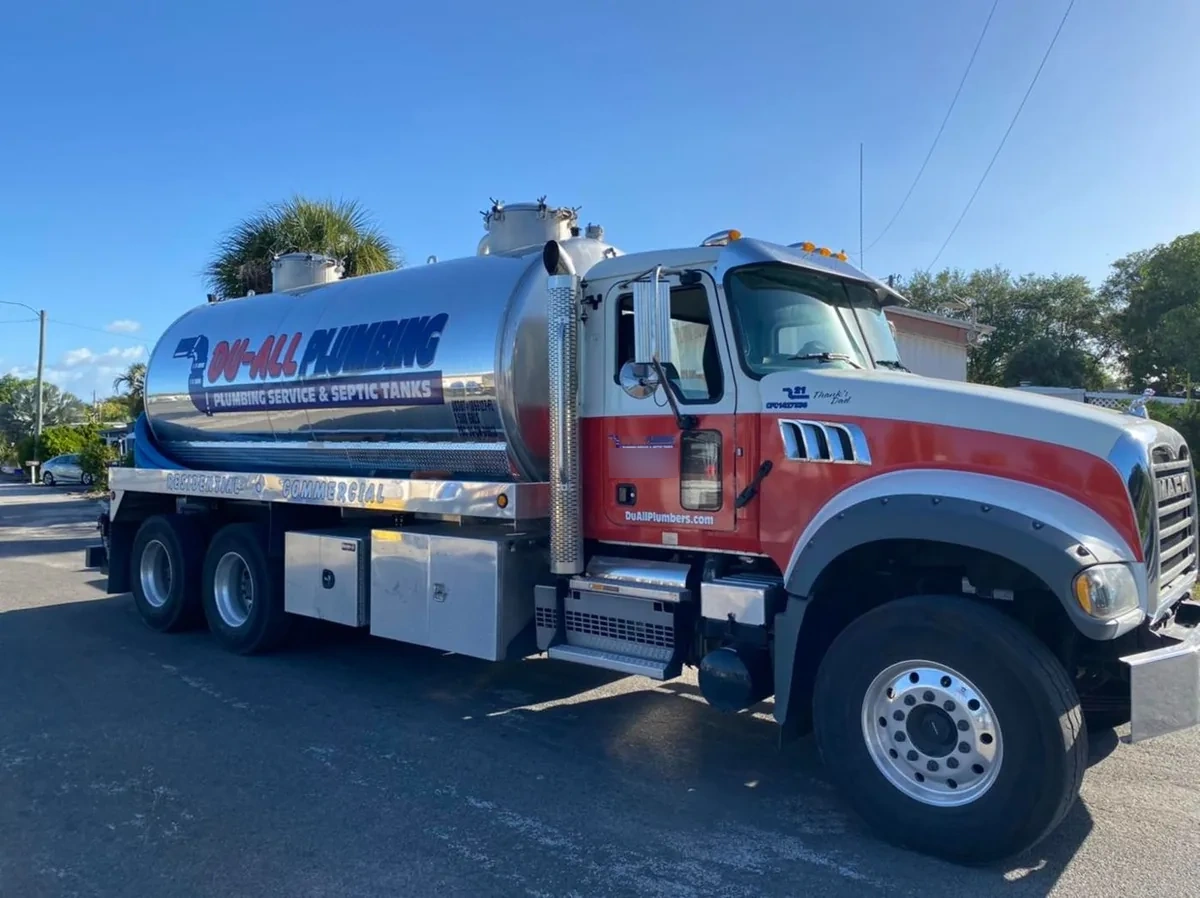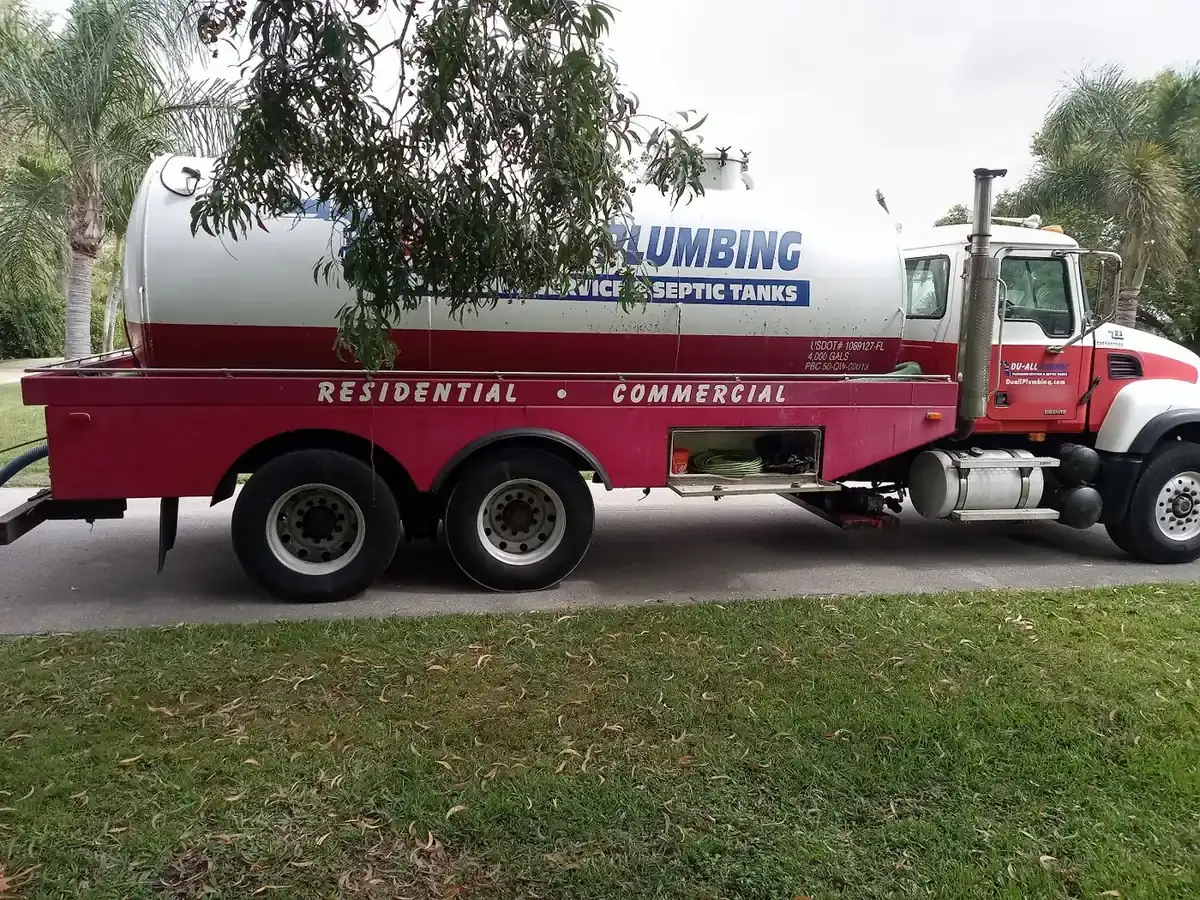
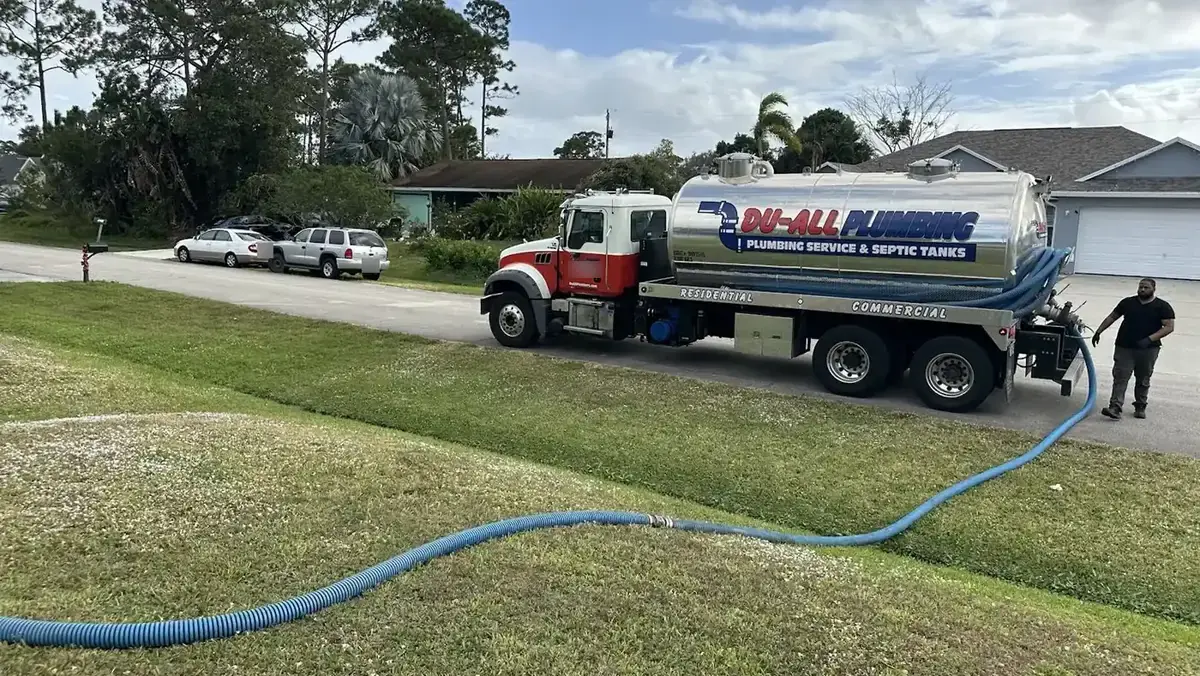
Above ground. Below ground. Du-All.
Septic Tank Pumping Jupiter Inlet Colony
Plan the pump-out around your property.
Du-All Plumbing provides septic tank pumping for confirmed septic systems in Jupiter Inlet Colony. Du-All Plumbing provides septic tank pumping in Jupiter Inlet Colony. Call 561-623-3111 with your address, wastewater-system records and any current symptoms.
Request service
Tell us what’s happening.
Share your property address and the problem you’re seeing. A Du-All team member will call you to arrange service.
This request does not confirm an appointment. To speak with the team, call 561-623-3111.
 A+ rated by the Better Business BureauView our BBB profile →
4.6/5 on Google348 reviews · Lake Worth BeachRead Google reviews (opens in a new tab)
Quick answer
How do I arrange septic tank pumping in Jupiter Inlet Colony?
Du-All Plumbing provides septic tank pumping in Jupiter Inlet Colony. Call 561-623-3111 with your address, wastewater-system records and any current symptoms. Ask for pricing and an access review before the visit, so the request matches the tank actually serving your property and any separate drain problem.
Septic tank pumping in Jupiter Inlet Colony begins with a residential property record and a careful access description. The town’s zoning code identifies a single-family residential community surrounded by coastal waters, not a single uniform wastewater installation. Du-All Plumbing needs to know what serves your home now, whether the tank is active and what prompted the call. Colony Road, Lighthouse Drive and Ocean Drive are documented local references that help locate the request. Give the complete 33469 address and gather any prior pumping paperwork. Keep maintenance separate from a renovation proposal so each task receives the right scope and approval review.
Jupiter Inlet Colony septic pumping before changing household demand
A kitchen, bathroom or laundry project can change the pattern of water entering an existing tank. Before assigning a maintenance date, consider both the retained material already present and the use expected afterward. Pumping removes accumulated sludge and scum; it does not increase tank size or the receiving field’s capacity.
Jupiter Inlet Colony’s single-family residential setting makes an individual household scenario useful: a home adding regular guests may send more showers and laundry while keeping the same installation. Ask how the current layer depths relate to the outlet and whether any unusually high liquid suggests a separate flow issue. A tank normally contains wastewater, so liquid presence alone is not an overdue-maintenance test.
The septic tank service hub connects the pumping task. Gather current system information once, then let the maintenance discussion address actual capacity, solids input and flow. The important result is restored separation space and an explanation of observed concerns, not an expectation that the container remains empty after the household resumes use.
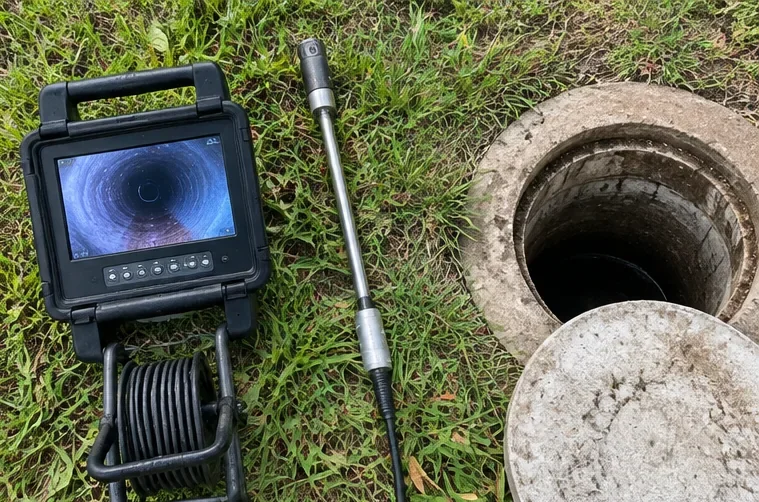
How should Jupiter Inlet Colony septic pumping protect service access?
Colony Road is the Town Hall street, and town reports identify work on Lighthouse Drive and Ocean Drive. At a private property along these residential routes, keep the approach off the tank and drainfield. Vehicle weight can damage components and compact the treatment area, creating a problem that material removal cannot correct.
Share the known access location and explain later hardscape before the visit. If more than one compartment exists, ask which sections the pumping task covers and what would prevent access to them. The homeowner should not open covers or attempt entry. Pumping must address retained contents rather than merely lower an elevated liquid level through whichever point is easiest to reach.
The Jupiter Inlet Colony plumbing page connects other building services. If access changes are proposed during renovation, preserve the ability to maintain the tank later. A clear service opening and a protected field help the system remain maintainable after a project, while the actual pumping interval still depends on observed accumulation and use.
Jupiter Inlet Colony septic pumping when surface water needs explanation
A homeowner noticing wet ground near a known tank should report its location and timing, along with any change in indoor drainage. Keep people away if wastewater may be present and do not wash the area into a storm drain. If household water consumption increased, mention that too; it may point toward a separate supply-side concern.
The town budget identifies road and stormwater maintenance as infrastructure priorities. For the service discussion, keep the private wastewater observation and public drainage concern clearly described so each can receive the appropriate response. Jupiter Inlet Colony water leak detection is relevant when a supply source needs investigation. A pump-out removes accumulated tank material but cannot repair every source of outdoor water. If wetness persists, give Du-All the completed service record and ask which next assessment would distinguish the suspected causes. The owner should understand what evidence supports another task before approving repeated material removal or a major repair whose purpose has not been explained.
What should Jupiter Inlet Colony septic pumping symptoms include?
Report the pattern inside the home before selecting the solution. Note whether a toilet, shower or sink changed first and whether other fixtures are affected during ordinary use. Do not keep flushing to test the system once wastewater is rising. Reduce unnecessary water use and explain whether the home is occupied, vacant or being prepared for visitors. Those facts help Du-All understand whether the call concerns scheduled maintenance or an immediate drainage limitation.
A tank pump-out removes accumulated material, but it does not guarantee that a restricted building line is clear or that another system component is functioning properly. The Jupiter Inlet Colony drain cleaning page provides a related route for a line-specific issue. Ask for a service scope that names the problem being addressed. If more than one issue is suspected, request a clear explanation of which step comes first and what information would justify moving to another task rather than treating all work as one automatic package.
Jupiter Inlet Colony septic pumping before a renovation changes use
A bathroom, kitchen or laundry project can change how a household uses water and can also alter access near a tank. Before the project, collect the current system drawing and maintenance record. Tell Du-All what is proposed and whether a pump-out is requested as maintenance, not as a substitute for the project’s plumbing design or review. Keep those purposes separate in the quote.
The town’s guidance names water-heater changeouts and bathroom, kitchen and laundry remodeling, while new construction and major renovations require committee review and a pre-application meeting. Ask the project professionals to confirm the process for the actual scope. The Learning Center can help prepare questions about pumping and other plumbing work. Preserve access information before paving or landscaping plans are finalized, and ask how future servicing will be reached. A clear record helps the owner avoid a maintenance opening becoming difficult to reach after the project, without asking anyone to uncover or alter equipment before approval.
What should Jupiter Inlet Colony septic pumping explain about recurring symptoms?
A pump-out can create temporary room even when another restriction remains. If drainage briefly improves and then fails again, report how quickly that happened and which fixtures are affected. The tank’s pre-service level and layer observations matter because a high liquid condition and thick sludge indicate different questions.
Normal household wastewater refills a serviced tank toward operating level. That should not be confused with an immediate return of accumulated solids. A persistent backup can involve the building line, outlet arrangement or the receiving system’s ability to accept effluent. Ask which assessment can distinguish those possibilities rather than automatically repeating pumping.
For later maintenance, use capacity, household size, wastewater and solids together. Spread laundry and keep grease and wipes out of the system. A written report is useful when it records those observed conditions, not when it merely says “full.” If a physical change is recommended, confirm the town process for that defined project and ask what finding supports it. The maintenance result and repair rationale should be clear before construction is considered.
Schedule Jupiter Inlet Colony septic pumping with a decision plan
Nearby service pages can help a property manager reach the correct local request. Septic tank pumping in Jupiter is a separate location page; it does not identify equipment inside Jupiter Inlet Colony. Keep each address and ownership authorization distinct, even when the same person manages several homes around the inlet.
For this appointment, collect the complete address, last known service record, a safe description of the entrance and the current symptom timeline. Explain whether a renovation is planned and whether an access area has changed since the last visit. Ask for the pumping scope and price basis before discussing optional follow-up. Leave tank covers closed and avoid extra water use if a backup is developing. Call Du-All at 561-623-3111 or submit the information through the Du-All contact form. Request septic tank pumping for the Jupiter Inlet Colony property and name the person who can approve access, scheduling and any separately described work.
Before you call
Jupiter Inlet Colony septic questions, answered
Should I mention a planned Jupiter Inlet Colony renovation before pumping?
Yes. Explain the project, actual use changes and access plans while keeping maintenance separate from the renovation approval process.
What if a pump-out does not explain wet ground at the property?
Report the remaining observation and service details. Ask what further assessment can identify the source before repeating material removal.
Can pumping be promised to fix every multi-fixture backup?
No. Report the fixture sequence and ask which task addresses the suspected tank or line issue.
What should an absent owner receive after Jupiter Inlet Colony pumping?
Request the completed service details, observations and any separate follow-up proposal, with a named approval contact.
Should I open the tank to improve my service description?
No. Leave covers secured and describe safely observed symptoms, available records and the authorized entrance.
Other plumbing services in Jupiter Inlet Colony
See all plumbing services in Jupiter Inlet Colony for this city.
Nearby septic service
Septic pumping near Jupiter Inlet Colony
Back to septic tank pumping, repair and installation, or browse every city on our locations page.
Local septic information sources
- library.municode.com (checked 2026-11-10)
- jupiterinletcolony.gov (checked 2026-11-10)
- jupiterinletcolony.gov (checked 2026-11-10)
- jupiterinletcolony.gov (checked 2026-11-10)
- jupiterinletcolony.gov (checked 2026-11-10)
- jupiterinletcolony.gov (checked 2026-11-10)
- epa.gov (checked 2026-11-10)
- epa.gov (checked 2026-11-10)
- epa.gov (checked 2026-11-10)
Above ground. Below ground. Du-All.
Tell us about your Jupiter Inlet Colony property, your septic tank and the problem you’re seeing.