Du-All offer
$30 off
Clearing any sink, toilet or main sewer line
Not valid with other offers. Not valid on prior service. Limit one coupon per service call.
Above ground. Below ground. Du-All.
Find the failure. Plan the repair.
Sewer line repair for South Florida properties on public sewer or septic. Tell Du-All about the backups and prior work so the team can discuss the next step.
Request service
Share your property address and the problem you’re seeing. A Du-All team member will call you to arrange service.
This request does not confirm an appointment. To speak with the team, call 888-800-2555.
 A+ rated by the Better Business BureauView our BBB profile →
4.6/5 on Google348 reviews · Lake Worth BeachRead Google reviews (opens in a new tab)
Quick answer
Common signs include repeated backups in more than one fixture, gurgling drains, sewage odor in the yard or near the cleanout, and soggy or sunken ground along the path of the line. These signs suggest a sewer line problem, but a camera inspection or excavation is what confirms where the damage is and how much pipe is affected.
Sewer Line Repair
We confirm the line is the problem, usually by clearing it and inspecting it, and find where the damage sits and how deep. We then explain whether a section repair or a longer replacement makes more sense, mark where digging is likely, and talk through access: driveways, trees, fences, irrigation and anything planted over the line. You should know the planned work area before the first shovel goes in.
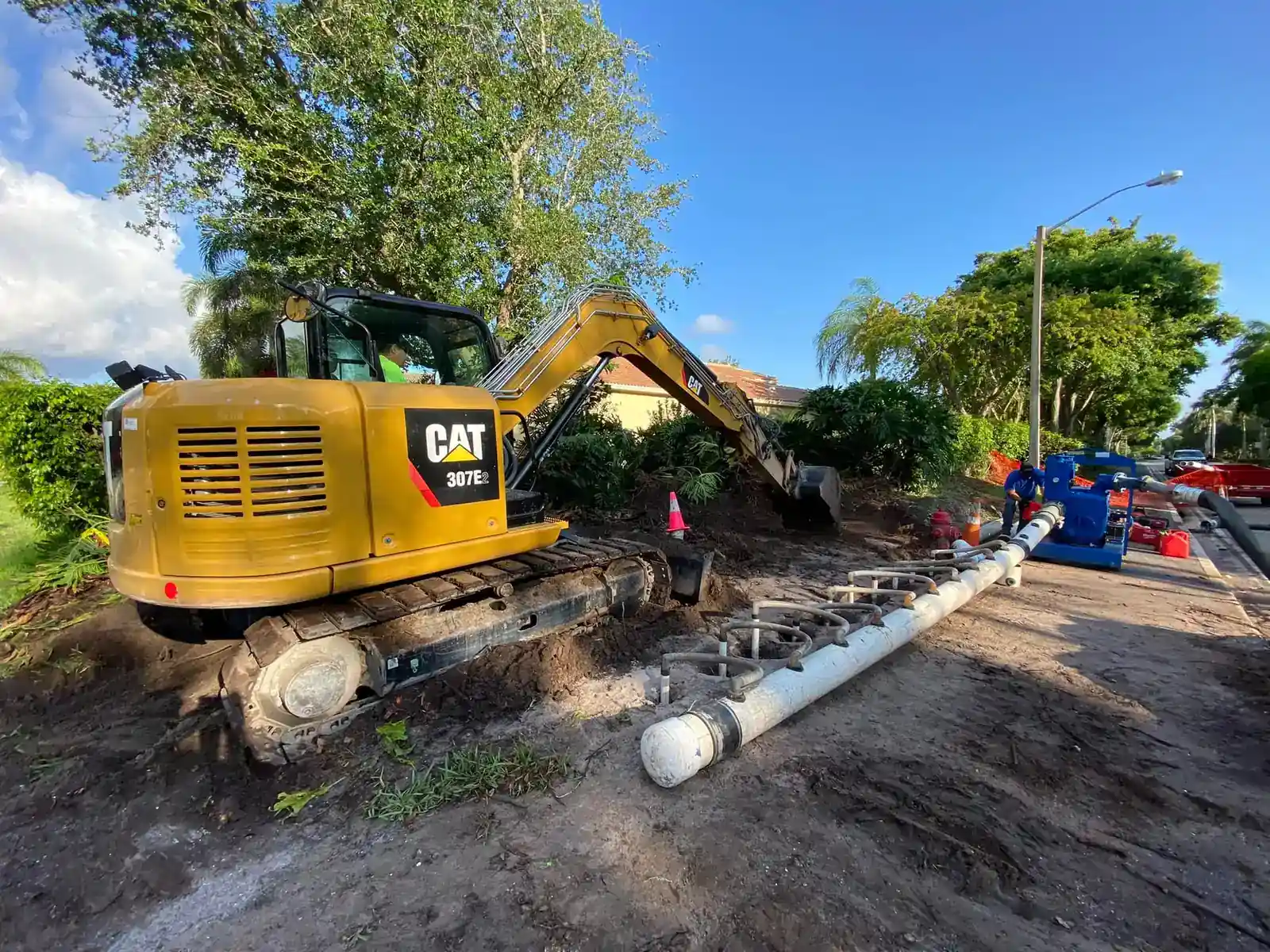
Our crew excavates to the damaged section, shores the pit when the depth and soil call for it, removes the failed pipe and installs new pipe at the correct slope. Deeper repairs and longer runs may use an excavator; shorter repairs may be dug by hand. Where the line connects to the house, the cleanout or the sewer tap, those joints are made carefully, because a poor connection becomes the next failure point.
Once the new section is in, we run water to confirm flow before the pipe is covered. The trench is then backfilled and compacted and the site is cleaned up. Backfill is not the same as finished landscaping: sod, pavers, concrete and plantings may need separate restoration, and we discuss what is and is not included before work begins.
| Situation | Often leans toward |
|---|---|
| One cracked or root-invaded joint, rest of the line sound | Section repair |
| Single belly where pipe has sagged in one spot | Section repair, re-set at correct slope |
| Damage at several points along the run | Replacement of the affected length |
| Old pipe material deteriorating along its length | Replacement |
| Line runs under a slab, driveway or mature tree | Depends on access; we plan options with you |
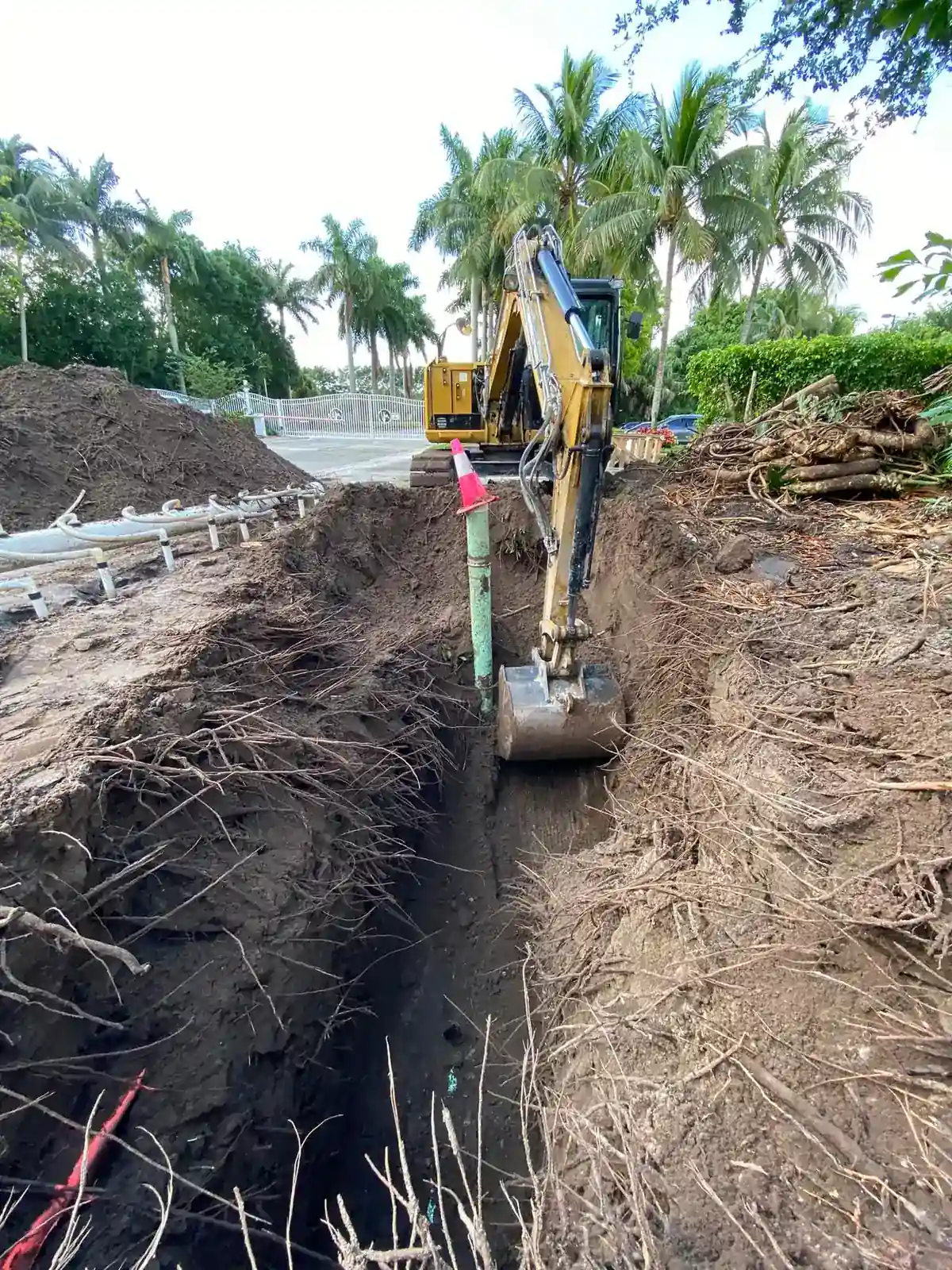
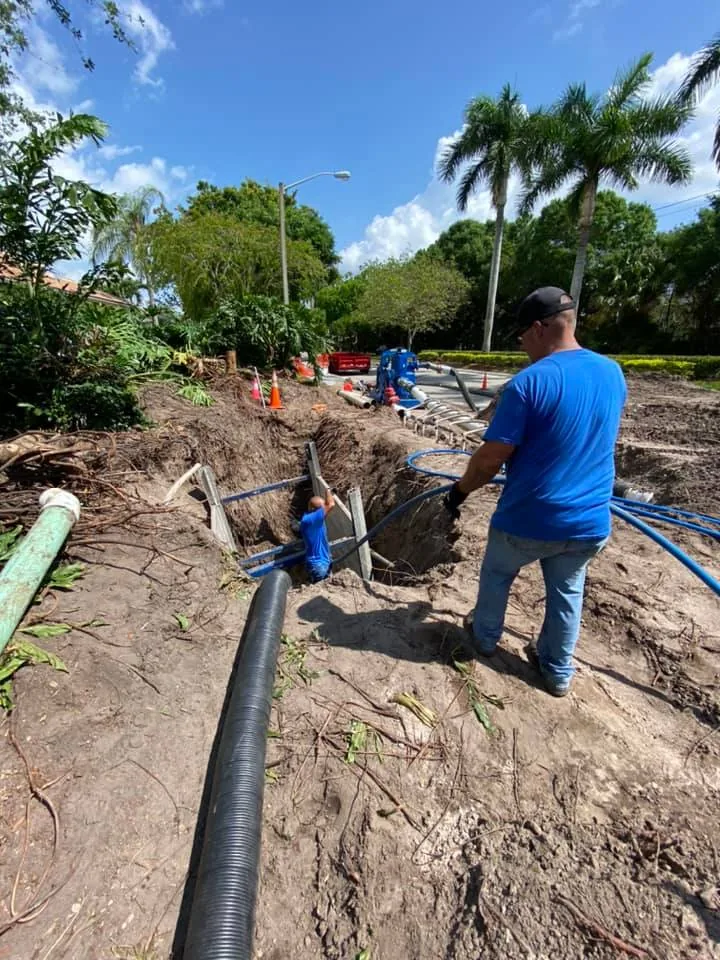
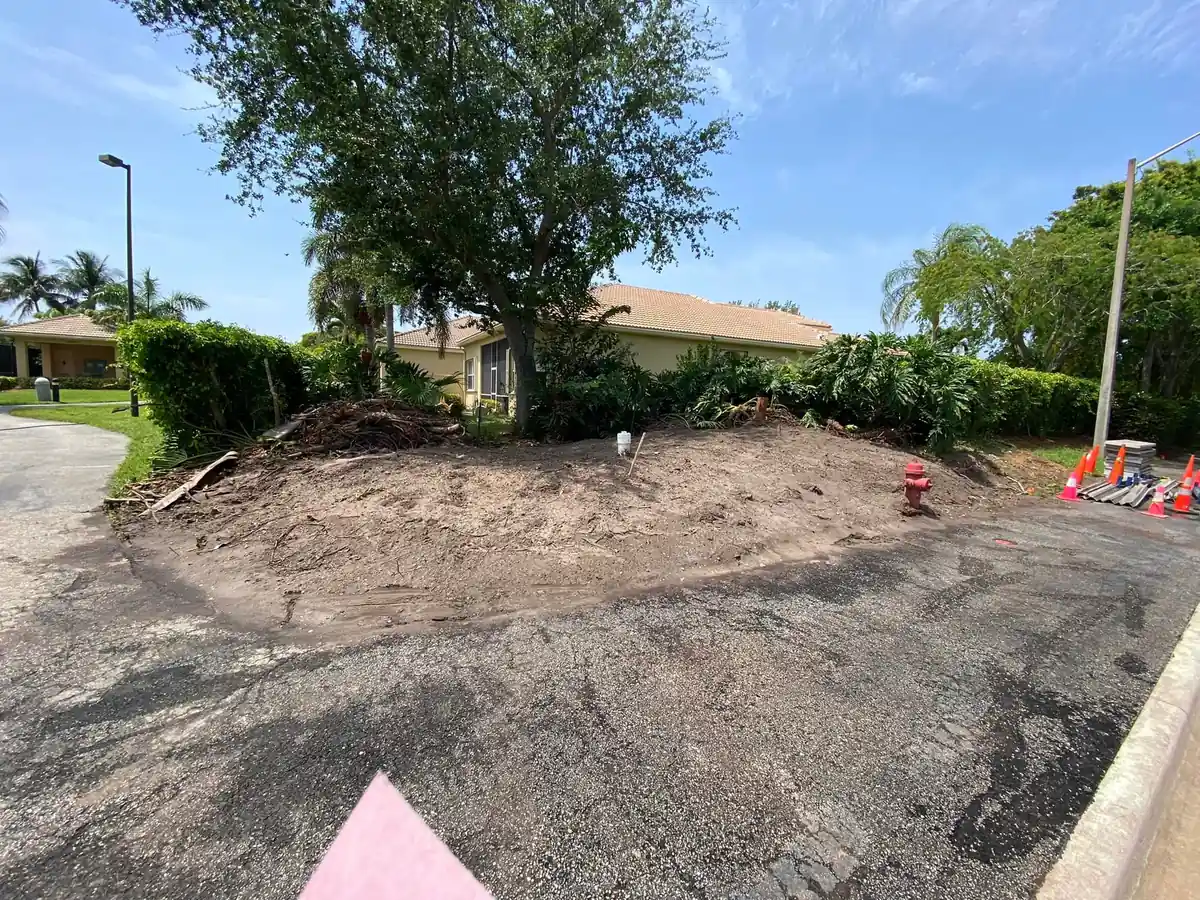
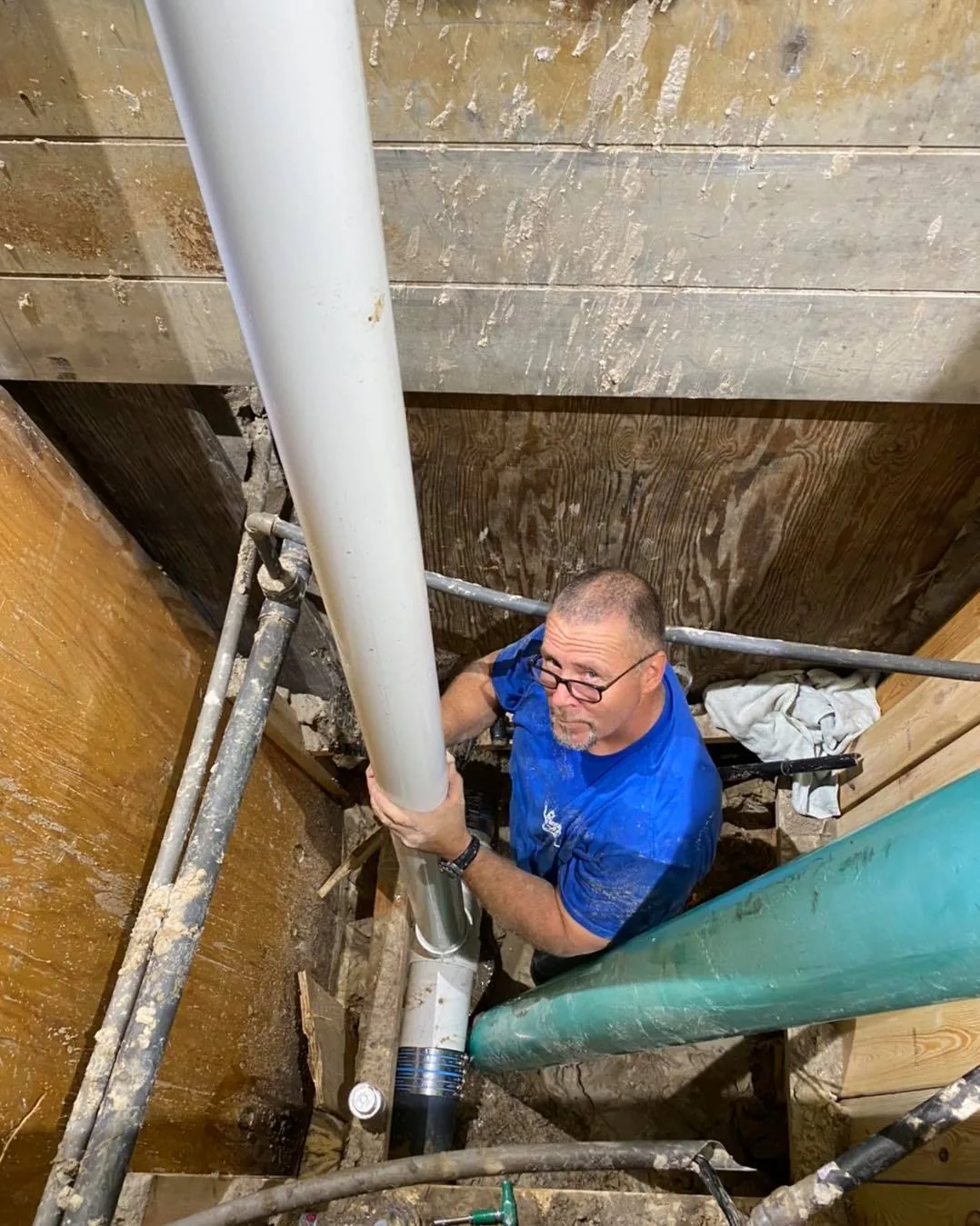
Examples from Du-All’s excavation photos. These images are not presented as a before-and-after sequence from one job.
The main line, explained
The main sewer line is the single pipe that connects your home's drains to the public sewer or to your septic tank. Every sink, toilet, shower and appliance drain eventually feeds into it, so when it fails the whole house feels it.
Failures tend to happen in a few predictable places: joints between pipe sections, where roots and ground movement attack first; low spots where the pipe has settled; the connection at the house; and the connection at the sewer tap or tank inlet. Long runs that cross under driveways or near large trees are under more stress than short, open runs.
Because the line is buried, homeowners usually notice the effects rather than the damage. Backups, slow drains throughout the house, odor and wet ground are the symptoms. Finding the cause takes inspection, and that is the first part of any sewer repair we recommend.
Roots
Yes. Roots rarely break into a sound pipe on their own, but they are very good at finding small gaps at joints and hairline cracks. Once inside, they grow toward the moisture and nutrients in the line, form a dense mat that catches waste, and slowly widen the opening as they thicken.
Tell the team about trees and shrubs near the line. Planting location, the condition of joints and the pipe route are useful context when investigating roots.
Roots can often be cleared from a line, and clearing restores flow for a while. If they keep returning to the same spot, the joint or crack that lets them in is still open, and a section repair is usually the lasting fix. Our article on why roots are a problem for sewer lines goes into more detail, and our drain cleaning page covers clearing.
Du-All offer
Clearing any sink, toilet or main sewer line
Not valid with other offers. Not valid on prior service. Limit one coupon per service call.
Sags and low spots
A belly is a section of pipe that has sunk lower than the pipe on either side of it. Sewer lines need a steady downhill slope so waste and water move together. Where the pipe dips, water pools, solids settle out, and that spot becomes a repeat clog.
Bellies form when the soil under the pipe settles or washes out, when the line was not bedded properly when it was installed, or when heavy loads such as vehicles cross over it. Ground conditions and groundwater can affect the repair plan; they need to be assessed at the property.
A small belly may only need periodic clearing. A deeper one that holds standing water or keeps clogging usually needs that section dug up and the pipe re-set on proper bedding at the correct slope. A camera inspection is the usual way to see how long and how deep the sag is.
Weighing the options
The amount of damage and the condition of the remaining pipe determine whether a section repair or a longer replacement makes sense. If one joint or one short section has failed and the remaining pipe is in good shape, repairing that section is usually the sensible choice. If the camera shows cracks, roots or deterioration at several points, fixing one spot may just move the next backup a few feet down the line.
Pipe material and age matter too. Older lines made of materials that deteriorate over time may be near the end of their life, even where they have not failed yet. We show you what we found and explain why we recommend one approach over the other, so the decision is yours to make with real information.
We will not tell you that a repair will prevent every future problem. Soil, roots and the condition of any pipe we did not replace still play a part. What we can do is explain the tradeoffs clearly.
Before the dig
Excavation planning is where a sewer repair succeeds or turns into a headache. Before digging, we look at where the line runs, how deep it is, and what sits on top of it. Driveways, walkways, patios, fences, irrigation lines, trees and other buried utilities all affect where and how we dig.
Some repairs can be done in a single pit dug by hand. Longer replacements may need an excavator and a trench along the length of the line. Deeper pits may need shoring so the crew can work safely. Underground utilities should be marked before digging, and we factor that timing into the plan.
Let us know about anything you are particularly concerned about, such as a new paver driveway, a favorite tree or an irrigation zone, so we can talk about it before work starts rather than after.
Backfill and restoration
After the new pipe is tested, the trench is backfilled and compacted so the ground over the line is stable. The work area is cleaned up and excess material is hauled away or graded as discussed. That gets the ground back to a safe, level condition.
Finished restoration is a separate question. Replacing sod, resetting pavers, pouring new concrete or replanting beds may or may not be part of your quote, and some surfaces such as decorative concrete may need a specialist. Freshly backfilled soil can also settle slightly over the following weeks.
We spell out what restoration is included before the job starts so there are no surprises when the crew leaves.
Sewer or septic
Many homes in Palm Beach, Martin and St. Lucie counties drain to a septic tank rather than a city sewer. The pipe from the house to the tank can suffer the same roots, bellies and breaks as any sewer line, and a failing tank or drain field can produce the same backups.
Because Du-All Plumbing handles both line repair and septic tank service, we can check whether the problem is the line, the tank or both, rather than repairing one and leaving the real cause in place. If you are unsure which system your home uses, we can help you find out during the visit. A $37 service call coupon is listed on this page; offers are not combinable, so mention it when you contact us.
Du-All offer
Your next service call
Not valid with other offers. Not valid on prior service. Limit one coupon per service call.
Your property, your service request
Main line inspection, root and belly repair, section replacement and full line replacement for houses on city sewer or septic.
Mainline repair and replacement, sanitary and storm line work and planning around access for occupied commercial properties. See our commercial plumbing page.
Palm Beach · Martin · St. Lucie
Du-All works from Lake Worth Beach and Palm City. Share your property address to confirm service availability and access for your job. Use 888-800-2555 to discuss the service you need.
Local sewer line repair guides
View the service locations or contact Du-All about your property.
Before you call
In many areas the property owner is responsible for the line from the house to the public sewer connection, but rules vary by utility. Check with your local utility if you are unsure where your responsibility ends.
Some problems, such as roots, can be cleared without digging. Broken or sagging pipe usually has to be exposed to repair. We explain the options after inspecting the line.
Typically by clearing the line and inspecting it, which shows where damage sits along its length so excavation can be targeted.
The trench is backfilled and the site cleaned up. Finished surfaces such as sod, pavers or concrete are discussed separately before work starts.
No. Roots can often be cleared. If they keep returning to the same spot, repairing that section is usually the longer-lasting fix.
Yes. Du-All Plumbing repairs the line from the house to the tank and also services septic tanks.
Call 888-800-2555 or send your property details so the team can discuss the work and scheduling.
Not valid with other offers. Not valid on prior service. Limit one coupon per service call.
Du-All Social
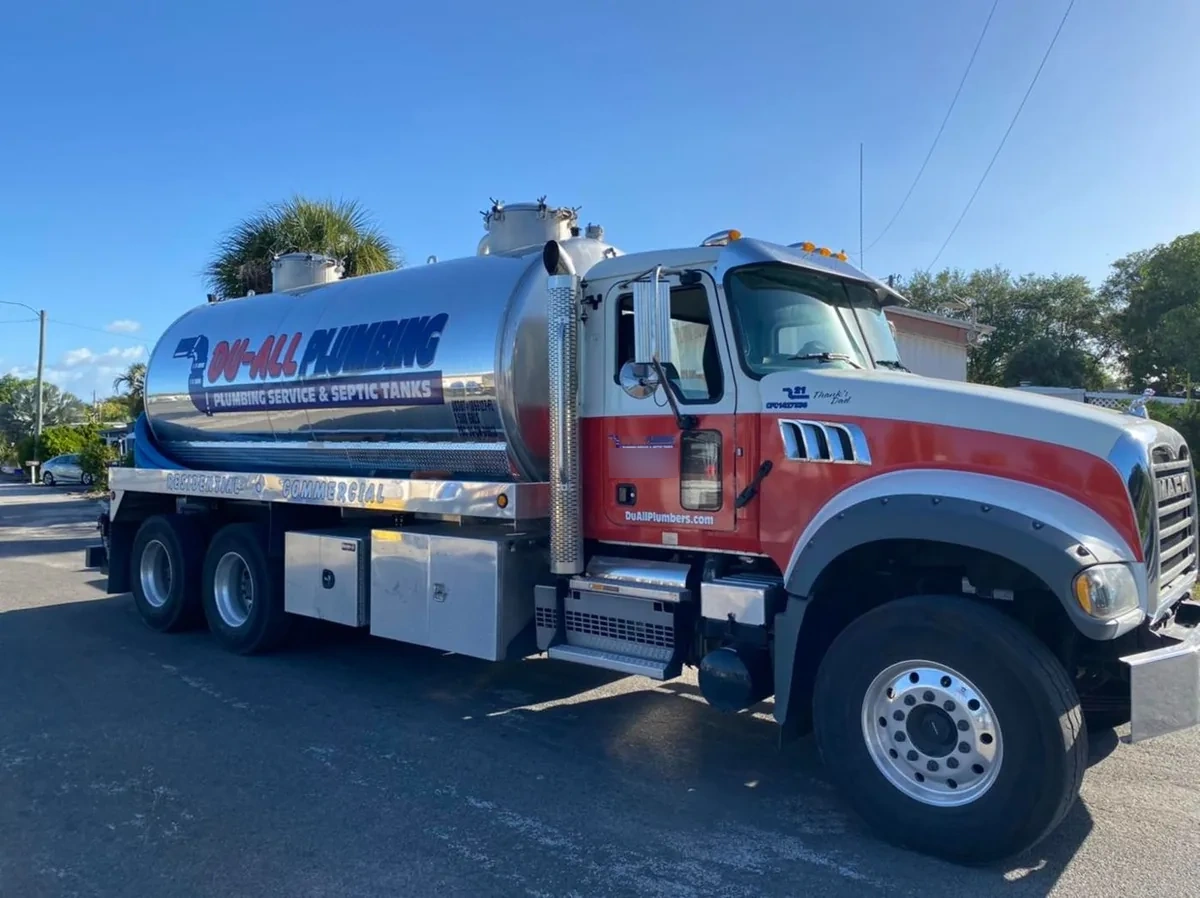
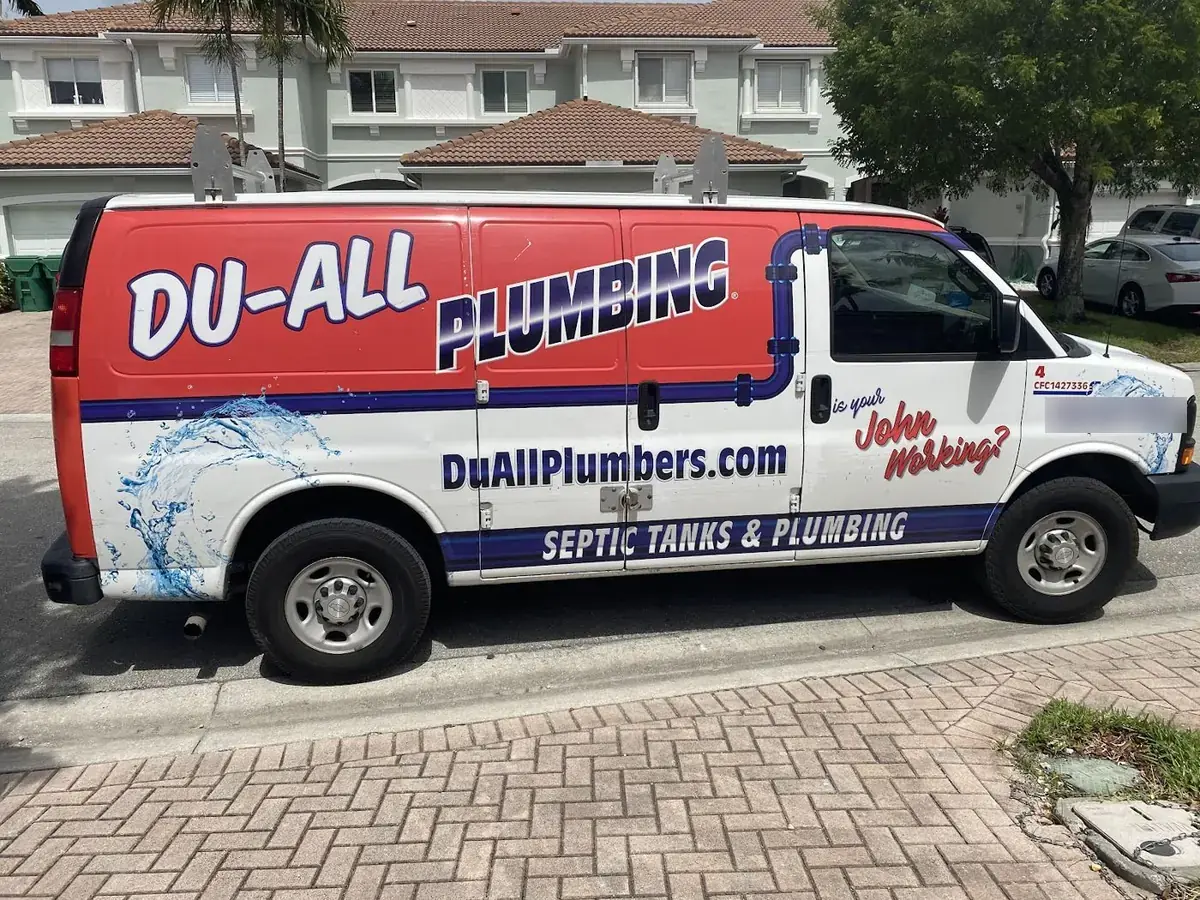
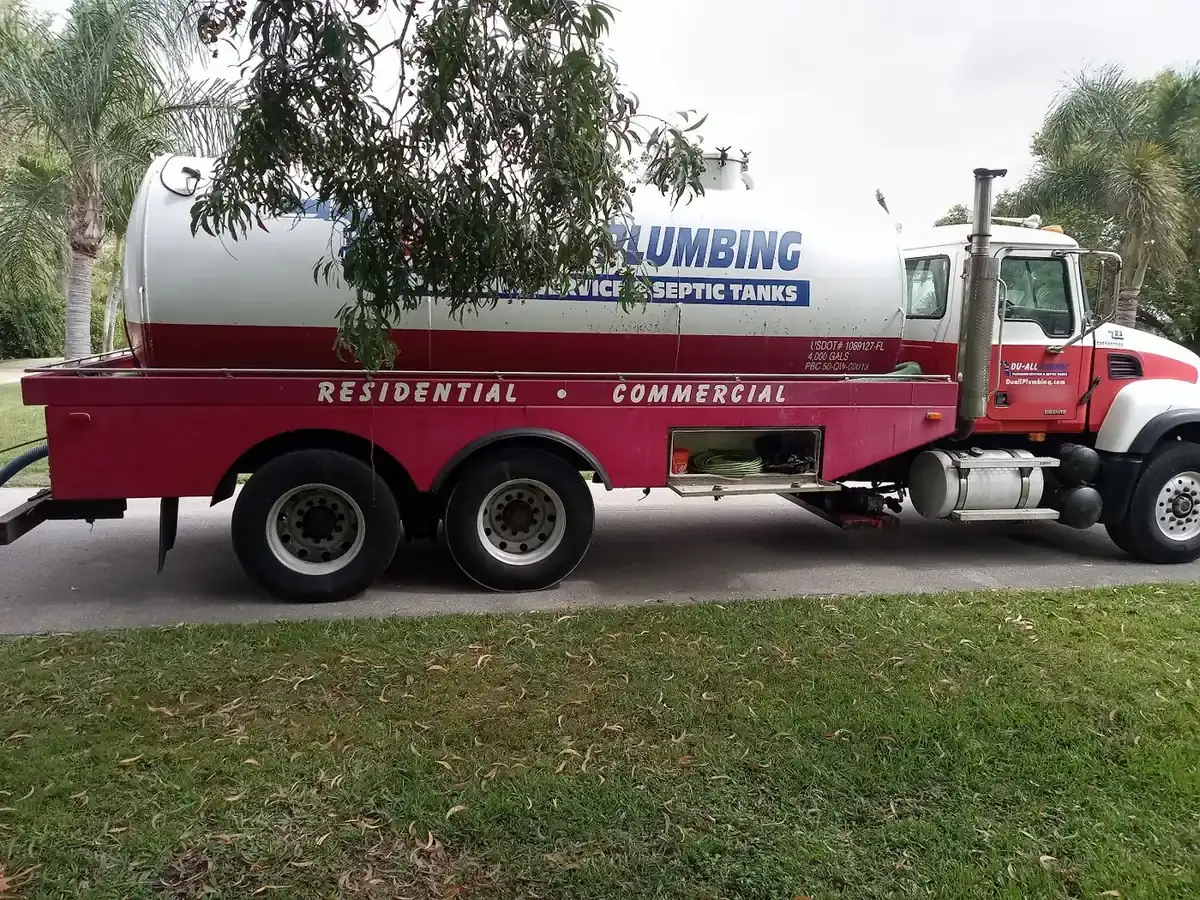
See the crews, trucks and jobs from around Palm Beach and the Treasure Coast.
Lake Worth Beach office
514 S E Coast St, Lake Worth Beach, FL 33460
561-623-3111
Palm City office
3442 SW Armellini Ave, Palm City, FL 34990
772-238-6456