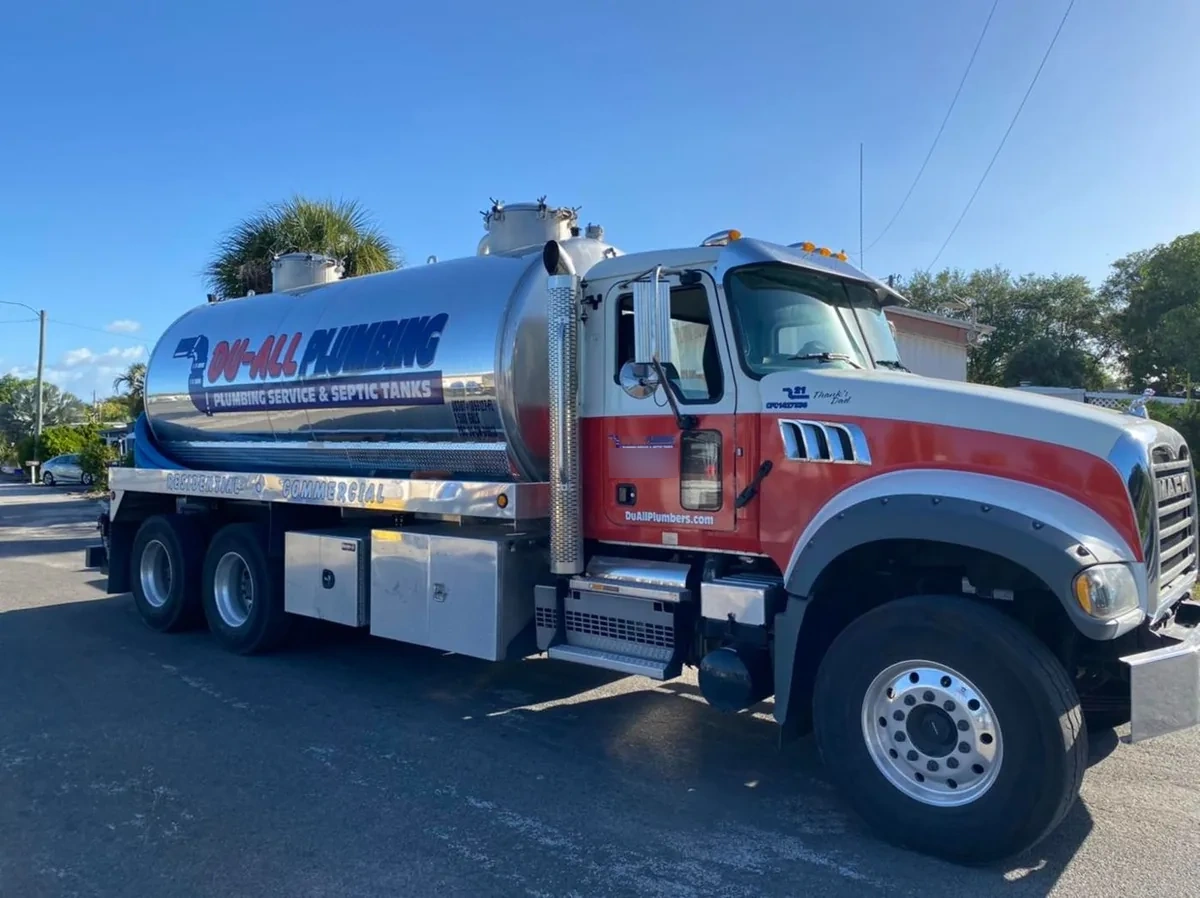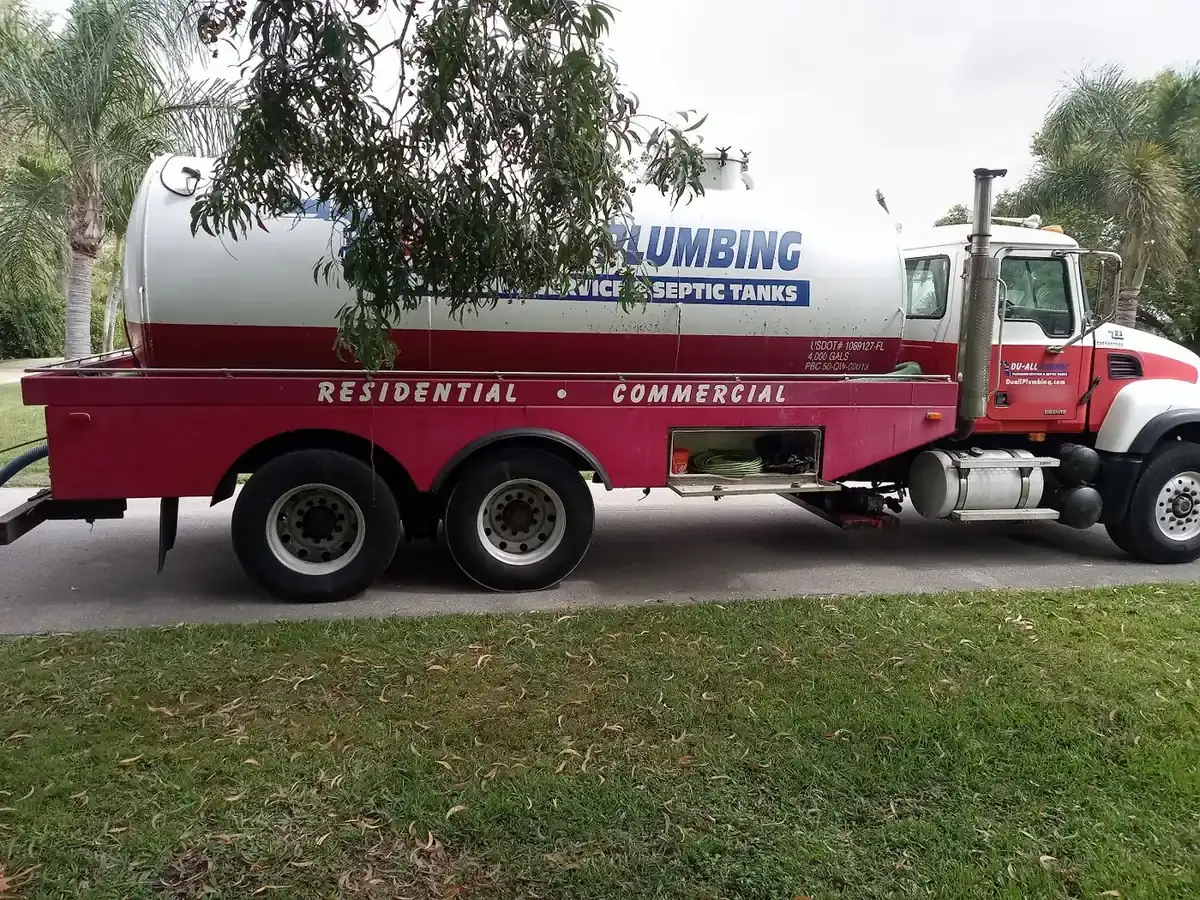
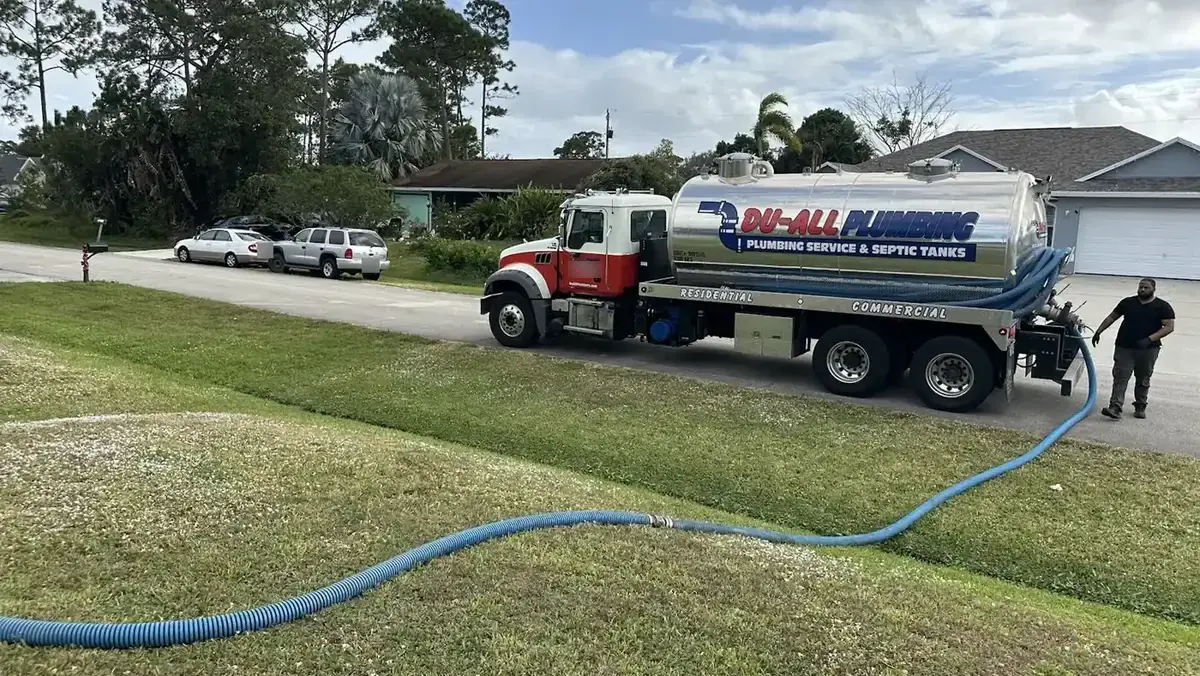
Above ground. Below ground. Du-All.
Septic Tank Pumping Loxahatchee Groves
Plan the pump-out around your property.
Du-All Plumbing provides septic tank pumping for confirmed septic systems in Loxahatchee Groves. Du-All Plumbing provides septic tank pumping in Loxahatchee Groves. Call 561-623-3111 with your address, wastewater-system records and any current symptoms.
Request service
Tell us what’s happening.
Share your property address and the problem you’re seeing. A Du-All team member will call you to arrange service.
This request does not confirm an appointment. To speak with the team, call 561-623-3111.
 A+ rated by the Better Business BureauView our BBB profile →
4.6/5 on Google348 reviews · Lake Worth BeachRead Google reviews (opens in a new tab)
Quick answer
How do I arrange septic tank pumping in Loxahatchee Groves?
Du-All Plumbing provides septic tank pumping in Loxahatchee Groves. Call 561-623-3111 with your address, wastewater-system records and any current symptoms. Ask for pricing and an access review before the visit, so the request matches the tank actually serving your property and any separate drain problem.
Septic tank pumping in Loxahatchee Groves calls for clear directions to the right building and a record of its sewage-disposal arrangement. The town’s rural residences, farmland, nurseries and equestrian facilities can place several different uses on nearby parcels or one property. Du-All Plumbing needs the wastewater details for the building in question, not an assumption that every rural address has the same system. F Road is the Town Hall and Building Department corridor, and 33470 is a postal-use example. Explain gates, rustic road access and current symptoms when you request pumping, leaving covers secured and unknown equipment undisturbed.
Loxahatchee Groves septic pumping for multiple building loads
A rural residence, nursery office or equestrian facility can generate different patterns of wastewater and retained solids. For an operating septic tank, establish which buildings actually connect, then consider their combined use. A shower-intensive day increases liquid flow, while disposal food waste and ordinary solids contribute to material retained over time. Pumping addresses that retained accumulation.
Loxahatchee Groves’ documented mix of rural homes, farmland, nurseries and equestrian uses makes this distinction practical. A home and another occupied building should not be treated as one maintenance load unless their connections establish it. The town plumbing application separately identifies potable-water and sewage-disposal sources, which can help organize the installation information.
The Du-All septic tank service hub connects pumping. Ask what sludge and scum were observed near the outlet and whether an unusually high level points to a flow problem beyond accumulation. A liquid-filled container is normal in use; the service should remove retained material and explain any condition that prevents wastewater from moving through the system correctly.
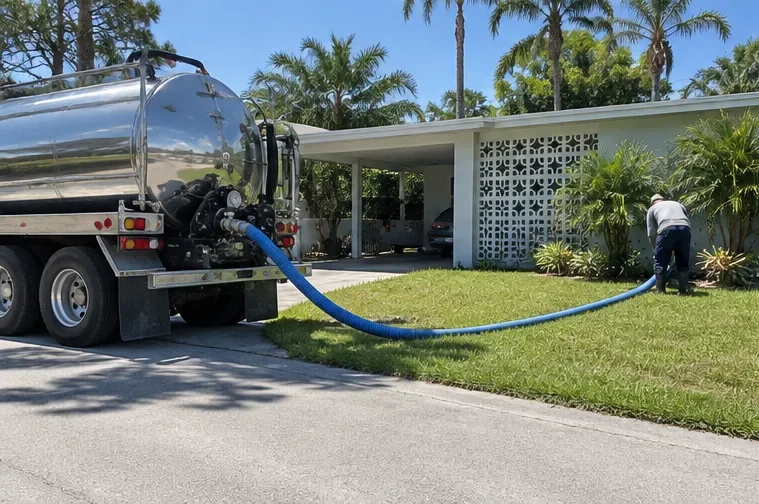
How should Loxahatchee Groves septic pumping protect the field?
Rustic dirt roads and retained slash-pine canopy are documented town features. On a private approach, keep pumping access away from the tank and drainfield rather than treating open ground as a vehicle route. Compaction or damaged buried components can affect treatment after the contents have been removed. Secure animals and use the established entrance without creating a shortcut through a paddock.
The field receives liquid leaving the tank and depends on suitable treatment conditions. Keep extra roof runoff and site drainage away from that area, and do not send unrelated wash water into the household system. An unusually large liquid load can cause trouble even when the tank has recently been pumped.
If surface wastewater appears, keep people and animals away and report whether indoor drainage also changed. Do not wash it toward a ditch. A pump-out can remove contents but does not prove that the receiving area accepts flow. Persistent symptoms call for an explained assessment of the remaining condition rather than another removal ordered only because the yard still looks wet.
Loxahatchee Groves septic pumping with several entrances or road labels
On a rural property, the residential driveway and a work entrance may lead to different buildings. Send the current physical address, the correct gate and a simple description of which building the tank serves according to the records. F Road is the town’s Building Department corridor, while Loxahatchee Groves Park Drive is a documented local road name. Use current address records if older directions use another label.
The practical access question is how to reach the known equipment without crossing a paddock, nursery area or unknown wastewater component. Ask what access review is included and who can approve a revised route. Keep gates secure for animals and identify the person opening them. The Loxahatchee Groves plumbing page connects broader local services. Once directions are settled, concentrate on the task: which component needs material removal, which symptoms are present and what findings would require another assessment. A clear building-and-gate plan prevents a property-wide request from obscuring a problem confined to one occupied structure.
What symptoms should precede Loxahatchee Groves septic pumping?
Separate household drainage observations from outdoor land conditions. Say whether multiple fixtures are affected, whether wastewater is returning inside and whether the problem follows ordinary use or a recent occupancy change. On a property with several buildings, identify exactly where the symptoms occur. A slow drain in one structure does not prove that every tank or drainfield on the parcel needs service.
If wastewater is backing up, stop unnecessary water use and keep people and animals away from contaminated areas. Do not open a tank, pour chemicals into a line or repeatedly run water to test it. If the report suggests a separate restriction, the Loxahatchee Groves drain cleaning page offers the related service route. Ask Du-All to define what pumping will address and what would require another assessment. A clear symptom location is especially useful where a residence and work buildings may have unrelated plumbing, but the actual connections must come from records or investigation.
Loxahatchee Groves septic pumping and a separate repair proposal
If pumping reveals a concern, ask for the affected component, supporting observation and purpose of the proposed next task. A line restriction, a tank concern and an unresolved field issue call for different explanations. Do not approve major replacement merely because material removal did not account for every symptom. Ask what additional assessment would clarify an uncertain cause.
Town registrations and permits are handled in MGO, and the town states no county resubmission is needed for its process. Confirm the actual approval route for proposed changes and keep it separate from routine maintenance. The town plumbing application’s distinct water-source and sewage-disposal fields can also help the owner organize existing records accurately. The Learning Center helps prepare terminology questions, but a proposal should make sense from the property’s findings. Identify who may authorize it if an on-site caretaker manages gates while the owner is elsewhere. Retain the completed pumping record and later proposal together so the next decision is based on documented work, not a broad instruction to repair whatever is found.
What should Loxahatchee Groves septic pumping show about the next interval?
Compare observed accumulation with the period of use that produced it. A tank with substantial sludge near the outlet needs a different maintenance discussion from a tank with little accumulation but a restricted house line. The four factors are installed capacity, household or connected use, wastewater and solids input. Acreage does not describe those factors.
If another building becomes regularly occupied, discuss the actual connection and changed demand. If a toilet runs continuously, repair that source separately; pumping cannot stop incoming water. Loxahatchee Groves water leak detection connects the supply-side concern.
After service, ordinary wastewater will refill the tank toward operating level. That is expected. What matters is whether the material-removal task was completed and whether any backup or surface symptom remains. Ask what pre-service observations and visible component concerns explain a proposed follow-up. A repair should address a named fault, while the next pumping decision should follow the tank’s accumulation and use rather than a blanket schedule chosen for rural properties.
Arrange Loxahatchee Groves septic pumping with access confirmed
ZIP 33470 is shared in the wider area and does not make neighboring places interchangeable. A request for septic tank pumping in Westlake has a different municipal context. Keep each property’s paperwork separate and provide the physical location, not only the postal name, when arranging service for more than one address.
For Loxahatchee Groves, prepare the building identification, last service receipt, current road directions and a safe description of the approach. State who will manage the gates and animals, who can approve work and whether a backup is occurring now. Ask for a pumping scope and price based on the available information, with separate approval for changes discovered on site. Do not uncover lids to strengthen the request. Call Du-All at 561-623-3111 or use the service contact form, requesting septic tank pumping for the identified building and an access review before the appointment is finalized.
Before you call
Loxahatchee Groves septic questions, answered
How should I request pumping when a Loxahatchee Groves parcel has several buildings?
Name the building and documented connections. Do not assume the residence, nursery or equestrian facilities all use one tank.
What access details help a rural pumping estimate?
Describe the authorized gate, private drive, obstructions and known opening. Ask which locating or access tasks are included.
Should increased household use be reported separately from a leak?
Yes. Describe both; pumping does not repair continuous incoming water from a fixture or supply line.
What should I ask before approving replacement after a pump-out?
Ask for the affected component, supporting findings and any further assessment needed to explain the cause.
Who should approve extra work if a caretaker opens the farm gate?
Name the authorized owner or manager before the visit. Entry permission alone should not imply repair authority.
Other plumbing services in Loxahatchee Groves
See all plumbing services in Loxahatchee Groves for this city.
Nearby septic service
Septic pumping near Loxahatchee Groves
Back to septic tank pumping, repair and installation, or browse every city on our locations page.
Local septic information sources
- loxahatcheegrovesfl.gov (checked 2026-11-10)
- loxahatcheegrovesfl.gov (checked 2026-11-10)
- loxahatcheegrovesfl.gov (checked 2026-11-10)
- loxahatcheegrovesfl.gov (checked 2026-11-10)
- epa.gov (checked 2026-11-10)
- epa.gov (checked 2026-11-10)
- epa.gov (checked 2026-11-10)
Above ground. Below ground. Du-All.
Tell us about your Loxahatchee Groves property, your septic tank and the problem you’re seeing.