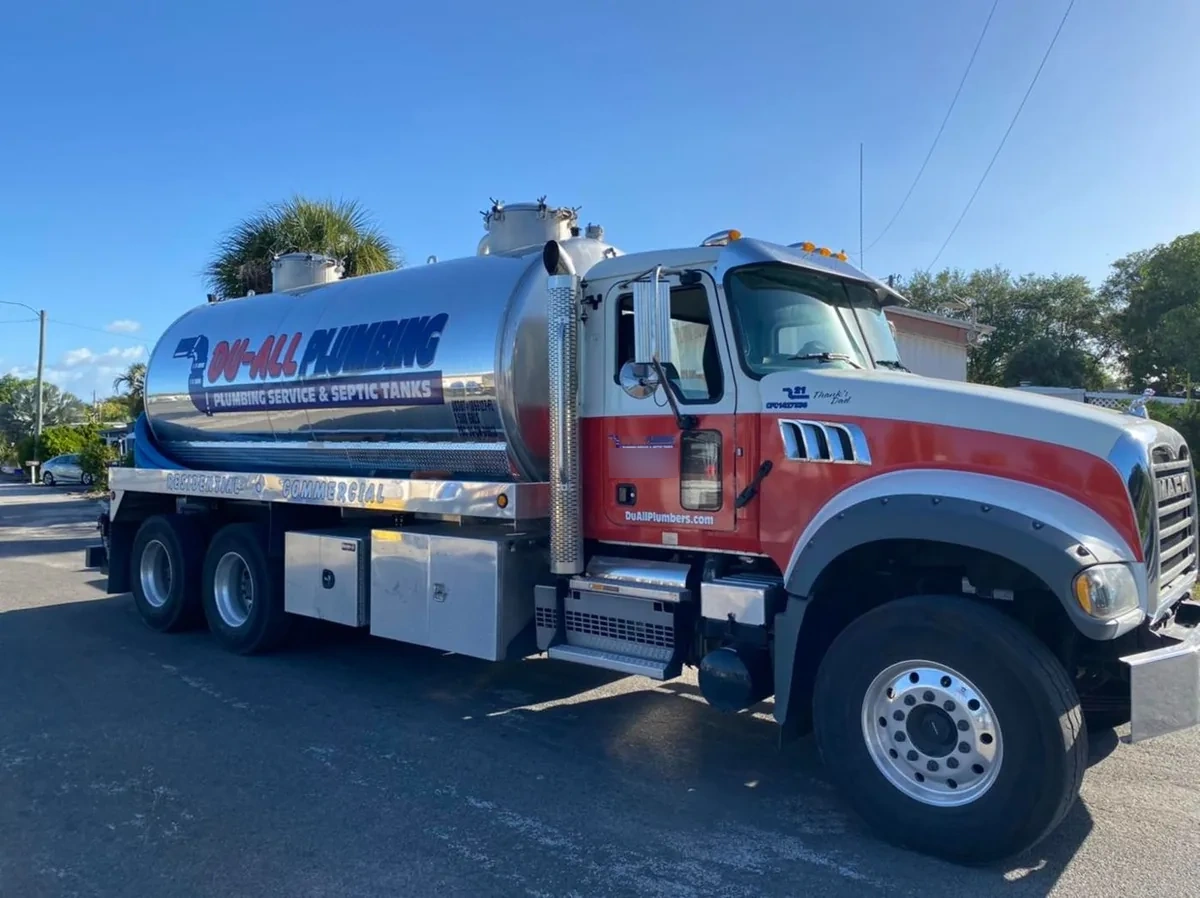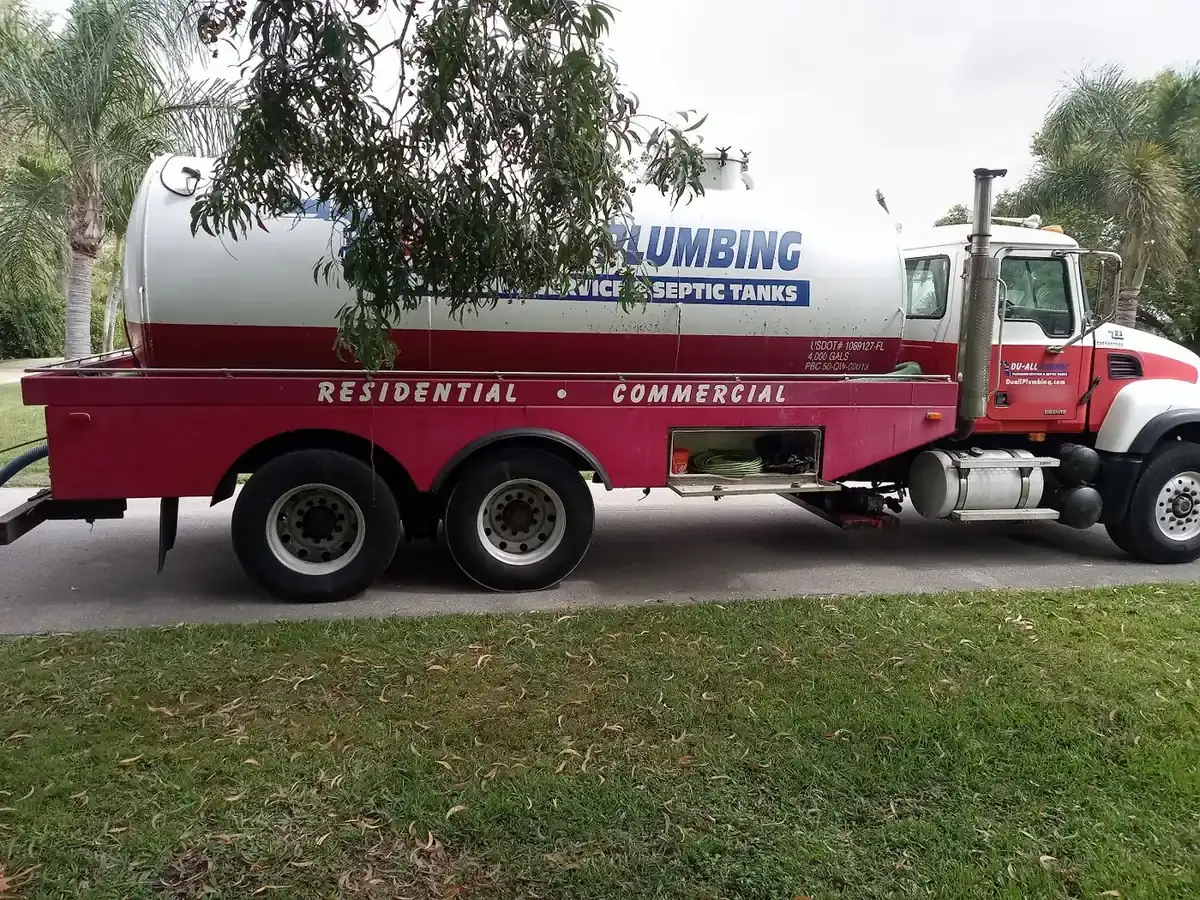
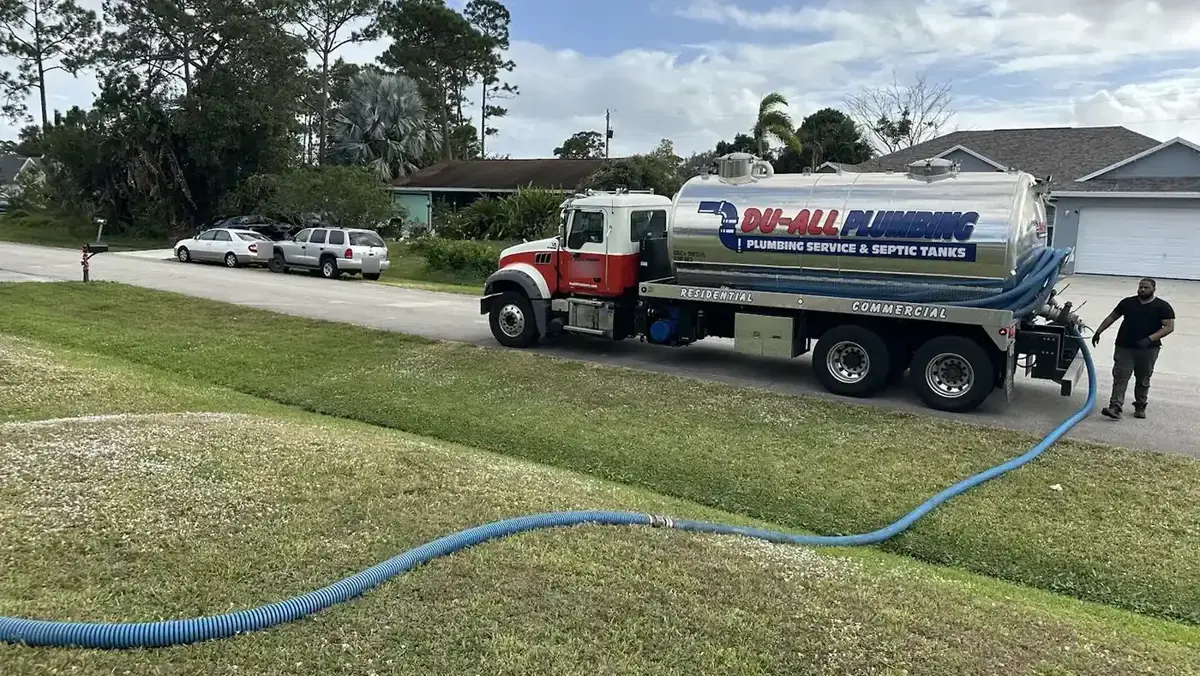
Above ground. Below ground. Du-All.
Septic Tank Pumping North River Shores
Plan the pump-out around your property.
Du-All Plumbing provides septic tank pumping for confirmed septic systems in North River Shores. Du-All Plumbing provides septic tank pumping in North River Shores. Call 772-238-6456 with your address, wastewater-system records and any current symptoms.
Request service
Tell us what’s happening.
Share your property address and the problem you’re seeing. A Du-All team member will call you to arrange service.
This request does not confirm an appointment. To speak with the team, call 772-238-6456.
 A+ rated by the Better Business BureauView our BBB profile →
4.6/5 on Google348 reviews · Lake Worth BeachRead Google reviews (opens in a new tab)
Quick answer
How do I arrange septic tank pumping in North River Shores?
Du-All Plumbing provides septic tank pumping in North River Shores. Call 772-238-6456 with your address, wastewater-system records and any current symptoms. Ask for pricing and an access review before the visit, so the request matches the tank actually serving your property and any separate drain problem.
Septic tank pumping in North River Shores needs a check of the home’s present wastewater connection before maintenance is selected. The property owners association reports Martin County water and available municipal vacuum sewer, so a tank mentioned in an old file may not represent the equipment receiving wastewater now. Du-All Plumbing needs the physical address, current records and the symptoms or maintenance goal. The platted North River Shores, Cocoanut Park and North River Forest communities provide a more precise local reference than the wider informal area name. ZIP 34994 is a local postal-use example, not a boundary for every property.
North River Shores septic pumping for an operating tank
The association reports available municipal vacuum sewer, but availability and a completed connection are different events. Confirm the current arrangement once: an operating septic tank needs tank maintenance, while a connected property needs the service appropriate to its private line or sewer component. An old pump-out invoice can describe a former system, so the distinction belongs at the start rather than repeated throughout the visit.
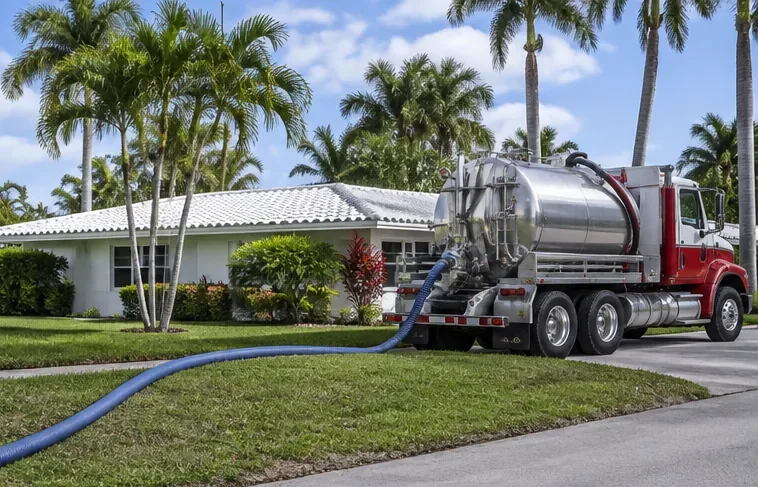
For the tank still receiving wastewater, pumping removes accumulated sludge and scum. It does not remove the household’s need for liquid treatment downstream. Solids settle, grease floats and the liquid between them passes toward the drainfield. The septic tank service page connects the maintenance service. The important question is how much separation space accumulation has consumed and how close retained material lies to the outlet. A normally liquid-filled tank is not automatically overdue, while thick retained layers can need attention before the household notices a backup.
What should North River Shores septic pumping assess before removal?
The tank’s pre-service condition helps explain the difference between accumulation and a flow problem. A professional assesses sludge and scum, liquid level and visible concerns around the inlet, outlet and structure. Ask for the findings to be related to the symptoms. “Full” is an incomplete explanation if it does not distinguish normal wastewater from excessive retained material or an unusually elevated level.
EPA identifies pumping triggers that include sludge approaching within 12 inches of the outlet, scum approaching within six inches of the outlet bottom, or combined layers exceeding a quarter of liquid depth. Homeowners should not uncover a tank to obtain those measurements. For a North River Shores household with incomplete history, the observed layers provide a starting point for maintenance. If accumulation is modest but drainage is severely restricted, another component may need assessment. Removing contents can still be part of service, but the next decision should follow the observed condition rather than assume every problem means the interval was too long.
North River Shores septic pumping for different housing and demand
The community includes single-family homes, duplexes, apartments and condominiums. Where a tank serves multiple occupied spaces, actual connections and combined use matter more than the number of people in one unit. Establish the maintained component and responsible party once, then focus on how much wastewater and solid material enter it. A slow branch serving one apartment may remain a separate issue even when a shared tank needs maintenance.
The POA distinguishes platted North River Shores, Cocoanut Park and North River Forest. For an operating tank at any of those properties, compare actual use with the earlier maintenance period: more residents, disposal use or a running fixture can change different parts of the load. The North River Shores plumbing page connects other fixture and building needs. Pumping frequency depends on capacity, wastewater, solids and household use together. A calendar copied from another residence can overlook both shared demand and differences in what reaches the tank.
What should change after North River Shores septic pumping?
The material retained in the serviced tank should be removed, with any limitations or observed concerns explained. Where compartments exist, ask which sections were included. A completed pump-out should not be confused with merely lowering a high liquid level long enough for the house to drain temporarily. Leave openings and the work area to the service personnel.
Ordinary wastewater will refill the tank toward operating level afterward. That is expected; it does not mean that fresh solids have instantly replaced what was removed. A quick return of backup needs a different question: is the building line restricted, is the outlet functioning or is the receiving system unable to accept flow? North River Shores drain cleaning connects the line-specific service. Describe whether the household ever returned to normal drainage and how quickly the problem reappeared. The timing helps interpret the result of pumping without treating another removal as a permanent repair for an unidentified fault.
North River Shores septic pumping and protection of the treatment area
The community is on the North Fork of the St. Lucie River. Keep wastewater contained at a problem property and keep extra roof or yard runoff away from the drainfield area. Excess liquid interferes with the field’s treatment role. Do not wash suspected sewage toward a road drain or the river, and keep people and pets away from contaminated ground.
Nosaw Park and its private boat ramp are on NW Fork Road. If that road locates the service approach, use the authorized property entrance and keep heavy vehicles off the tank and field rather than creating a shortcut across the treatment area. Access is a single practical step, not the maintenance itself. If wetness persists after pumping, compare it with indoor drainage and water consumption. North River Shores water leak detection connects a separate supply concern. A tank pump-out cannot repair every source of outdoor water or establish by itself that the field functions correctly.
How should North River Shores septic pumping guide future maintenance?
Use the observed accumulation to interpret the interval that has just elapsed. If retained layers were approaching the outlet, waiting for fixture symptoms again would lose the preventive benefit. If use will change, account for that before choosing the next maintenance date. EPA describes typical household pumping every three to five years, with the actual need shaped by tank size, wastewater, solids and household size; it is not a fixed promise for every property.
Spread laundry loads through the week and keep wipes, grease and unnecessary food solids out of the drains. Repair continuous fixture flow because pumping does not stop its hydraulic load. The Learning Center supports these maintenance questions. If a physical repair is proposed, the POA’s construction review does not replace Martin County permitting. Confirm that process for the defined change while keeping routine pumping and repair interpretation separate. The technical reason for the proposal should identify a component and observation, not merely the age of the community or the lack of an earlier receipt.
Arrange North River Shores septic pumping for the current problem
For a home in the 34994 postal area around NW Britt Road, describe the active system and the actual symptom rather than requesting service from a mailing label alone. A separate nearby address can use Stuart septic tank pumping. At the North River Shores property, the immediate question is whether the request concerns preventive accumulation removal, a current backup or persistent surface wastewater.
Leave covers secured, keep people away from contamination and reduce unnecessary water use if drains are backing up. Tell Du-All which fixtures changed, when the problem began and whether a prior pump-out briefly restored normal drainage. Ask for the identified tank’s pumping task and an explanation of findings that need another assessment. Call 772-238-6456 or use the service contact form with the full address and last known service information. Request a visit that separates accumulated solids, normal operating liquid and any unresolved flow restriction so the next action follows the actual condition.
Before you call
North River Shores septic questions, answered
Does available North River Shores vacuum sewer remove the need for tank maintenance?
Only a completed connection changes the active arrangement. Confirm whether this home still sends wastewater to the tank, then maintain the equipment actually in use.
Why can a normally liquid-filled tank still be working correctly?
The tank retains liquid so solids settle and grease floats before effluent leaves. Pumping need depends on accumulated layers and their outlet relationship, not liquid presence alone.
What should a shared-tank property consider before pumping?
Consider the actual connected units and combined wastewater and solids inputs. A symptom confined to one branch can still need separate line attention.
Why could North River Shores backup return shortly after pumping?
A restricted building line, outlet concern or downstream acceptance issue may remain. Report the return timing and whether normal drainage was restored at all.
Should a 34994 household refill the tank as a test after service?
No special refill test is needed. Ordinary wastewater returns it toward operating level; report any actual recurring symptoms without deliberately adding a large water load.
Other plumbing services in North River Shores
See all plumbing services in North River Shores for this city.
Nearby septic service
Septic pumping near North River Shores
Back to septic tank pumping, repair and installation, or browse every city on our locations page.
Local septic information sources
- northrivershoresfl.org (checked 2026-11-10)
- northrivershoresfl.org (checked 2026-11-10)
- northrivershoresfl.org (checked 2026-11-10)
- northrivershoresfl.org (checked 2026-11-10)
- martin.fl.us (checked 2026-11-10)
- northrivershorestennisclub.com (checked 2026-11-10)
- ustaflorida.com (checked 2026-11-10)
- epa.gov (checked 2026-11-10)
- epa.gov (checked 2026-11-10)
- epa.gov (checked 2026-11-10)
Above ground. Below ground. Du-All.
Tell us about your North River Shores property, your septic tank and the problem you’re seeing.