Du-All offer
$30 off
Clearing any sink, toilet or main sewer line
Not valid with other offers. Not valid on prior service. Limit one coupon per service call.
Above ground. Below ground. Du-All.
Toilet repair for your Loxahatchee home or business.
Toilet repair in Loxahatchee matters more on a private system. A running toilet keeps a well pump cycling and sends extra water into the septic tank and drainfield.
Request service
Share your property address and the problem you’re seeing. A Du-All team member will call you to arrange service.
This request does not confirm an appointment. To speak with the team, call 561-623-3111.
 A+ rated by the Better Business BureauView our BBB profile →
4.6/5 on Google348 reviews · Lake Worth BeachRead Google reviews (opens in a new tab)
Loxahatchee toilet repair for homes on private wells
Quick answer
Toilet repair in Loxahatchee matters more on a private system. A running toilet keeps a well pump cycling and sends extra water into the septic tank and drainfield. EPA says one leaky or running toilet can add as much as 200 gallons a day. Du-All Plumbing can stop the leak. Call 561-623-3111.
Toilet repair in Loxahatchee, 33470, for homes and farms in Loxahatchee Groves along the lettered roads off Okeechobee and Southern Boulevards, and in The Acreage area around Orange Boulevard.
The Town of Loxahatchee Groves says virtually all of its homes and farms rely on private wells and septic systems, and the Town doesn't provide water or sewer service. In parts of The Acreage, some properties have connected to county water lines while others still use wells, and sewer generally isn't available there. If your home is on its own system, a toilet that won't stop running causes problems in two places:
No water bill shows the leak, so you have to listen for it. If the pump clicks on when no one is using water, or you hear the tank refill on its own, check the toilets first.
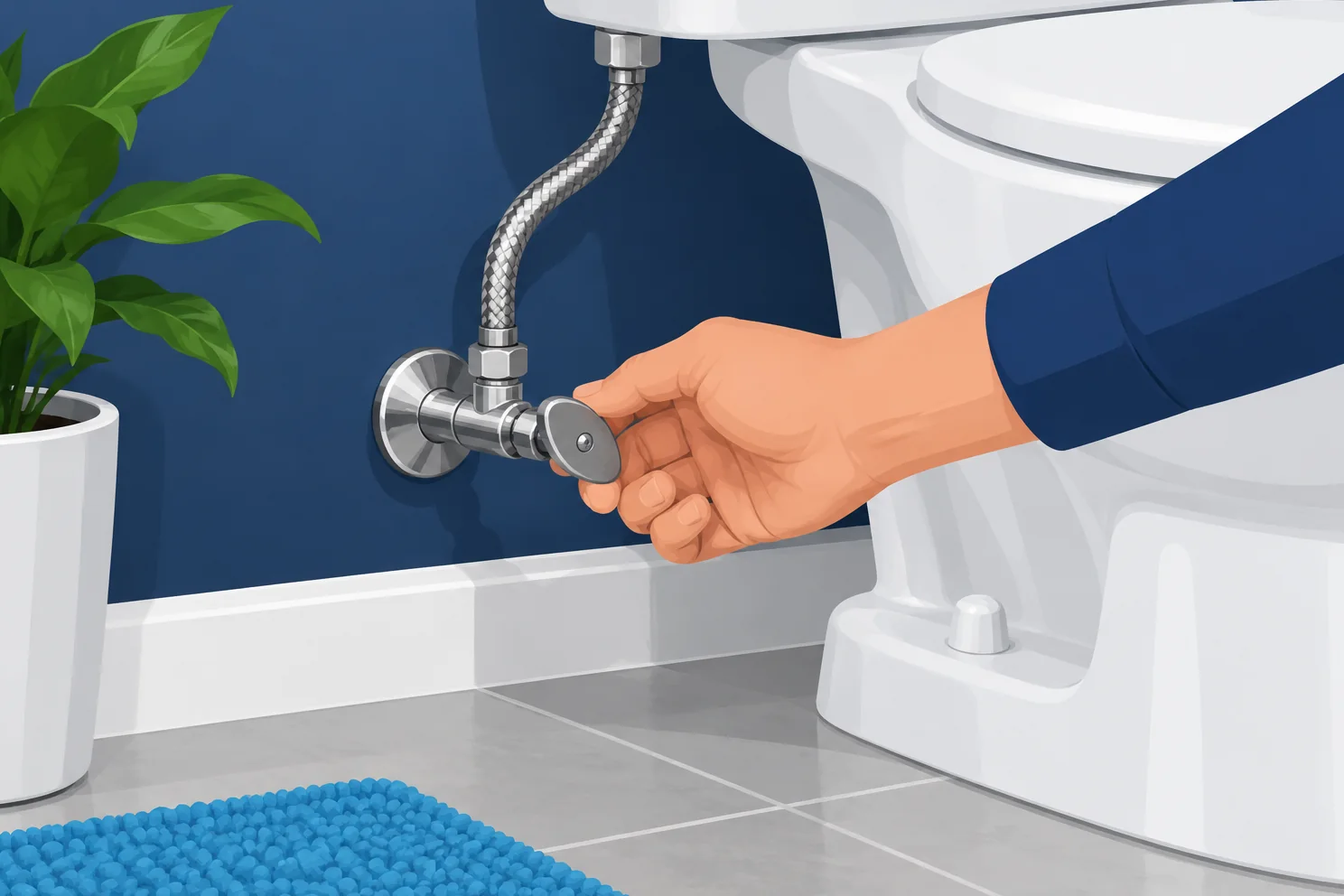
Homes on a private well have no utility meter, so the standard meter check doesn't apply. Use the toilet itself instead. Put dye or a dye tablet in the tank, not the bowl. Leave the toilet alone for ten minutes, look at the bowl, and then flush. Color in the bowl means tank water is reaching the bowl, most often past the flapper or its seat.
Your well system can confirm it. With all water use stopped, listen for the pump or watch the pressure gauge near the pressure tank. If the pressure slowly drops and the pump restarts while nothing is running, water is going somewhere. Close the valve behind each toilet if it turns easily by hand and see whether the cycling stops. If it does, a toilet is the likely cause. If it doesn't, the water is going elsewhere, such as an outdoor line, a livestock waterer or a pipe, and that needs a different search. Don't open the pressure tank or pump controls.
Some private wells deliver water with iron, sulfur or hardness, and minerals can build up inside a toilet. Scale on the flush valve seat keeps a flapper from sealing. Sediment can block the small screen in the fill valve inlet, so the tank fills slowly or the valve chatters. Orange or black staining at the waterline is often a sign of minerals in the water, not a broken toilet.
Not every well behaves this way, and a treatment system changes things too. If your toilets keep losing flappers or fill valves, tell us whether the house has a softener, filter or other treatment equipment. Choosing parts suited to your water and cleaning the valve seat when we replace the flapper can make repairs last longer. Don't put chlorine tablets or harsh cleaners in the tank. They can damage the flapper and other rubber parts, which brings the leak right back.
EPA is direct: only human waste and toilet paper belong in the toilet. Wipes, including ones labeled flushable, paper towels, feminine products, diapers, dental floss, grease, cat litter, medications and household chemicals can snag in the trapway or the line beyond it, and they don't break down the way toilet paper does. A toilet that keeps clogging is often catching one of these items in its trapway, where a closet auger or pulling the toilet can retrieve it.
Water use matters as well. EPA notes that toilets account for 25 to 30 percent of household water use. Fixing a leak and replacing a high-volume toilet with an efficient one both cut the water your drainfield has to absorb.
Du-All offer
Clearing any sink, toilet or main sewer line
Not valid with other offers. Not valid on prior service. Limit one coupon per service call.
Du-All offer
Any new toilet
Not valid with other offers. Not valid on prior service. Limit one coupon per service call.
If one toilet clogs and the rest of the house drains normally, the blockage is probably in that toilet or the pipe just under it. A flanged plunger handles many of these. If several fixtures drain slowly, toilets gurgle, the lowest drain backs up, or you notice odors or soggy ground over the drainfield, the problem is probably farther along, in the main line, the tank or the drainfield.
In that case, stop using water as much as possible. Keep children, pets and livestock away from any sewage indoors or out, and don't handle it yourself. Don't pour chemical drain cleaners or additives into the toilet hoping to fix it. Our septic tank and drain cleaning pages explain the next steps.
Most toilet problems are fixed with tank parts, a new seal or a supply line. Replacement makes sense when the porcelain is cracked, parts don't fit, or the toilet clogs often because of its design. Don't patch cracked porcelain. A cracked tank can fail suddenly.
When you replace, measure the rough-in from the finished wall to the center of the floor bolts and check the clearances around the bowl. EPA WaterSense labeled toilets use 1.28 gallons per flush or less and are independently certified for flushing performance.
Water on the floor near a toilet can be condensation, especially when cold well water fills a tank in a humid room. It can also be a drip from the supply line nut, a leaking tank bolt or a failed wax seal. Dry everything, flush once, and watch for the first new drop. The dye test won't find these. It only checks the seal between the tank and bowl.
Seal failures show up as water at the base after flushing, odor, or a toilet that rocks. The fix is to lift the toilet, check the flange and reset it on a new seal. Don't crank down the floor bolts. That can crack the base. Supply lines that are bulging or rusted should be replaced before they fail.
When the power goes out, a well pump stops, and the toilets work only until the pressure tank runs low. After that a tank won't refill. If you plan to flush with stored water, pour it into the bowl, not the tank. When power returns, stay nearby as the toilets refill. Air or sediment stirred up in the lines can occasionally keep a fill valve from closing.
We repair flappers, fill and flush valves, supply lines and wax seals, and we install new toilets. See our toilet repair services. If water seems to disappear and the toilets aren't the cause, the Loxahatchee leak detection page covers the next step. Call 561-623-3111 or use the contact page.
Nearby toilet repair pages: toilet repair in Royal Palm Beach, toilet repair in Greenacres, toilet repair in West Palm Beach.
Before you call
Use a ten-minute tank dye test, and watch your well pressure gauge or listen for the pump starting while no water is in use. Closing each toilet's easy-turning valve shows whether the cycling stops.
Yes. EPA says one leaky or running toilet can add as much as 200 gallons a day, and extra water can overload the drainfield.
No. Loxahatchee Groves says virtually all of its homes rely on wells and septic, and some Acreage properties have county water. Check your own property records.
Minerals or sediment can scale the flush valve seat or clog the fill valve screen. Tell us about any water treatment equipment so we can choose suitable parts.
EPA advises flushing only human waste and toilet paper. Wipes can clog the system.
See all plumbing services in Loxahatchee for this city.
Nearby toilet repair
Back to toilet problems, or browse every city on our locations page.
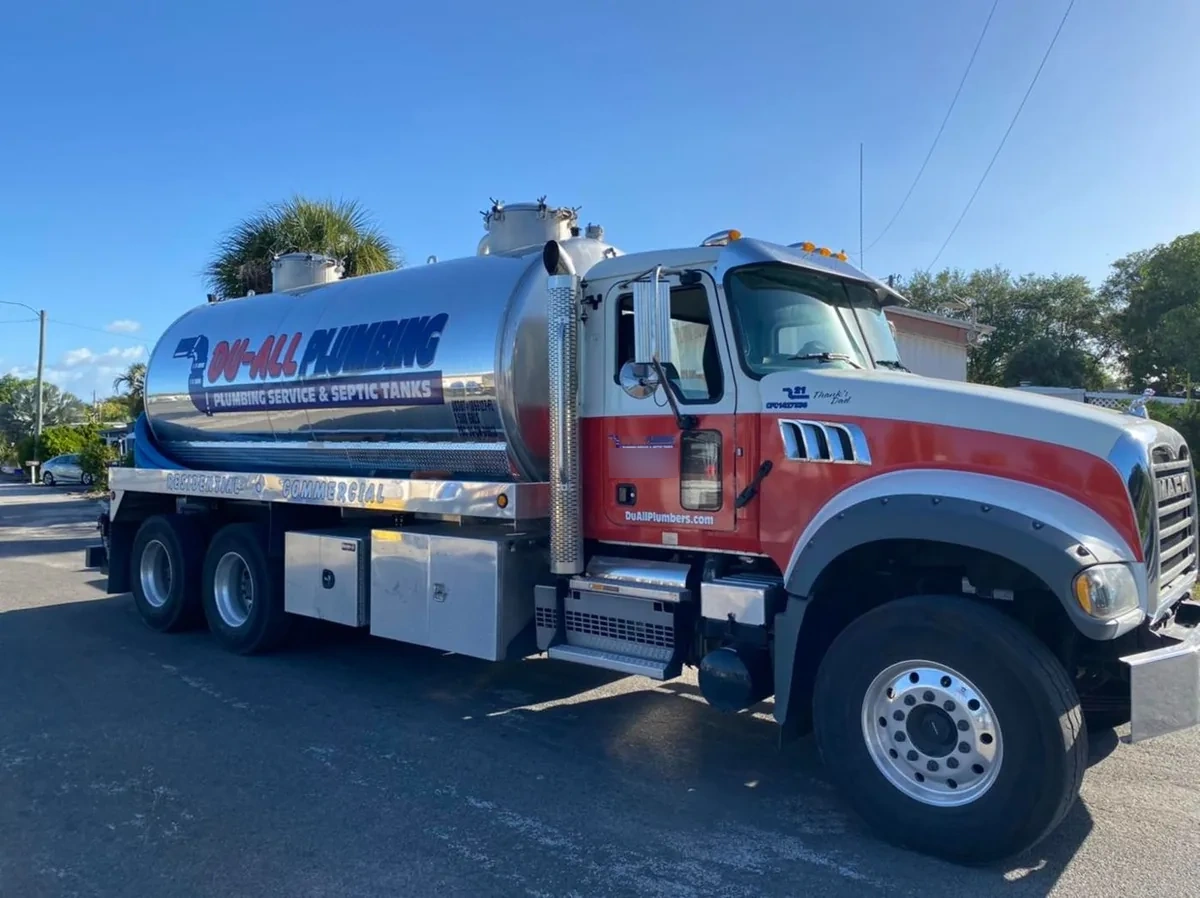
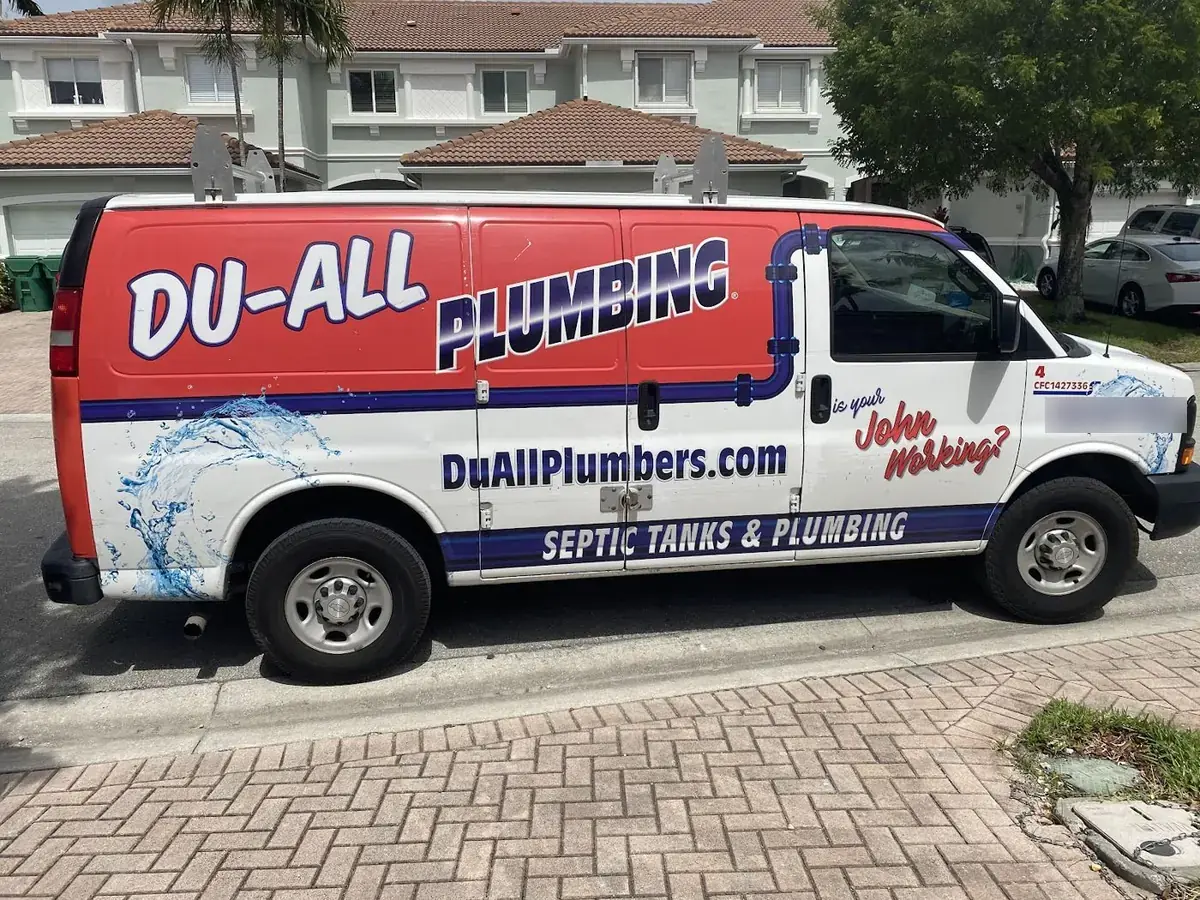
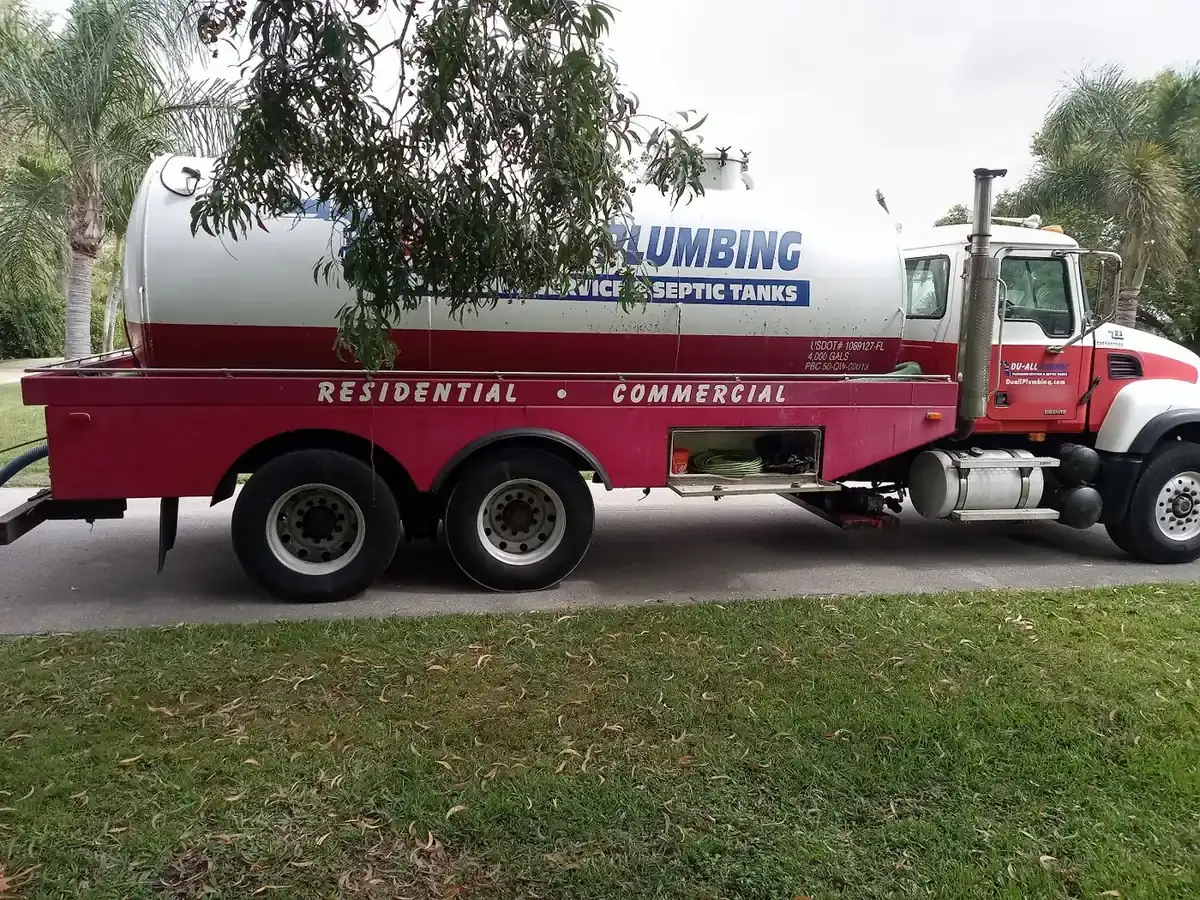
The page video and hero photo are shared Du-All site media, not footage of a specific job in this city.
Tell us about your Loxahatchee property, which toilet is acting up and what you have noticed.
Not valid with other offers. Not valid on prior service. Limit one coupon per service call.
Du-All Social
See the crews, trucks and jobs from around Palm Beach and the Treasure Coast.
Lake Worth Beach office
514 S E Coast St, Lake Worth Beach, FL 33460
561-623-3111
Palm City office
3442 SW Armellini Ave, Palm City, FL 34990
772-238-6456