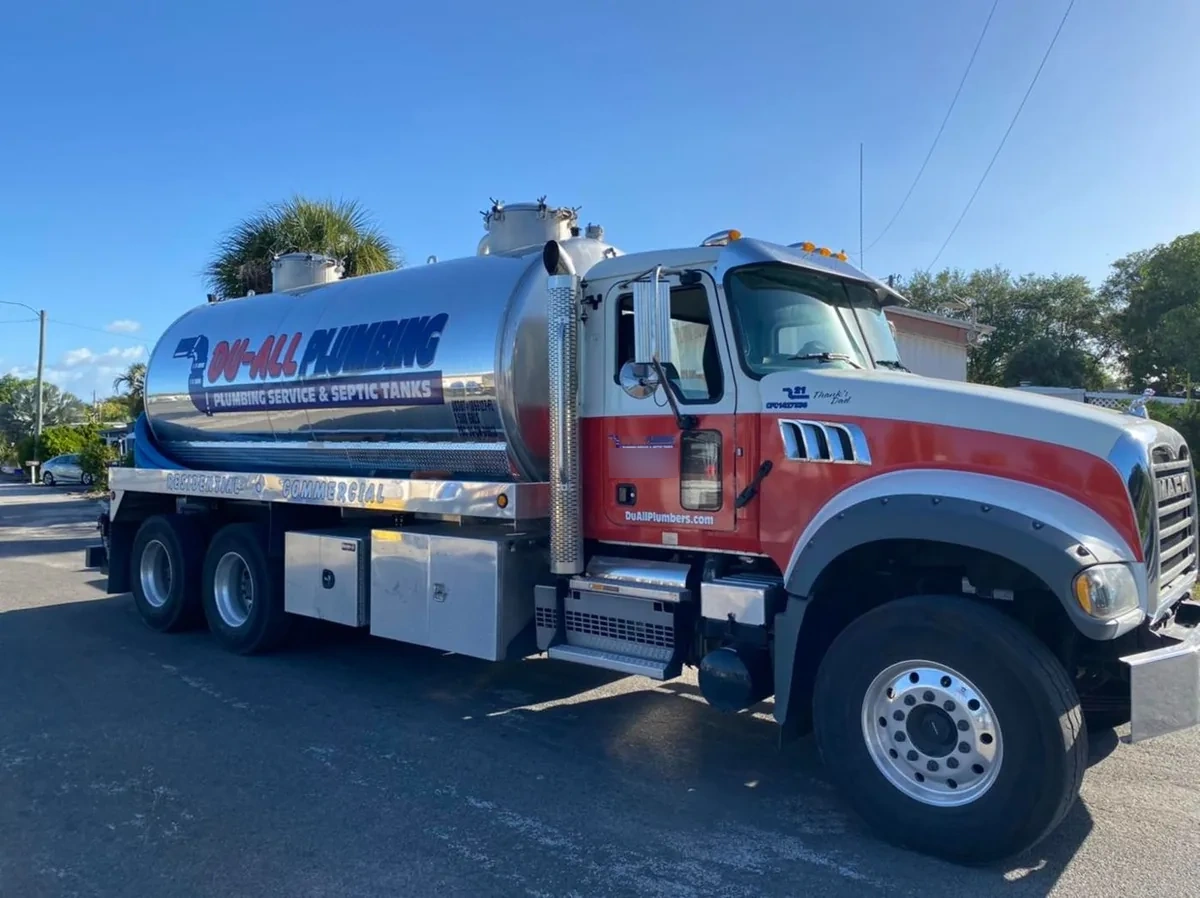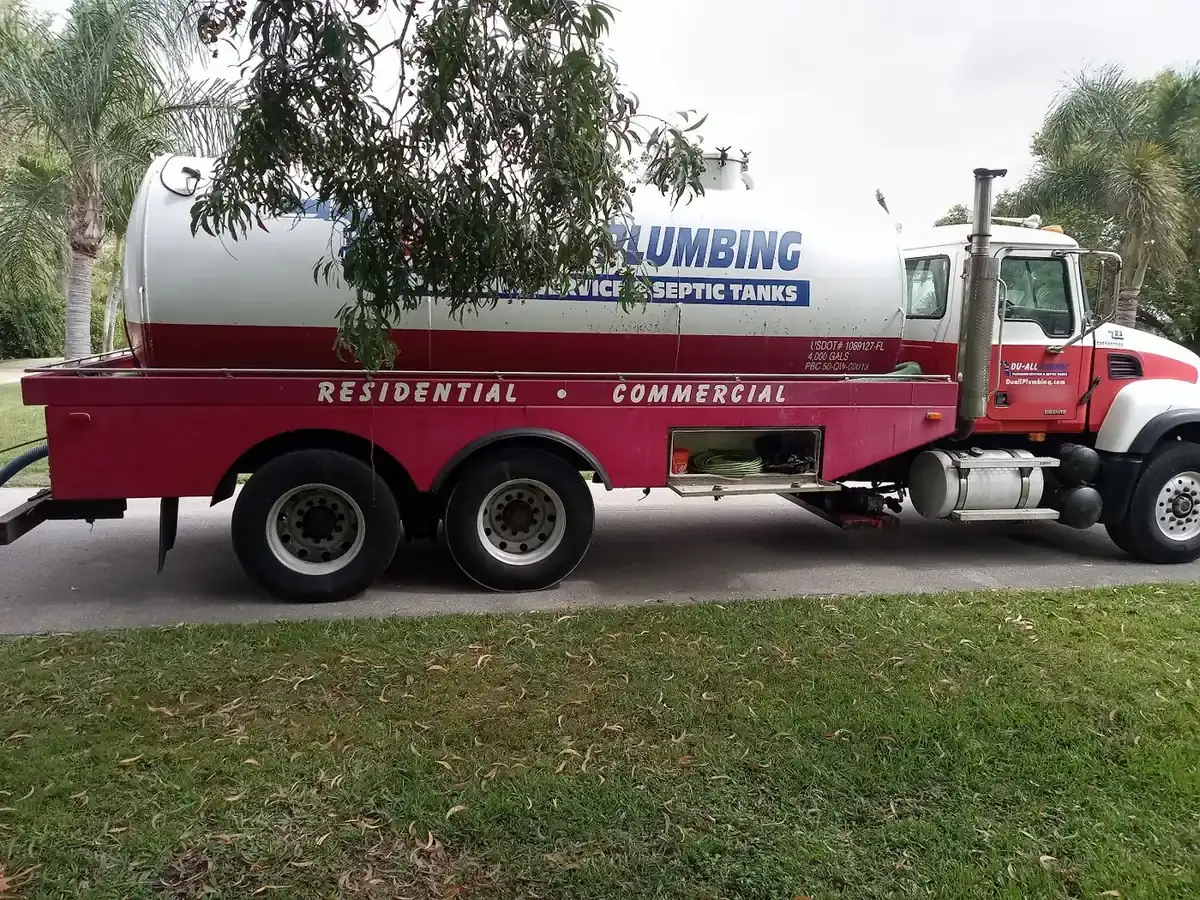

A septic system treats a household's wastewater on the property instead of sending it to a public sewer. When it works, it is easy to forget. When it is neglected, failure can be messy, expensive, and a health concern. This guide covers how the system works, how pumping and inspection fit together, what warning signs mean, and what homeowners in Florida should know about local oversight. For service, see our septic tank services or contact Du-All Plumbing at 888-800-2555.
How does a septic system work?
According to the EPA's description, a typical system has two main parts: a septic tank and a drainfield, also called a soil absorption field. The tank holds wastewater long enough for solids to settle to the bottom as sludge while oils and grease float to the top as scum. Compartments and a T-shaped outlet keep sludge and scum in the tank. The partly clarified liquid, called effluent, flows out to the drainfield, where soil treats it as it percolates down toward groundwater.
Some properties have alternative systems that use pumps, sand, or other media for additional treatment. Those systems have electrical and mechanical parts and usually need more frequent attention than a basic gravity system.
How do you find your tank and drain field?
The EPA notes that your local permitting authority can often provide a copy of the property's septic record drawing, called the as-built, along with permit records. Property records and past pumping receipts may also show the location. A septic professional can locate the tank lids if records are missing. Once found, sketch the layout with measurements from fixed points such as the house corners.
Septic pumping guide: when does a tank need pumping?
Pumping removes the accumulated sludge and scum that bacteria cannot break down. The EPA states that household septic tanks are typically pumped every three to five years, and that frequency depends on tank size, household size, wastewater volume, and solids.
A more precise trigger comes from measurement. The EPA says a tank should be pumped if the bottom of the scum layer is within six inches of the bottom of the outlet, if the top of the sludge layer is within 12 inches of the outlet, or if more than 25 percent of the liquid depth is sludge and scum. That is why measuring during an inspection is more useful than a calendar alone.
What makes a tank need pumping sooner?
- More people in the home than the system was designed for.
- Heavy garbage disposal use. The EPA notes that a disposal adds solids and that tanks may need more frequent pumping as a result.
- Grease, wipes, and other materials that do not break down.
- A smaller tank for the household's actual use.
What should you record after pumping?
- Date, company, and the volume removed if provided.
- Sludge and scum levels measured before pumping.
- Condition of baffles or tees, lids, and the effluent filter if one is installed.
- Any repairs recommended.
The EPA recommends writing down the measured levels and keeping service reports so you can track how fast solids build up in your tank.
Septic inspection guide: what is checked?
The EPA says the average household system should be inspected at least every three years by a septic service professional, and that alternative systems with electrical float switches, pumps, or mechanical components should generally be inspected about once a year. Its frequent questions page describes routine maintenance as inspecting the entire system every one to three years.
According to the EPA, an inspection can include:
- Locating the system and uncovering access ports.
- Opening and inspecting all tanks, including pump tanks and distribution boxes where present.
- Evaluating sludge and scum levels to decide whether pumping is needed.
- Checking the effluent filter if one is installed.
- Looking for signs of leakage, such as low water levels, and signs of backup, such as staining above the outlet.
- Checking the tank, inlet and outlet pipes for damage or corrosion.
- Verifying electrical connections, pumps, and alarms on systems that have them.
Should you get an inspection before buying a home?
It is a sensible step for any home on septic. Ask for the system's permit history from the local authority, recent pumping records from the seller, and an inspection report that describes what was opened, measured, and observed. A visual walk-over alone says little about the tank or drainfield condition.
Drain field basics: what does the drainfield do?
The drainfield is where the actual soil treatment happens. Effluent flows through perforated pipes, chambers, or other units and spreads into the soil. The EPA explains that the soil removes harmful coliform bacteria, viruses, and nutrients as wastewater percolates through it. It also warns that an overloaded drainfield can flood, sending sewage to the ground surface or causing backups in toilets and sinks.
How do you protect the drain field?
The EPA's guidance comes down to a few rules:
- Parking: do not park or drive on the drainfield.
- Planting: keep trees away from it so roots do not grow into the system. A septic professional can advise on distance for your site.
- Placing: keep roof drains, sump pumps, and other rainwater drainage away from the drainfield area. Excess water slows or stops treatment.
- Surfaces: do not cover it with concrete or asphalt, which reduce evaporation and the oxygen the soil bacteria need.
- Structures: check with a local designer or permitting authority before building anything on or near it.
What can you plant over a drain field?
The EPA points to native grasses and ground covers as better choices and does not recommend trees, shrubs, or vegetable gardens on the drainfield. Roots can damage pipes, and vegetables could be exposed to effluent. A grass cover also helps limit erosion over the field.
What are the warning signs of septic trouble?
The EPA lists signs of possible septic failure that include:
- Water and sewage from toilets, drains, and sinks backing up into the home.
- Bathtubs, showers, and sinks draining very slowly.
- Gurgling sounds in the plumbing.
- Standing water or damp spots near or over the tank or drainfield.
- Sewage odors around the tank or drainfield.
- Bright green, spongy grass over the tank or drainfield, even in dry weather.
- High nitrate or coliform levels in a nearby drinking water well.
Is it the septic system or the house plumbing?
One slow sink with everything else normal usually points to a clog in that fixture, not the septic system. Several fixtures slowing together, sewage odors outdoors, or wet ground over the tank or field point toward the septic system or the main line leading to it. A plumber or septic professional can check whether the tank level is normal, which helps separate a building drain clog from a full tank or a saturated drainfield. Supply symptoms, such as low water pressure, are a separate issue and do not indicate septic trouble.
What should you do if you see warning signs?
- Reduce water use right away: postpone laundry, dishwashing, and long showers.
- Keep people and pets away from any surfacing sewage.
- Note what you see, where, and when it started. Photos help.
- Call a septic professional for evaluation.
Septic odor troubleshooting: where is the smell coming from?
The EPA notes that a septic odor does not automatically mean failure. Roof vents release system gases so pressure can equalize, and that is normal. Odors can come from an obstructed vent, wind patterns pushing vent gases down, or other site conditions, and the vent may need cleaning or raising. Odors near the tank lids or drainfield, especially with damp ground, are more concerning.
| Where | Possible cause | Next step |
|---|---|---|
| Near the roof line on some days | Vent gas drifting down in certain winds | Ask about vent height or a vent filter. |
| Indoors at one drain | Dry trap or fixture issue | Run water into it; clean the fixture. |
| Indoors throughout | Venting or building drain problem | Call a plumber. |
| At the tank lids | Loose or damaged lid or riser seal | Keep people away; call for service. |
| Over the drainfield, with wet ground | Overloaded or failing field | Reduce water use and call promptly. |
Is it safe to open the septic tank?
No. Leave the lids to septic professionals and keep them secured so children and pets cannot get in. Never lean into, reach into, or enter a septic tank. OSHA classifies underground tanks and vaults as confined spaces because they can hold toxic or oxygen-poor atmospheres, and people have been seriously hurt entering them. If a lid is cracked, loose, or missing, block the area off and call for repair.
Septic myths and facts
Do septic additives replace pumping?
No. The EPA says additives containing bacteria or chemicals are not recommended for household systems, because the wastewater already contains plenty of bacteria and other microorganisms, and additives can be ineffective or harm system operation and the environment. Pumping is what removes solids.
If there are no problems, does the tank not need pumping?
Not necessarily. The EPA notes that going years without pumping and without symptoms can mean very low water use, but it can also mean the tank is leaking or that the problem simply has not surfaced yet. Measuring sludge and scum is the reliable way to know.
Can anything labeled flushable go in?
The EPA's guidance is to flush only human waste and toilet paper. It specifically lists non-flushable wipes, feminine hygiene products, paper towels, cat litter, coffee grounds, cooking grease, and household chemicals among things never to flush.
Will normal cleaning kill the system?
Normal household cleaning in ordinary amounts is part of everyday wastewater. The concern is large volumes of toxic products, solvents, paints, and drain chemicals, which the EPA says should not go down the drain. Use cleaners according to their labels and dispose of leftover chemicals through local hazardous waste programs.
What should Florida homeowners know about septic systems?
Septic systems are common in Florida. The Florida Department of Environmental Protection states that onsite sewage treatment and disposal systems are used by about 30 percent of the state's population, with an estimated 2.6 million systems in operation, and that proper design, construction, and maintenance help protect groundwater, which provides 90 percent of the state's drinking water.
Who handles septic permits in Florida?
Oversight has been changing, and the agency handling permits depends on your county. The Florida DEP Onsite Sewage Program page and the Florida Department of Health septic page explain who handles permitting and give current county contacts. Check with that office before any repair, modification, or new construction, and ask for your property's permit and as-built records at the same time.
How do Florida conditions affect septic systems?
If the soil around your drainfield becomes saturated, for example after heavy rain or high water, it accepts effluent more slowly. The EPA notes that excess water slows or stops treatment, which is why it advises keeping rainwater drainage away from the field. During and after prolonged rain, reduce water use, keep roof runoff away from the field, and watch for slow drains or wet spots. If your property floods, have the system checked before resuming normal use.
Septic do's and don'ts
What should you do?
- Have the system inspected and measured on the schedule your professional recommends.
- Keep records of pumping, inspections, and repairs.
- Spread laundry over the week. The EPA notes that doing all laundry in one day can flood the drainfield.
- Fix leaking toilets and faucets, which add steady water to the system.
- Consider water-efficient fixtures to reduce volume.
- Keep tank lids accessible and secured.
What should you avoid?
- Flushing anything other than human waste and toilet paper.
- Pouring grease, oil-based paint, solvents, or drain chemicals down drains.
- Driving, parking, paving, or building over the drainfield.
- Directing gutters or sump discharge onto the field.
- Planting trees near the tank or field.
- Opening or entering the tank yourself.
Homeowner septic maintenance plan
A workable plan has four parts, matching the EPA's framework: inspect and pump on schedule, use water efficiently, dispose of waste properly, and maintain the drainfield.
- Locate the system and keep a sketch with measurements.
- Get the permit and as-built records from your county health department if available.
- Schedule inspections, and pump when measured levels call for it.
- Track water use and repair leaks.
- Post a short list near the kitchen sink of what should not go down the drains.
- Walk the drainfield after heavy rain and note wet spots or odors.
- Keep every service report in one folder.
What should a septic log contain?
Dates of pumping and inspection, measured sludge and scum levels, effluent filter cleaning, alarm events on systems with pumps, repairs, and any symptoms you noticed with the date. For drain problems inside the house, see the sewer and drain maintenance guide, and for local conditions, the South Florida plumbing maintenance guide. More topics are in the Learning Center.