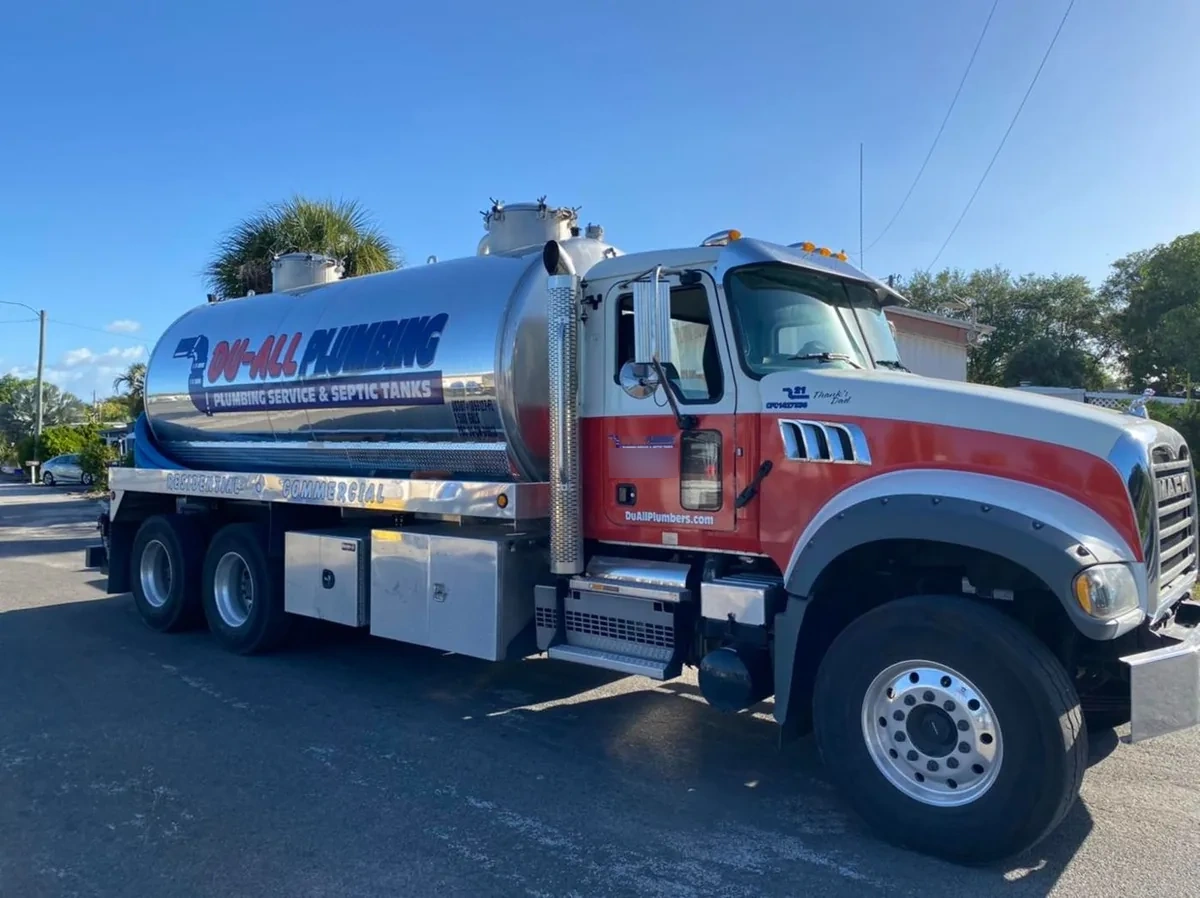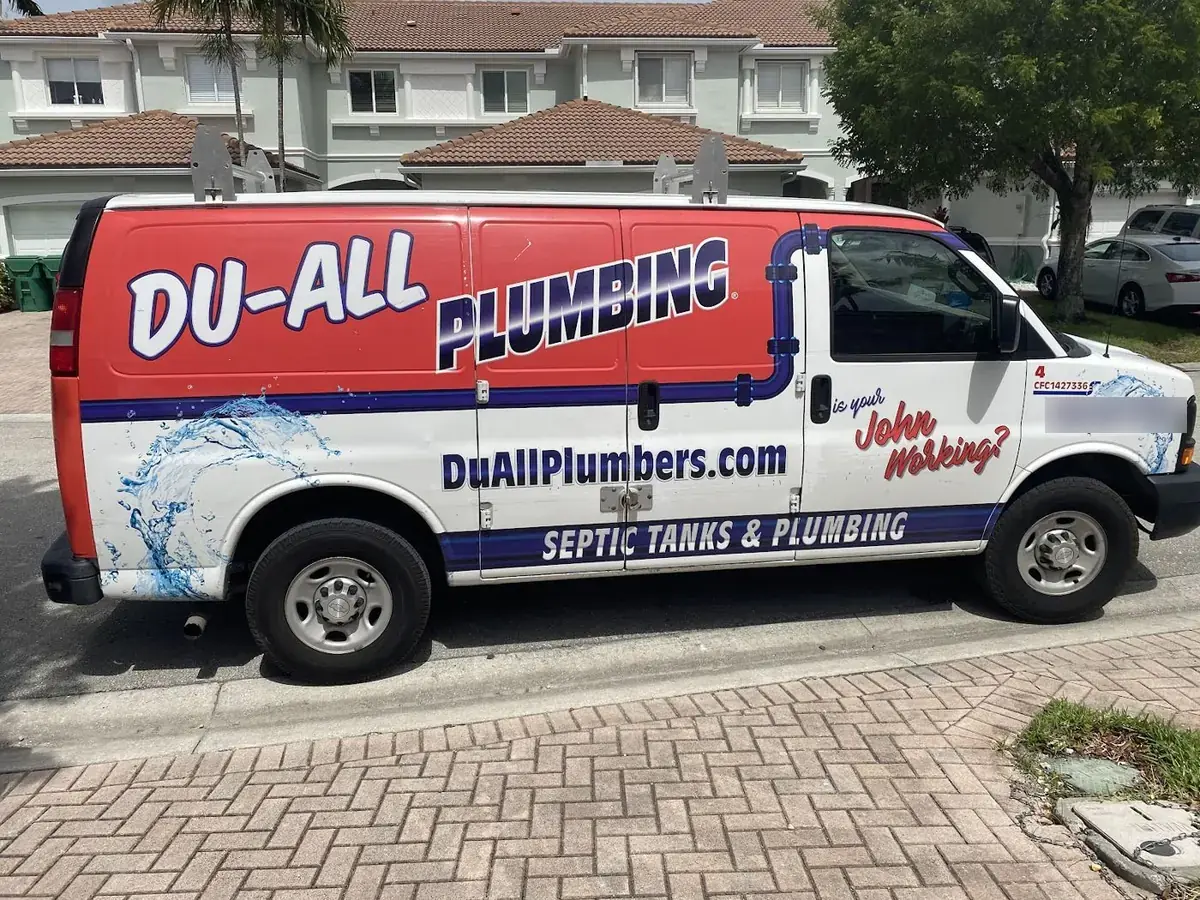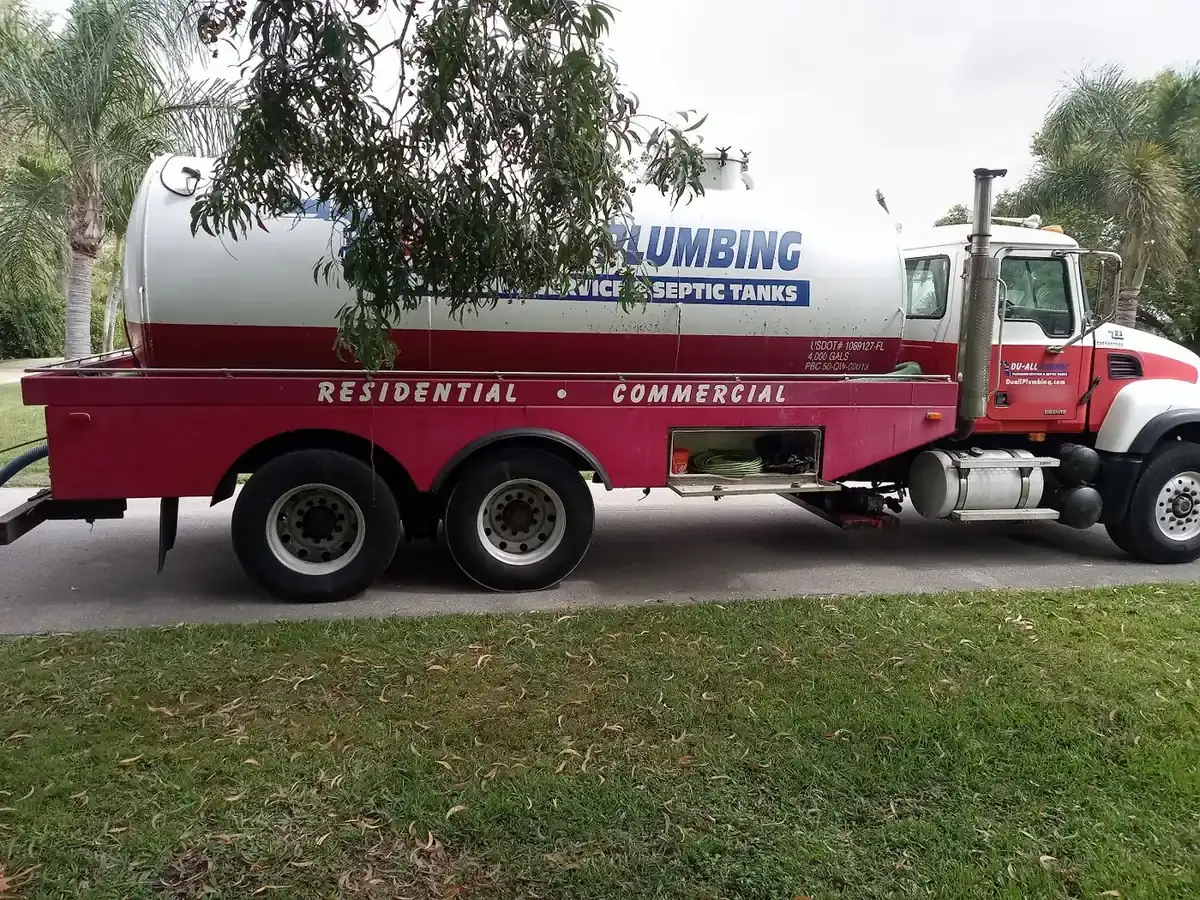
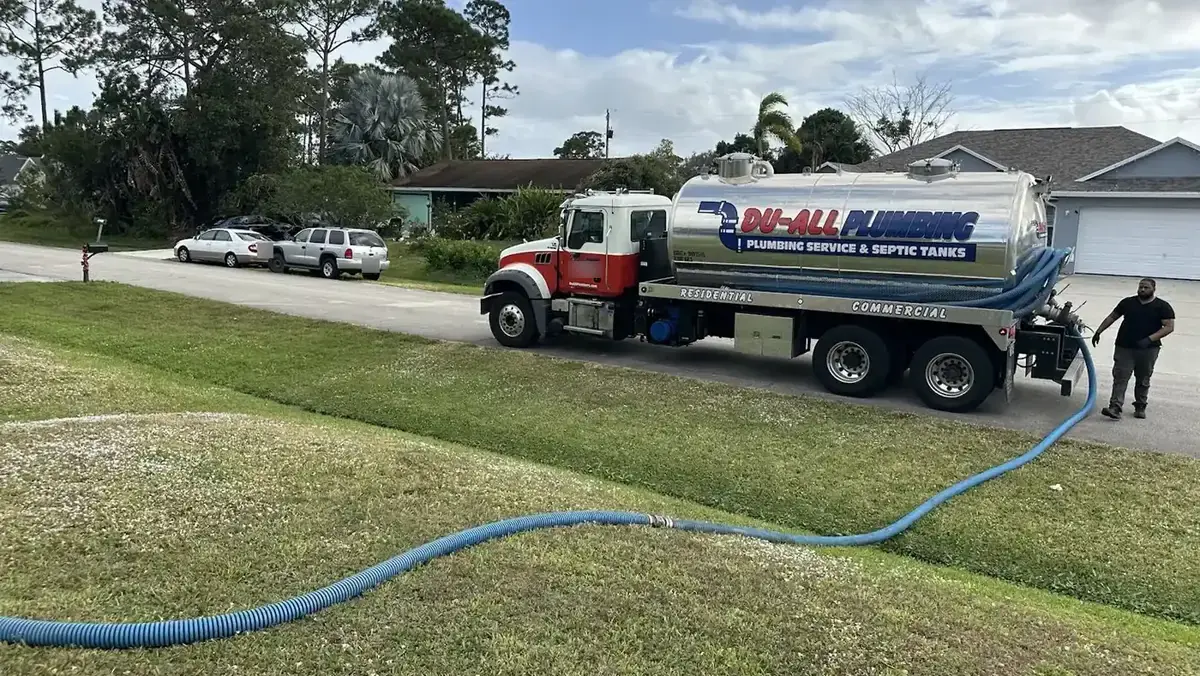
Above ground. Below ground. Du-All.
Septic Tank Pumping Fort Pierce
Plan the pump-out around your property.
Du-All Plumbing provides septic tank pumping for confirmed septic systems in Fort Pierce. Du-All Plumbing provides septic tank pumping in Fort Pierce. Call 772-238-6456 with your address, wastewater-system records and any current symptoms.
Request service
Tell us what’s happening.
Share your property address and the problem you’re seeing. A Du-All team member will call you to arrange service.
This request does not confirm an appointment. To speak with the team, call 772-238-6456.
 A+ rated by the Better Business BureauView our BBB profile →
4.6/5 on Google348 reviews · Lake Worth BeachRead Google reviews (opens in a new tab)
Quick answer
How do I arrange septic tank pumping in Fort Pierce?
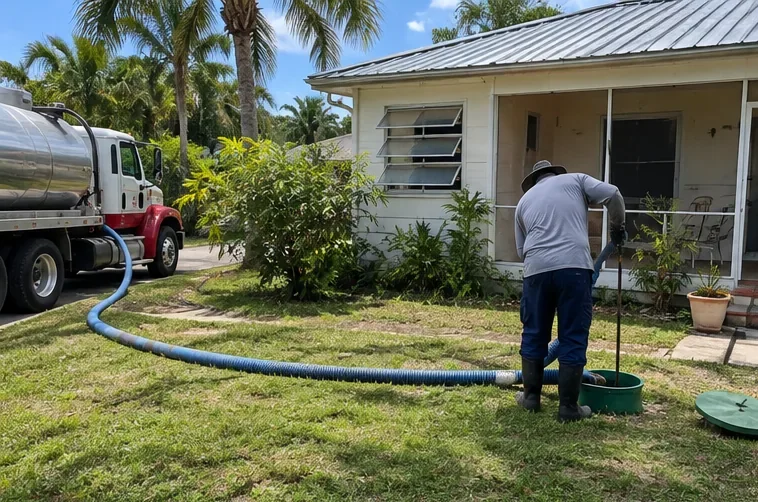
Du-All Plumbing provides septic tank pumping in Fort Pierce. Call 772-238-6456 with your address, wastewater-system records and any current symptoms. Ask for pricing and an access review before the visit, so the request matches the tank actually serving your property and any separate drain problem.
Septic tank pumping in Fort Pierce removes retained sludge and scum before they crowd the outlet and reduce wastewater separation. Du-All Plumbing can discuss preventive maintenance for an operating tank or help distinguish accumulation from a recurring backup. A household moving into a renovated Lincoln Park home or changing the use of an Edgartown residence should consider the demand reaching its existing installation. Bring the last service information if available and describe the affected fixtures. Call 772-238-6456 with the full address, including 34950 where applicable, and explain whether the house drains normally or wastewater is returning.
Fort Pierce septic pumping when a backup is more than accumulation
If wastewater rises through a low fixture, reduce unnecessary use and report which drains are affected. Pumping may be needed at an active tank, but it does not automatically explain the backup. The tank can have accumulated sludge, unusually high liquid or both, and those observations point toward different maintenance and flow questions.
Solids settle and grease floats while liquid passes onward. Pumping removes the retained layers before separation space becomes too restricted. A normal liquid-filled tank does not by itself indicate failure. The septic tank service hub connects maintenance, while Fort Pierce drain cleaning connects a separate line restriction.
For a Lincoln Park residence, use the actual installation and pre-service findings rather than the neighborhood’s age to interpret symptoms. If drainage improves only briefly after contents are removed, ask how the earlier level and outlet condition inform the next assessment. Repeating removal can create temporary room without repairing the reason wastewater cannot pass onward normally.
How should Fort Pierce septic pumping respond to changed household use?
Lincoln Park’s plan identifies Avenue D as a revitalization corridor. Consider a renovated residence there that retains an operating tank but gains more permanent occupants. New bathrooms or regular laundry use can change incoming flow without changing tank capacity. Before choosing another pumping date, compare the tank’s observed accumulation with the demand it will receive after the household change.
For an Edgartown residence with an active tank, adding regular use to a previously occasional-use space raises a similar connection question: which fixtures feed that installation, and how much extra wastewater and retained material will they add? Edgartown is a defined city zoning district; any proposed building change still needs its applicable review. The maintenance issue is the actual connected load.
The Fort Pierce plumbing page connects separate fixture work. A running toilet should be corrected rather than offset with repeated pumping. Use capacity, wastewater, solids input and household size together, then ask how measured sludge and scum should influence the next interval.
What should Fort Pierce septic pumping access protect?
Protect both the service opening and the area that treats the effluent. Driving across a tank can damage its structure, while repeated vehicle loading over the field can compact soil and damage buried components. A cleared route is only useful if it avoids creating a treatment problem that remains after the tank contents are removed.
If a driveway, fence or hardscape was added since the previous service, explain its relationship to the known opening. Do not probe the ground or lift a cover to resolve uncertainty. Ask whether locating and reaching the proper opening are included, leaving the professional to handle access. Pumping through an available point should not be mistaken for servicing every compartment in an unfamiliar installation.
Keep roof runoff and other extra water away from the field as well. A tank can have freshly restored separation space while the receiving area is still overloaded with liquid. Safe access and control of unnecessary water protect the maintenance result; neither is a substitute for removing the retained material.
Fort Pierce septic pumping findings before a physical repair
A tank service can reveal conditions that material removal does not repair. Damaged inlet or outlet components can interfere with flow or solids retention; visible leakage concerns need explanation; an effluent filter, where installed, can need professional assessment. Ask which component was observed and how the proposed remedy relates to the reported symptom.
A comprehensive inspection can assess more than a pump-out. EPA’s inspection guidance includes retained layers, backup staining, tank integrity and the receiving area, with further assessment depending on the installation. The Learning Center’s plumbing and septic guides support those distinctions. An emptied tank alone does not demonstrate that all components function correctly under normal load.
Fort Pierce Engineering separately handles utility, driveway and right-of-way permits. If a supported repair would disturb a driveway crossing or public area, identify that extent and confirm the applicable process once. The technical decision should come first: what fault is established, what remains uncertain and which physical change actually addresses it?
How does Fort Pierce septic pumping help interpret persistent wetness?
Wet ground and a high tank level can indicate that the system is not passing liquid normally, but removing contents does not identify every possible cause. Compare the outdoor observation with fixture drainage and incoming water. A running fixture adds liquid continuously; a restricted outlet or a receiving area that cannot accept effluent creates a different problem.
If a supply source is possible, Fort Pierce water leak detection connects that separate question. Keep people and pets away from suspected wastewater and do not wash it into drainage. Describe when the wetness appeared and whether it persisted while unnecessary household use was reduced, without deliberately adding water as a test.
After pumping, note whether normal drainage returns and how quickly the symptom reappears. A brief improvement can be temporary storage in the lowered tank rather than a repaired outlet or restored field. Pre-service layer and level findings help interpret that result. The next assessment should explain the remaining flow problem instead of repeating material removal simply because wetness is still visible.
What should Fort Pierce septic pumping completion and cost distinguish?
Capacity, configuration and access affect the material-removal task. Ask which compartments are included and whether locating or reaching an uncertain opening is separate. The professional handles service access; keep covers secured and heavy vehicles off the tank and field.
Ordinary wastewater returns the tank toward operating level after pumping. That is expected and is different from an immediate recurrence of retained sludge. If the same backup returns, describe its timing and affected fixtures before agreeing to another removal as the entire remedy.
For later care, spread laundry and keep grease, wipes and unnecessary disposal solids out. Ask how the measured layers relate to the outlet and available working depth. An interval that allowed solids too close to the discharge needs reconsideration before the next backup, while little accumulation with poor drainage calls for a different explanation. The cost of material removal and the reason for a physical repair are separate questions: one concerns retained contents and access, the other concerns a demonstrated fault.
Request Fort Pierce septic pumping with a defined next step
Preventive pumping should happen before retained solids defeat separation, not only when the home becomes unusable. If there is an active backup, describe it first so the visit addresses the current drainage limitation as well as any maintenance need. For a separate property north of the city, St. Lucie Village septic tank pumping connects the nearby service area.
At the Fort Pierce home, leave covers secured and keep people away from contamination. Call 772-238-6456 or use the Du-All contact form with the address, last service date if known and the sequence of fixture changes. Request the identified tank’s pumping task and an explanation of the observed accumulation, completion and any remaining fault. Say whether use changed recently and whether a previous pump-out restored normal drainage only briefly, so the next action follows the actual problem.
Before you call
Fort Pierce septic questions, answered
What should I report first during a Fort Pierce septic backup?
Report the affected fixtures and whether wastewater is rising. Reduce unnecessary use and describe the pattern before selecting routine pumping.
How should a renovated Lincoln Park home plan pumping when occupancy rises?
Compare the observed accumulation and tank capacity with the new connected use. More regular showers or laundry change liquid demand, while household waste and disposal use affect retained solids; pumping removes accumulation but does not enlarge the installation.
What if the documented access point is under new paving?
Tell Du-All before scheduling. Ask what locating or access work is included and leave the equipment undisturbed.
Does a building permit cover every proposed excavation after pumping?
Not necessarily. City Engineering separately handles utility, right-of-way and driveway permits for applicable work.
What should persistent wetness after a Fort Pierce pump-out trigger?
A report with the completed service details and a discussion of further assessment. Pumping does not repair every possible source of outdoor water.
Other plumbing services in Fort Pierce
See all plumbing services in Fort Pierce for this city.
Nearby septic service
Septic pumping near Fort Pierce
Back to septic tank pumping, repair and installation, or browse every city on our locations page.
Local septic information sources
- cityoffortpierce.com (checked 2026-11-10)
- cityoffortpierce.com (checked 2026-11-10)
- cityoffortpierce.com (checked 2026-11-10)
- cityoffortpierce.com (checked 2026-11-10)
- cityoffortpierce.com (checked 2026-11-10)
- epa.gov (checked 2026-11-10)
- epa.gov (checked 2026-11-10)
- epa.gov (checked 2026-11-10)
Above ground. Below ground. Du-All.
Tell us about your Fort Pierce property, your septic tank and the problem you’re seeing.