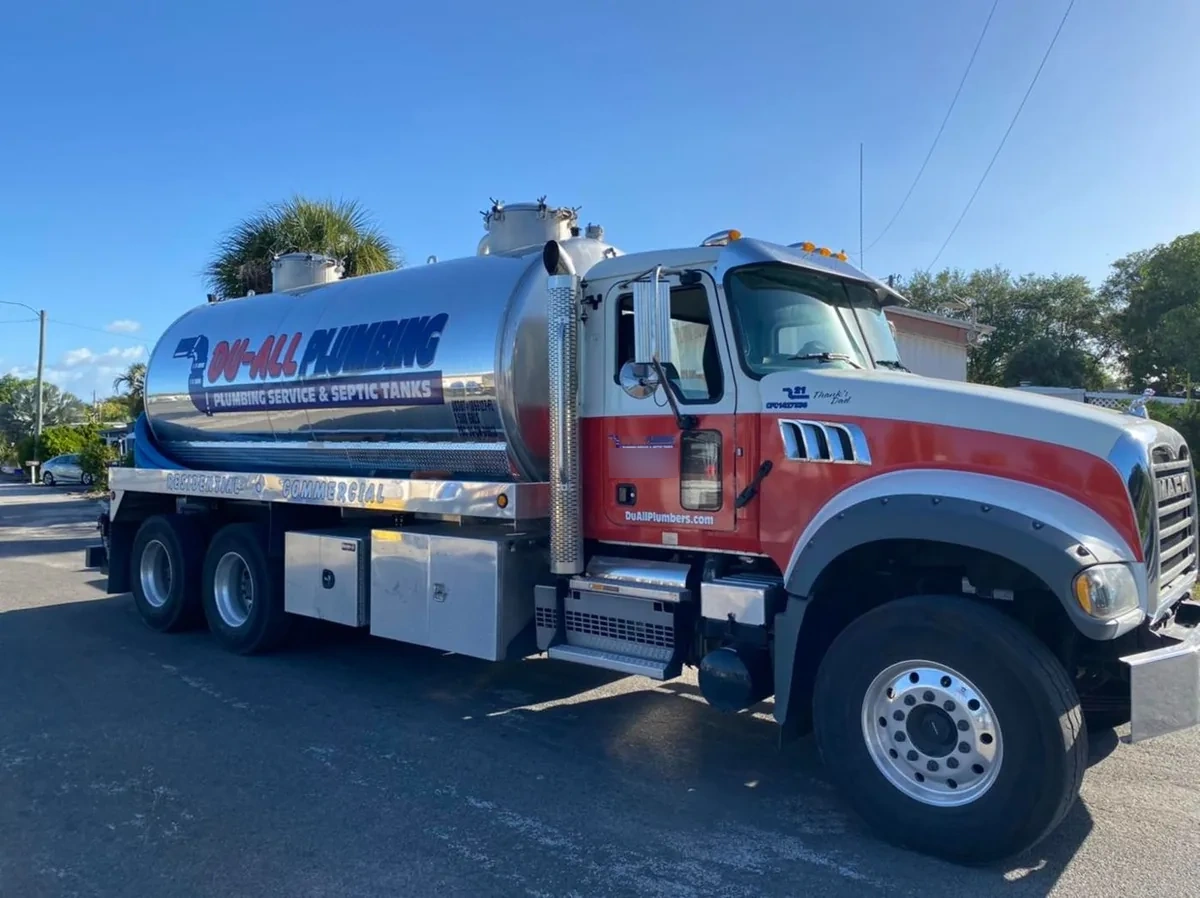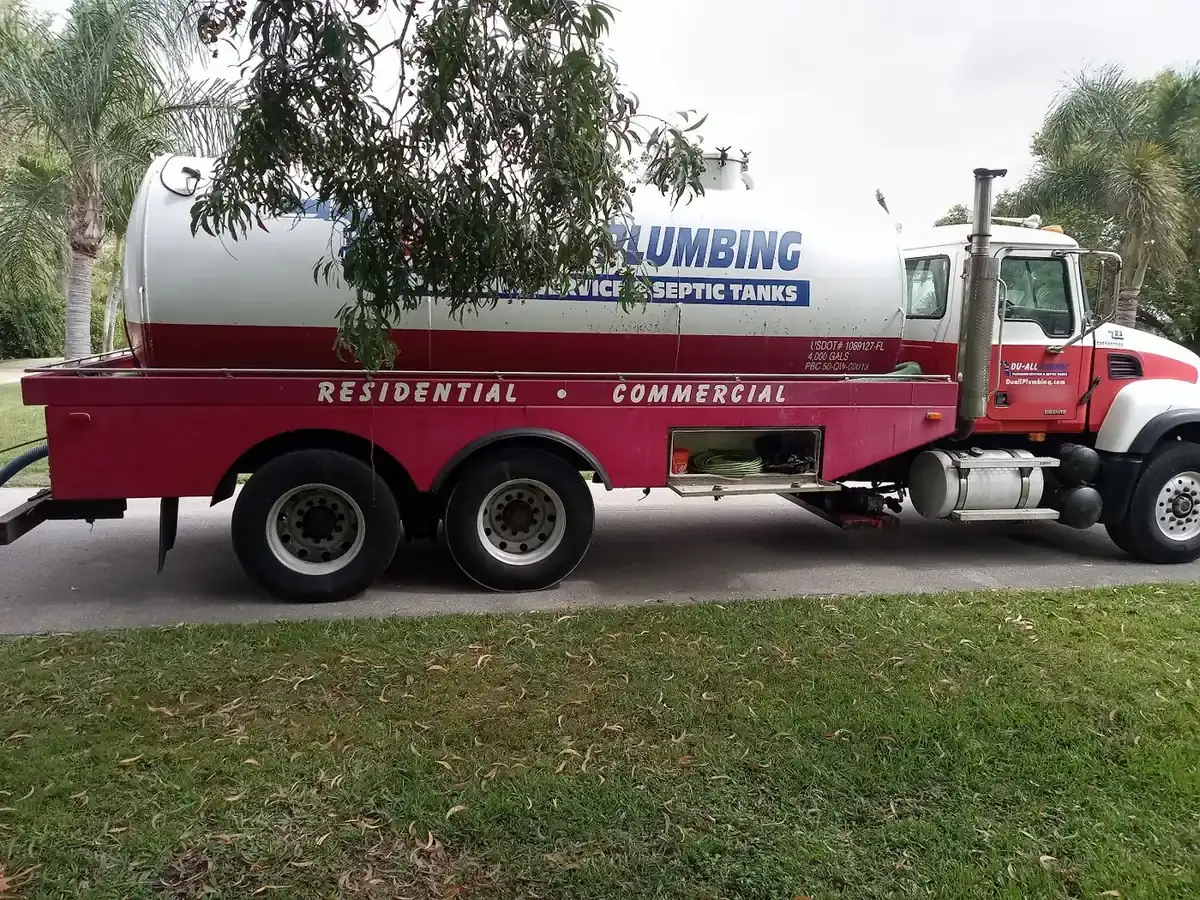
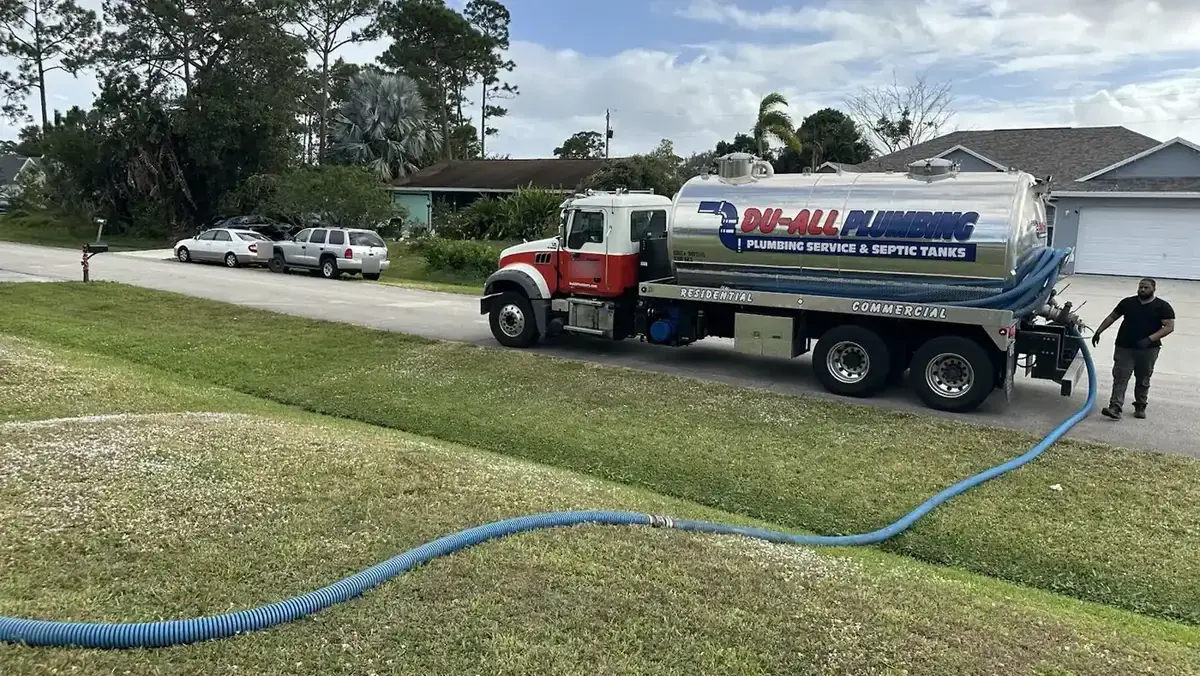
Above ground. Below ground. Du-All.
Septic Tank Pumping Pahokee
Plan the pump-out around your property.
Du-All Plumbing provides septic tank pumping for confirmed septic systems in Pahokee. Du-All Plumbing provides septic tank pumping in Pahokee. Call 561-623-3111 with your address, wastewater-system records and any current symptoms.
Request service
Tell us what’s happening.
Share your property address and the problem you’re seeing. A Du-All team member will call you to arrange service.
This request does not confirm an appointment. To speak with the team, call 561-623-3111.
 A+ rated by the Better Business BureauView our BBB profile →
4.6/5 on Google348 reviews · Lake Worth BeachRead Google reviews (opens in a new tab)
Quick answer
How do I arrange septic tank pumping in Pahokee?
Du-All Plumbing provides septic tank pumping in Pahokee. Call 561-623-3111 with your address, wastewater-system records and any current symptoms. Ask for pricing and an access review before the visit, so the request matches the tank actually serving your property and any separate drain problem.
Septic tank pumping in Pahokee begins by identifying the system at your property, not by assuming that a lakefront location determines wastewater disposal. Pahokee is a Palm Beach County city on Lake Okeechobee, with marina and campground recreation as well as residential and other land uses. Du-All Plumbing needs your 33476 address, prior pumping records if available and the reason for the request. Bacom Point Road, East Main Street and South Lake Avenue are useful route references. Describe the actual entrance and any drainage symptoms so the pumping conversation stays attached to the right building and equipment.
Pahokee septic pumping removes stored solids before carryover
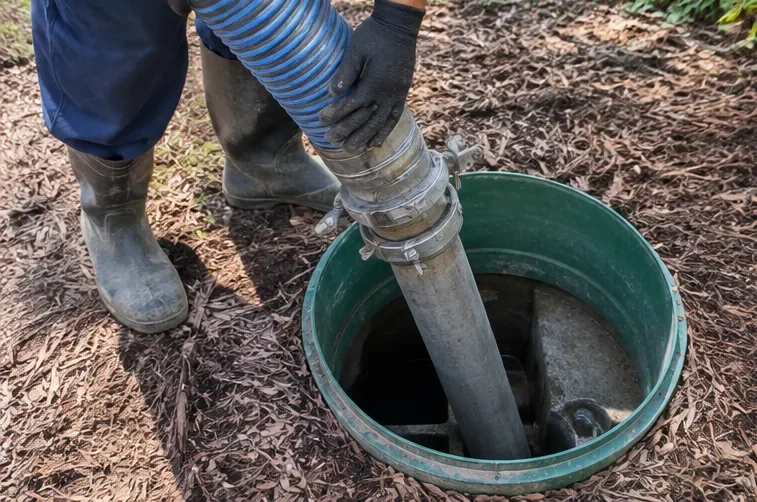
A septic tank is designed to hold wastewater long enough for heavier material to settle and floating material to rise. Sludge and scum stay behind while liquid leaves toward treatment. If those retained layers consume too much depth, the separation process loses working room and solids can approach the outlet. Pumping is preventive removal of that material, not only a response to a house that has stopped draining.
Pahokee Public Works includes wastewater treatment among its responsibilities, so confirm the actual arrangement at the property before selecting a tank service. Once an operating tank is identified, ask for the observed layers and any unusual liquid condition to be explained. A normally water-filled tank is different from excessive accumulation.
The septic tank service information connects the maintenance task. For a 33476 household, use actual tank size, wastewater, solids and occupancy to interpret the visit. A brief service description that says only “full” does not explain why pumping was needed or which remaining problem may require a different assessment.
How should Pahokee septic pumping distinguish use changes from faults?
The Barfield Highway area includes documented residential, office, congregate-living and agricultural uses. Where a tank serves a changed use, describe what actually enters it. More occupants can increase water and solids; a running fixture adds mostly liquid continuously. These conditions have different implications even though both may appear in a request for a “full tank.”
For a residence reopening after vacancy, previous solids remain relevant. Pumping does not become unnecessary solely because recent use was light. Conversely, poor drainage with little measured accumulation raises a question about flow through the building line, outlet or field. Ask how the observed condition supports the proposed first task.
Bacom Point Road, East Main Street and South Lake Avenue provide precise local approaches if several properties are being coordinated. After locating the right building, focus on connected use and symptoms rather than transferring another property’s tank specification. A meaningful maintenance result identifies removed accumulation and any unresolved reason wastewater cannot pass onward normally.
Pahokee septic pumping for mixed residential and business use
The Barfield Highway project narrative describes surrounding single-family, office, congregate-living and agricultural uses. For a pumping request, state your own building’s use and the equipment documented for it. If several structures share a site, identify which one has the problem and who holds the drawing that shows connections. A tenant’s symptom report and an owner’s system record can both be useful without asking either person to guess missing information.
If occupancy or use has changed, explain when it changed and whether drainage behavior changed at the same time. Ask Du-All to name the component and task in the quote, particularly when maintenance responsibility is shared between parties. The Pahokee plumbing page connects broader local services when the issue is not limited to tank material. Keep the completed service record by building and address so later requests do not borrow a capacity, service date or maintenance recommendation from another property under the same manager.
What should Pahokee septic pumping symptoms tell Du-All?
List the affected fixtures and the sequence of changes. A toilet that will not drain, a shower that receives wastewater and a single slow basin are different observations. Describe what happened during normal use without repeating it as a test. If wastewater is backing up, reduce unnecessary water use and keep people away from contamination. Leave tank covers and loaded cleanouts closed rather than trying to inspect the liquid level yourself.
Pumping removes accumulated material from an active tank. It does not guarantee that a house line is clear or identify the reason a drainfield may be struggling. If the issue appears confined to a line, drain cleaning in Pahokee is a separate service path worth discussing. If outdoor wetness is the main observation, describe where it is and when it appeared without diagnosing lake-related soil conditions. Ask which finding would justify pumping and which would lead to another assessment so the visit has a clear purpose.
Pahokee septic pumping records for a buyer or new manager
Ask for the last pumping receipt, installation drawing and later documents showing changes to the wastewater arrangement. Match the record to the actual building. If service history is incomplete, report it as unknown and ask what observations from the next visit should establish a maintenance baseline. A purchase date or inspection date should not quietly become the last-service date in the file.
City Hall and the permit department are on Begonia Drive in ZIP 33476, and the city directs building applications to Pahokee iWorQ. If findings lead to a proposed alteration, confirm the process for that work while keeping the maintenance task separate. The Learning Center can help the buyer prepare questions about tank service and line problems. Request written findings that distinguish completed work from recommendations. A manager taking over the property should be able to see what was serviced, what remains uncertain and who authorized each additional task instead of relying on a verbal summary passed between former occupants.
What should Pahokee septic pumping completion and cost reflect?
The task should address retained contents in the identified installation, with any compartments and access limitations explained. Ask which material-removal and access work is included and whether locating an unknown opening is a separate step. Leave covers secured and keep vehicles off the field; damage created during access is not corrected by pumping.
After normal use resumes, the tank returns toward its operating liquid level. It does not remain empty, and refill alone is not evidence of new sludge accumulation. If backup returns quickly, describe the timing and affected fixtures so the remaining flow restriction can be considered.
For future planning, ask how layer observations and household use should shape the interval. Keep wipes and grease out and spread laundry instead of concentrating it into one day. If a physical alteration is proposed, the city’s Begonia Drive permit department and iWorQ route provide the current process for applicable work. The repair should have a component-specific reason; pumping itself is maintenance, not a certification that every line and treatment component has passed a separate inspection.
Request Pahokee septic pumping with the right local file
If you also manage homes elsewhere around the lake, use separate system records. Belle Glade septic tank pumping and South Bay pumping requests belong to their own properties. Shared regional roads do not establish shared wastewater arrangements or approval requirements.
For Pahokee, gather the address, current use, last pumping information and the entrance description. Add the fixture symptoms, whether wastewater is returning indoors and who can approve the appointment. If the wastewater destination remains uncertain, say that before a pump-out is selected. Request a scope that explains the intended material-removal service, pricing basis and decision point for any additional investigation or repair. Keep everyone away from suspect wastewater and do not open the system to gather more details. Call Du-All at 561-623-3111 or send the Pahokee information through the Du-All service request form, asking for access and system records to be reviewed when arranging septic tank pumping.
Before you call
Pahokee septic questions, answered
How should a new Pahokee owner handle missing pumping receipts?
Report the history as unknown and gather any drawing or connection records. Ask what service observations should establish a maintenance baseline.
Will pumping clear every Pahokee household drain?
No. Describe the fixture pattern and ask whether a separate line service is appropriate.
What should a mixed-use Pahokee property identify before pumping?
Name the building, its documented connection and the person responsible for maintenance and authorization.
How should I compare Pahokee pumping prices?
Compare the same material-removal, access and locating scope, with clear terms for additional authorization.
What if a repair is recommended during Pahokee pumping?
Ask for written findings, the affected component and a separate proposal with the applicable approval review before authorizing it.
Other plumbing services in Pahokee
See all plumbing services in Pahokee for this city.
Nearby septic service
Septic pumping near Pahokee
Back to septic tank pumping, repair and installation, or browse every city on our locations page.
Local septic information sources
- cityofpahokee.com (checked 2026-11-10)
- cityofpahokee.com (checked 2026-11-10)
- prd-tnm.s3.amazonaws.com (checked 2026-11-10)
- cityofpahokee.com (checked 2026-11-10)
- cityofpahokee.com (checked 2026-11-10)
- cityofpahokee.com (checked 2026-11-10)
- epa.gov (checked 2026-11-10)
- epa.gov (checked 2026-11-10)
- epa.gov (checked 2026-11-10)
Above ground. Below ground. Du-All.
Tell us about your Pahokee property, your septic tank and the problem you’re seeing.