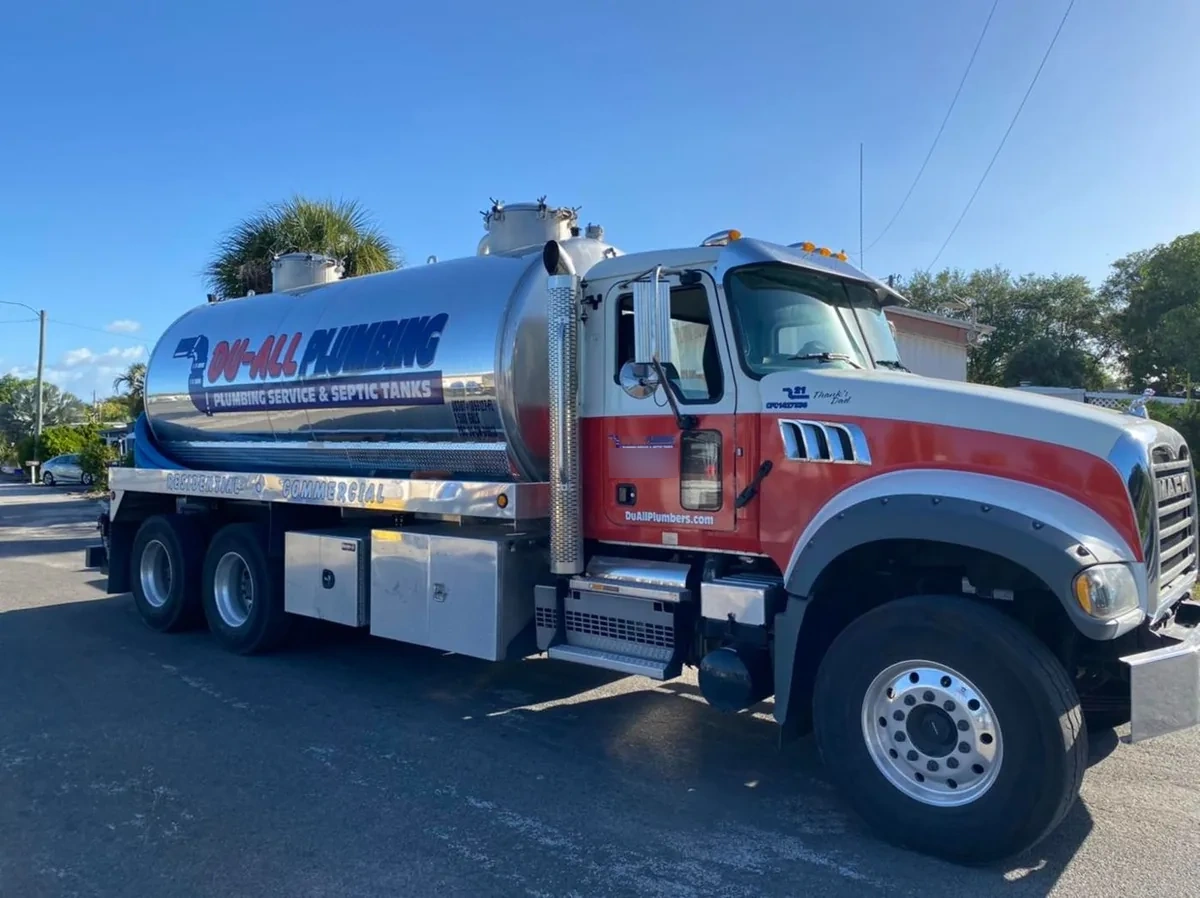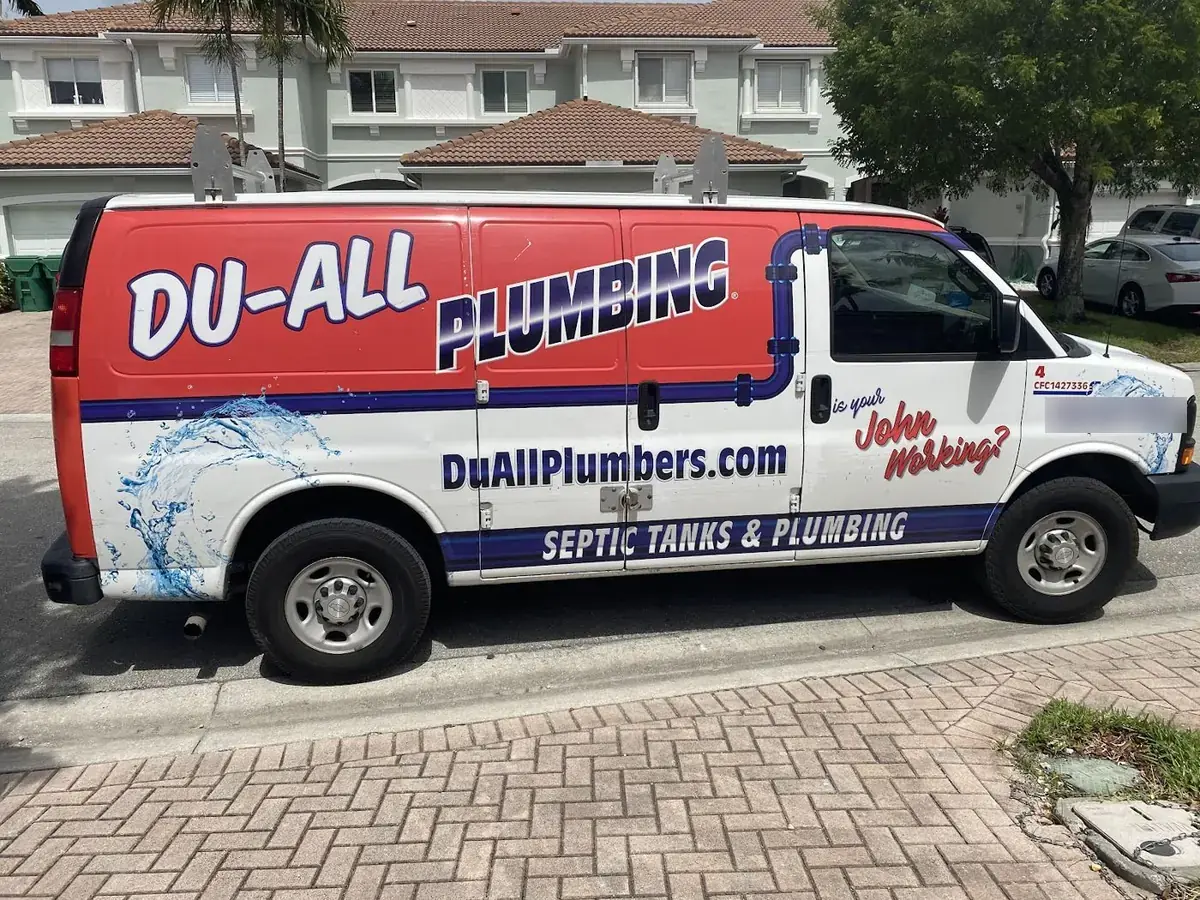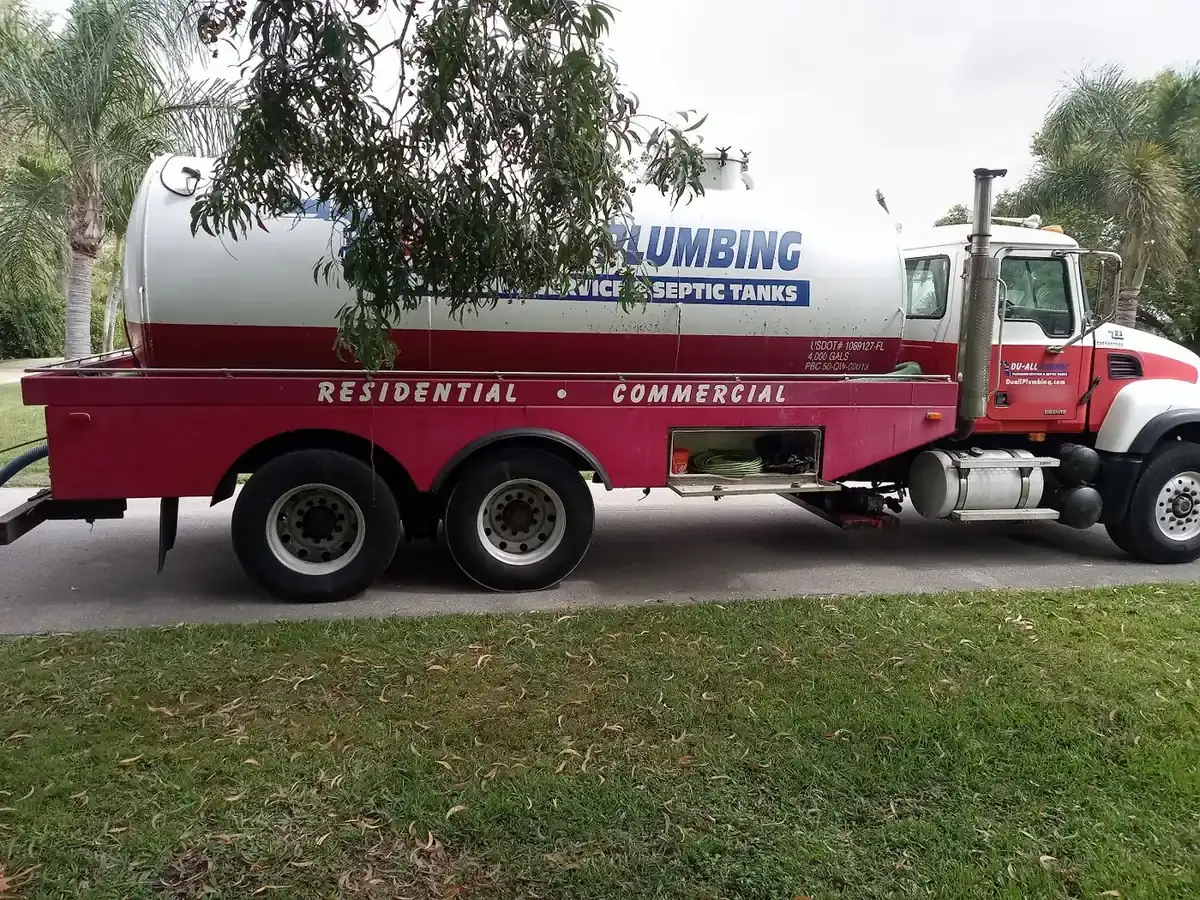
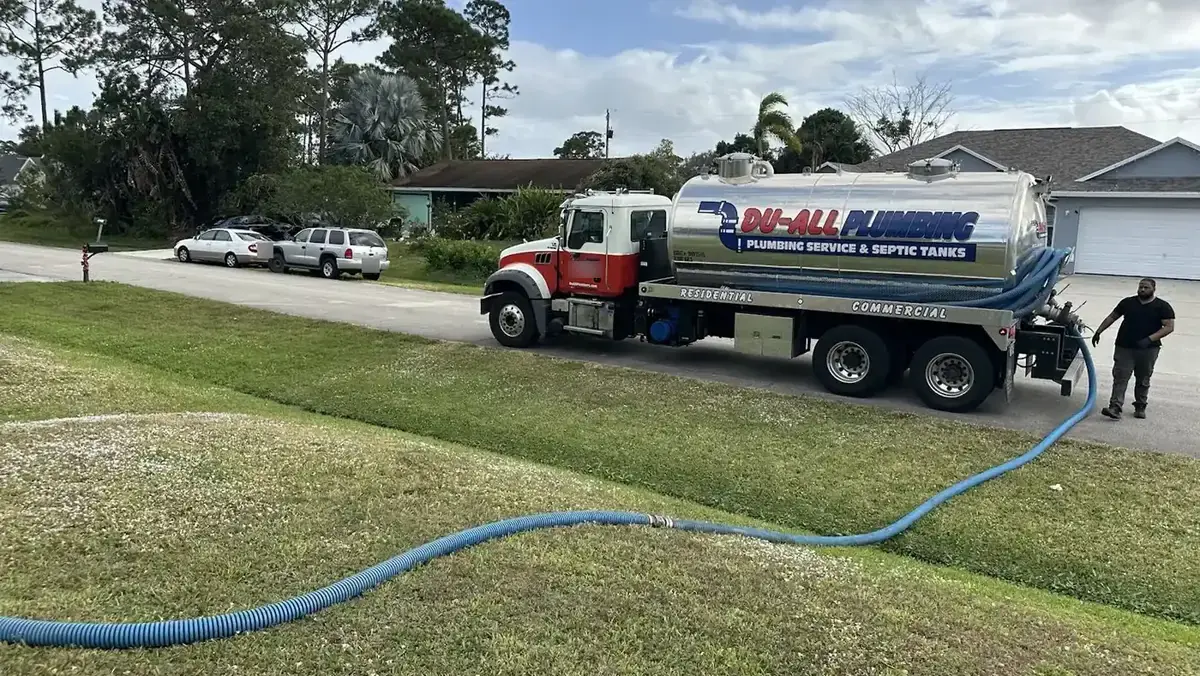
Above ground. Below ground. Du-All.
Septic Tank Pumping Belle Glade
Plan the pump-out around your property.
Du-All Plumbing provides septic tank pumping for confirmed septic systems in Belle Glade. Du-All Plumbing provides septic tank pumping in Belle Glade. Call 561-623-3111 with your address, wastewater-system records and any current symptoms.
Request service
Tell us what’s happening.
Share your property address and the problem you’re seeing. A Du-All team member will call you to arrange service.
This request does not confirm an appointment. To speak with the team, call 561-623-3111.
 A+ rated by the Better Business BureauView our BBB profile →
4.6/5 on Google348 reviews · Lake Worth BeachRead Google reviews (opens in a new tab)
Quick answer
How do I arrange septic tank pumping in Belle Glade?
Du-All Plumbing provides septic tank pumping in Belle Glade. Call 561-623-3111 with your address, wastewater-system records and any current symptoms. Ask for pricing and an access review before the visit, so the request matches the tank actually serving your property and any separate drain problem.
Septic tank pumping in Belle Glade starts with the wastewater arrangement at your address, not the agricultural landscape around it. The city occupies western Palm Beach County near Lake Okeechobee’s southeastern shore, and local directions often refer to canals, parks and the Main Street corridor. Du-All Plumbing can take a pumping request for a confirmed working tank while keeping a drain blockage or sewer-connected property on a different service path. Have your 33430 address, any previous pumping receipt and a description of the problem ready. Those details help define a useful visit before anyone discusses additional work.
What does Belle Glade septic tank pumping remove?
Pumping removes the material a working tank is designed to retain. Heavy solids settle to the bottom as sludge, while grease and other floating matter form a scum layer above the liquid. Between them, wastewater has room to separate before effluent leaves toward the drainfield. As the retained layers grow, that working space shrinks and solids can get closer to the outlet. Waiting for every fixture to stop draining misses the preventive purpose of pumping.
For a household in Belle Glade’s 33430 area, the useful maintenance question is how much accumulation is present relative to the tank’s usable depth and outlet. A liquid-filled tank is normal; it is not proof that a pump-out is overdue. Du-All’s septic tank service addresses the material that remains after ordinary liquid flow. The professional should distinguish the sludge and scum observations from the liquid level before pumping changes what can be seen.
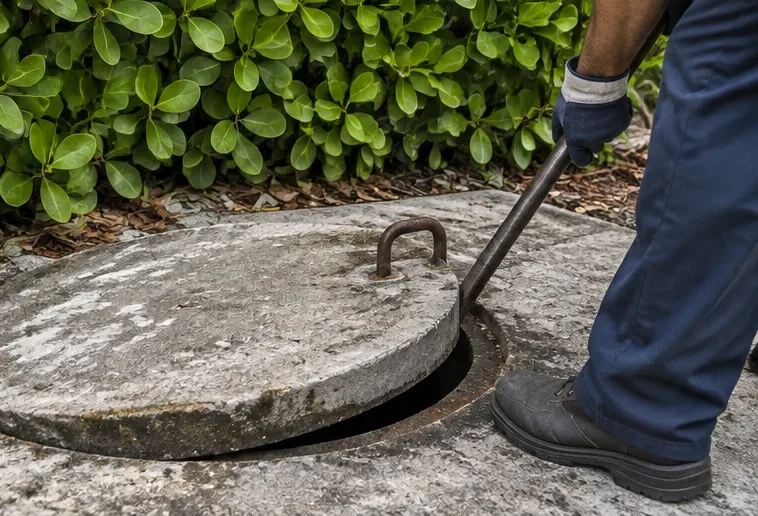
How should a Belle Glade septic pumping visit begin?
Consider a residence reached from the North Main Street corridor that drains normally but has no reliable maintenance history. The first service decision is not to create a blockage test. It is to identify the operating tank and assess retained material. Professional observation of sludge, scum and the outlet relationship gives a better basis for maintenance than the number of years a seller remembers owning the house.
EPA identifies pumping triggers based on layer positions, including sludge approaching within 12 inches of the outlet or the bottom of scum within six inches of the outlet’s bottom. It also identifies combined sludge and scum exceeding 25 percent of liquid depth. These are measurements for a septic professional, not instructions to open the tank yourself. Ask which observation supports pumping and whether a high liquid level, damaged outlet arrangement or another concern needs assessment beyond accumulation. A pump-out removes material; recognizing a different problem before removal helps avoid losing useful diagnostic information.
Belle Glade septic pumping across residential and mixed-use properties
Belle Glade’s official zoning map distinguishes residential, mobile-home and industrial districts. For an operating tank, different uses matter through what actually enters it. A residence with more occupants may send more wastewater, while a property where food scraps regularly go through a disposal may add more solids. Those are different maintenance pressures: a short burst of liquid flow and years of retained material should not be treated as the same condition.
If a residence and another building occupy one parcel, establish which fixtures enter the tank being pumped. A problem confined to the other building may remain after the household tank is serviced. The Belle Glade plumbing page connects related service needs when the concern involves that separate building. For a tank that does receive the changed load, discuss actual occupancy, wastewater, solids and capacity together. Those are EPA’s four maintenance factors, and they explain why copying a neighboring property’s interval can overlook an important difference in use.
What should Belle Glade septic pumping completion mean?
The objective is removal of accumulated contents, not merely taking away enough liquid to make a high level disappear temporarily. Ask which tank sections are included where the installation has compartments, and what remaining material or inaccessible area would prevent completion of the agreed task. The professional handles the openings and service work; the homeowner should remain clear of covers, hoses and wastewater.
After pumping, ordinary household wastewater will bring the tank back toward its operating liquid level. That refill is expected and does not mean it has instantly accumulated years of solids again. Conversely, a rapid return of backup symptoms is not explained away by saying that all tanks contain water. The direction and timing of returning flow, outlet condition and downstream acceptance may need assessment. A service report that separates removed accumulation from these observations gives you a practical answer about what pumping accomplished and what, if anything, still needs attention.
Belle Glade septic pumping when a drain blockage remains
A house with wastewater rising in a shower requires a different conversation from a normally draining home scheduled for maintenance. Reduce unnecessary water use and report which fixtures are affected. If only a basin is restricted, a branch problem may be involved. If several fixtures react, the shared path and downstream system need consideration. Repeated flushing adds water without identifying the cause.
Belle Glade drain cleaning addresses a separate restricted-line concern. Pumping does not clear every obstruction upstream, restore a damaged outlet or repair a drainfield that cannot accept effluent. If symptoms recur, compare them with the pre-service observations: was the tank unusually high, were solids near the outlet, and did the household ever return to normal drainage? That comparison determines the useful next question. It is more informative than repeatedly ordering another pump-out whenever the house slows, because each possible fault requires a different explanation and remedy.How can Belle Glade owners protect the benefit of septic pumping?
Spread household laundry through the week instead of sending a large concentration of water through the system on one day. Keep wipes, grease and unnecessary food solids out of the drains. A pump-out creates room for separation again, but it does not give the system unlimited hydraulic or solids capacity. A continuously running toilet can defeat careful scheduling by adding flow around the clock.
For unexplained incoming water, Belle Glade water leak detection connects the supply-side discussion. The Learning Center offers supporting information on maintenance. Belle Glade’s agricultural economy also makes it important to keep household wastewater service distinct from any unrelated site drainage: roof runoff and yard water should not be directed into a tank or its field. Discuss the actual household pattern after service, using measured accumulation and known capacity to guide the next interval rather than treating the completed pump-out as a reason to postpone all future attention until a backup occurs.
Arrange Belle Glade septic pumping with safe access
West Canal Street North reaches Torry Island Campground, while Hand Park is on West Canal Street South. Retain that north/south distinction when giving the entrance for a pumping visit. Keep heavy vehicles off the tank and drainfield; access for removal should not create damage to the treatment area. Leave covers secured and provide any existing drawing rather than probing the yard.
For another Glades property, Pahokee septic tank pumping is the nearby service route. At the Belle Glade home, tell Du-All whether the aim is preventive solids removal or help with an active backup, and whether water use recently changed. Ask for pumping of the identified installation and an explanation of any findings outside that task. Call 561-623-3111 or use the service request form with the full address, symptom sequence and last known service date. Request a visit that addresses the accumulated material and any separate drainage concern explicitly.
Before you call
Belle Glade septic questions, answered
Does a liquid-filled Belle Glade tank automatically need pumping?
No. A working tank normally holds liquid; the sludge and scum layers and their relationship to the outlet indicate accumulation. Leave those measurements to a septic professional.
What should pumping accomplish at a normally draining 33430 home?
It should remove retained material before solids threaten the outlet and drainfield. Ask what accumulation was observed and which tank compartments are included in the task.
Why can Belle Glade drains back up again soon after a pump-out?
A restricted building line, outlet problem or downstream acceptance issue may remain. Report the returning fixture pattern rather than assuming the tank has immediately filled with new solids.
Should a disposal-heavy household use the same interval as its neighbor?
Not automatically. Food solids can increase accumulation; consider actual solids input, wastewater, occupancy and tank size together.
How should I prepare a canal-street property for pumping?
Specify West Canal Street North or South and the correct entrance. Keep vehicles off the field, leave covers secured and call 561-623-3111 with current symptoms.
Other plumbing services in Belle Glade
See all plumbing services in Belle Glade for this city.
Nearby septic service
Septic pumping near Belle Glade
Back to septic tank pumping, repair and installation, or browse every city on our locations page.
Local septic information sources
- flauditor.gov (checked 2026-11-10)
- bellegladefl.civicpluswebopen.com (checked 2026-11-10)
- bellegladefl.civicpluswebopen.com (checked 2026-11-10)
- bellegladefl.civicpluswebopen.com (checked 2026-11-10)
- epa.gov (checked 2026-11-10)
- epa.gov (checked 2026-11-10)
- epa.gov (checked 2026-11-10)
Above ground. Below ground. Du-All.
Tell us about your Belle Glade property, your septic tank and the problem you’re seeing.