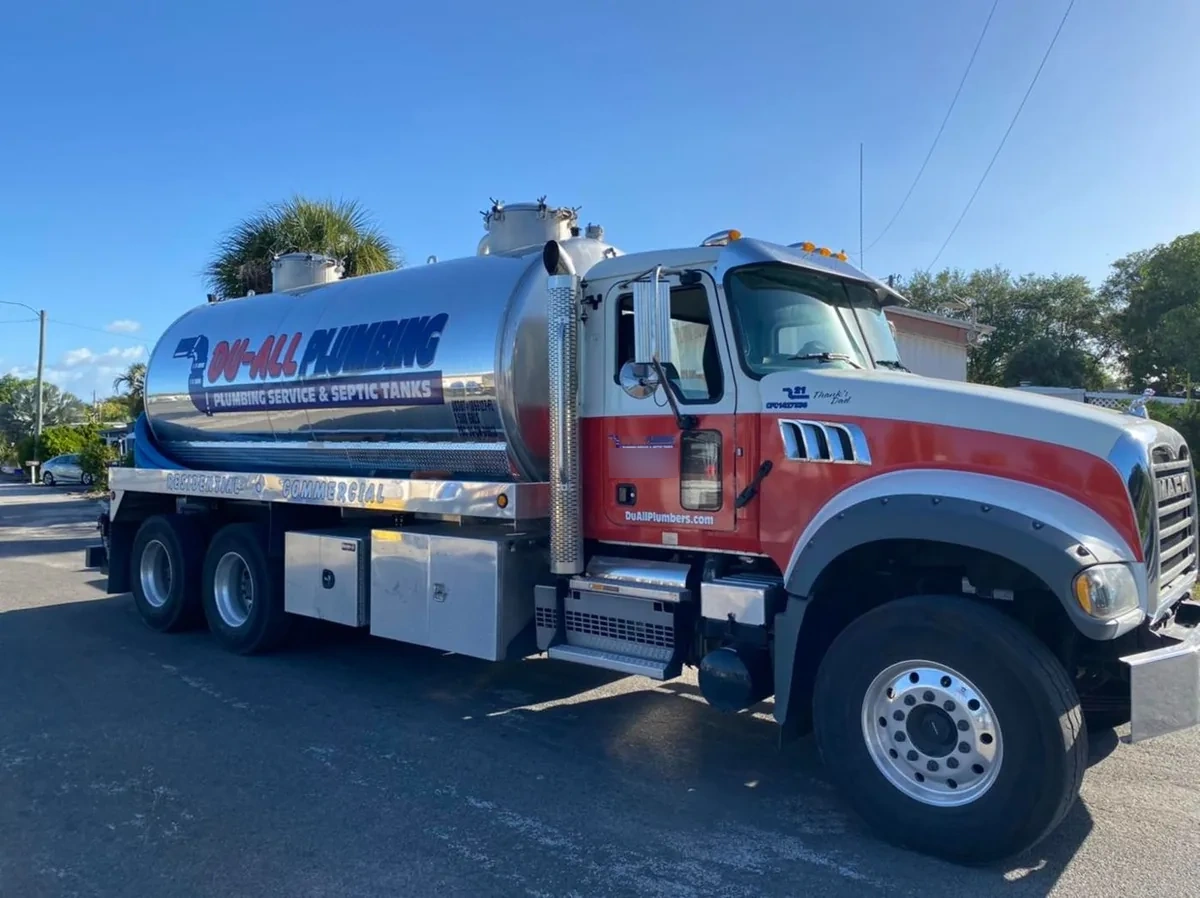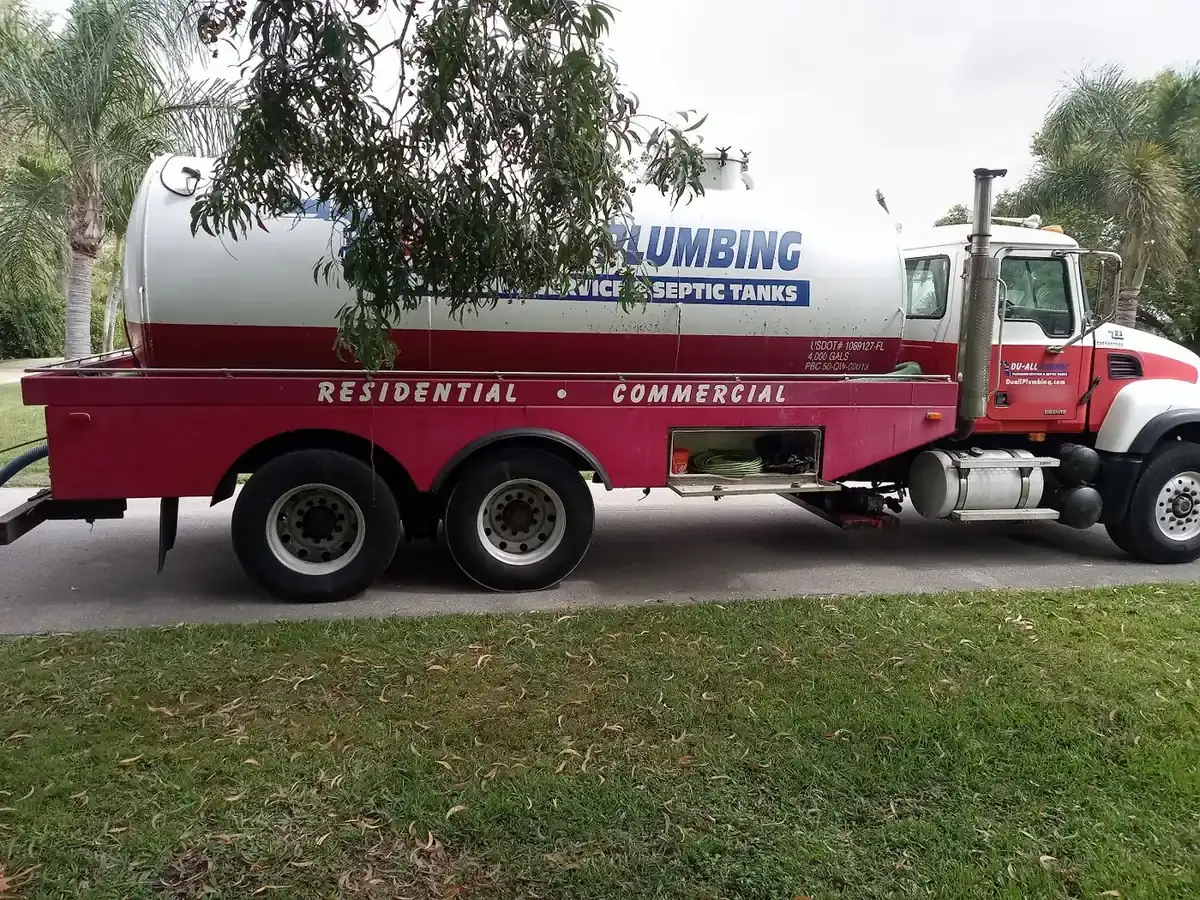
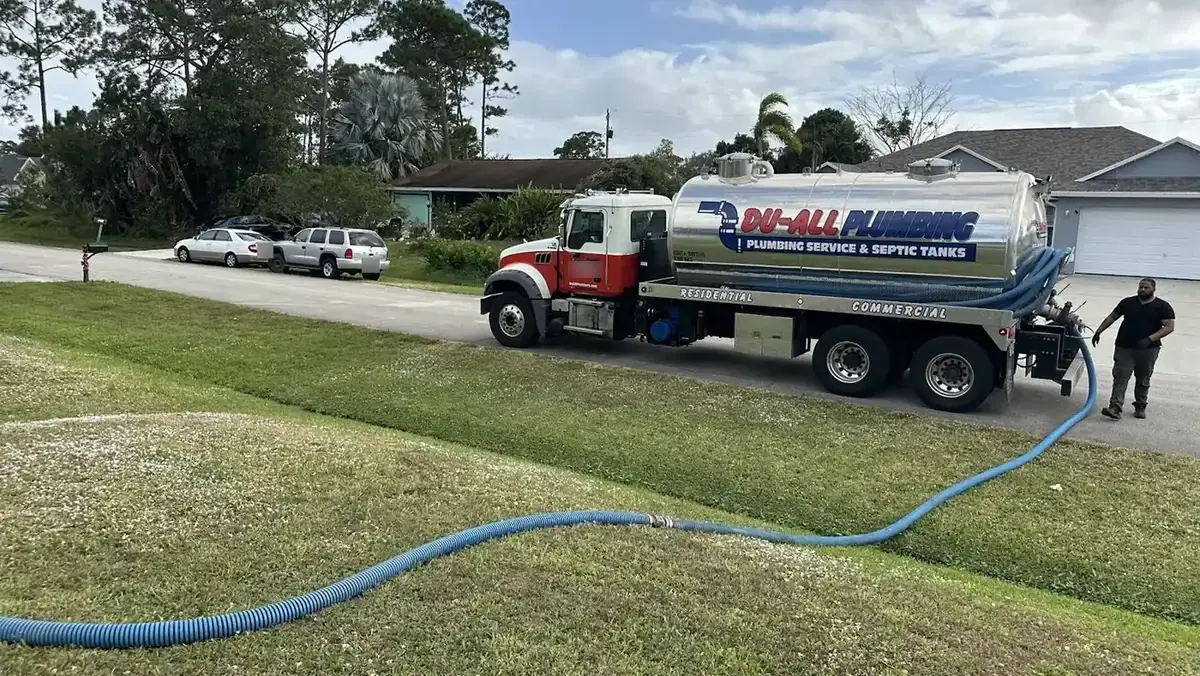
Above ground. Below ground. Du-All.
Septic Tank Pumping Wellington
Plan the pump-out around your property.
Du-All Plumbing provides septic tank pumping for confirmed septic systems in Wellington. Du-All Plumbing provides septic tank pumping in Wellington. Call 561-623-3111 with your address, wastewater-system records and any current symptoms.
Request service
Tell us what’s happening.
Share your property address and the problem you’re seeing. A Du-All team member will call you to arrange service.
This request does not confirm an appointment. To speak with the team, call 561-623-3111.
 A+ rated by the Better Business BureauView our BBB profile →
4.6/5 on Google348 reviews · Lake Worth BeachRead Google reviews (opens in a new tab)
Quick answer
How do I arrange septic tank pumping in Wellington?
Du-All Plumbing provides septic tank pumping in Wellington. Call 561-623-3111 with your address, wastewater-system records and any current symptoms. Ask for pricing and an access review before the visit, so the request matches the tank actually serving your property and any separate drain problem.
Septic tank pumping in Wellington needs the correct building, wastewater record and access plan, especially where residential use and equestrian activity meet. The village’s history describes housing ranging from apartments to homes with private aircraft hangars, so a Wellington address does not imply one standard system. Du-All Plumbing needs your full 33414 address, prior tank records and a clear explanation of the maintenance goal or drainage symptom. Greenview Shores Boulevard, Aero Club Drive, Big Blue Trace and South Shore Boulevard are route references. Describe current gates and activity at the property rather than assuming that a familiar road establishes access.
Wellington septic pumping before winter household demand rises
Wellington’s winter equestrian activity can bring a real change in household use. For a residence receiving more guests, the maintenance issue has two parts: solids retained from earlier use and the new flow entering the system. A pump-out can remove the first; it cannot increase the drainfield’s ability to accept unlimited water during the busiest period.
Inside a working tank, heavy material settles as sludge and floating grease forms scum. Liquid between those layers continues toward treatment downstream. When accumulation reduces the separation space, pumping protects the outlet from solids carryover. The Du-All septic tank service hub connects the maintenance service. For a 33414 household preparing for visitors, discuss the existing tank’s accumulation and actual expected use rather than choosing a service only after several bathrooms become difficult to use. The goal is enough functioning separation space for the installed system, not an empty container that must remain empty.
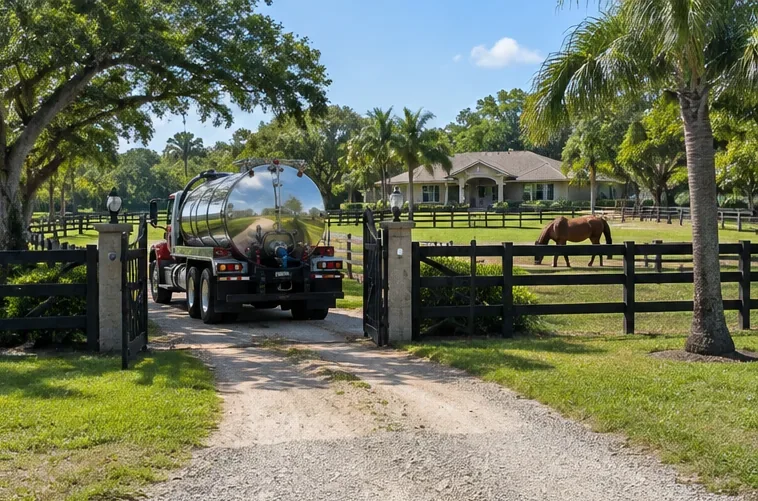
How does Wellington septic pumping fit several building uses?
Wellington’s documented housing range includes apartments and homes with private aircraft hangars, alongside its equestrian activity. Consider a property with a residence and another occupied building. Before deciding how much service is needed, establish which wastewater connections enter the tank. A restroom used by visiting staff can change demand on that tank if connected; a separate building’s restriction may remain unrelated.
For the installation receiving the increased flow, separate hydraulic loading from solids accumulation. Back-to-back showers and laundry add liquid quickly. Food waste from a disposal and ordinary retained waste contribute to material that builds over time. Pumping is directed at that retained material. Ask which condition the visit is addressing and which building remains affected if drainage does not return to normal. The Wellington plumbing page connects other building-service needs. Treating every symptom on a large property as one full tank can hide a restricted branch or a different component that needs its own assessment.
Wellington septic pumping observations before contents are removed
The pre-pumping condition can answer questions that an emptied tank cannot. A professional can assess retained layers, whether liquid appears unusually high and whether visible outlet or tank concerns need attention. Ask for those observations to be explained in relation to the symptom, not only listed as “tank full.” Normal operating liquid and excessive sludge are different findings.
EPA’s maintenance guidance uses the proximity of scum and sludge to the outlet and the share of liquid depth occupied by those layers to judge pumping need. Household size, wastewater, solids input and tank size then help interpret future scheduling. A winter-only occupancy pattern still leaves earlier solids behind during vacancy. If service shows relatively little accumulation but the household has severe backup symptoms, the next question should not be an automatically shorter pumping interval. It should be what prevents wastewater from passing through the installed system correctly, and which additional assessment can distinguish a restriction from a downstream problem.
What should Wellington septic pumping change after the visit?
Removal should create working volume between the retained-material zones again. If a tank has multiple compartments, clarify which are being serviced so removing contents from an accessible opening is not mistaken for understanding every section. The homeowner should not open covers, enter the service area or try to finish inaccessible work. Any uncertainty about completion belongs in the service explanation.
With ordinary use, the tank will refill with wastewater toward its operating level. Do not add water simply to test that refill or expect the container to remain empty. What matters at the house is normal drainage without recurring backup; what matters in maintenance is the reduction of retained solids. If a shower still receives wastewater or the trouble returns quickly, report the timing. Wellington drain cleaning is the related route for a building-line restriction. Pumping cannot straighten a damaged route, repair a baffle or make an overloaded treatment field accept flow by itself.
Wellington septic pumping and Acme roadside drainage
Acme maintains swales and roadside drainage on Wellington roads and distinguishes private, county and village road ownership. Keep that stormwater work separate from household wastewater. Roof runoff and other excess rainwater should be kept away from the drainfield area because additional water interferes with treatment; wastewater from a problem system should never be washed toward a swale.
If outdoor wetness appears, report its timing alongside indoor drainage and consumption. A supply leak can create a separate wet area and can add flow if the fault is a running fixture. Wellington water leak detection connects that investigation. Keep animals and people away from suspected sewage. After a pump-out, persistent wetness deserves a cause-based assessment rather than an assumption that another removal will repair the field. Explain whether the observation changed when unnecessary household use stopped, without running extra water as a test. That information helps distinguish the next technical question while keeping the roadside drainage network out of the wastewater problem.
How can Wellington owners maintain the result of septic pumping?
Plan laundry in distributed loads rather than concentrating all seasonal turnover washing into one day. Keep grease, wipes and unnecessary disposal solids out of the tank. Repair continuous fixture flow instead of treating pumping as a way to offset it. These choices address both the pace of incoming water and the amount of material the tank must retain between services.
Around a driveway serving equestrian and residential uses, keep animals secured and vehicles away from the tank and drainfield during service. Greenview Shores Boulevard, Aero Club Drive, Big Blue Trace and South Shore Boulevard are documented local routes; identify the actual entrance once, then let the visit focus on the tank and its condition. The Learning Center’s septic guides support the maintenance discussion. Ask how measured accumulation and the household pattern should shape the next interval, rather than assigning a calendar rule solely from the number of seasonal guests or the acreage of the property.
Arrange Wellington septic pumping and act on specific findings
If service identifies a physical defect or another unresolved condition, ask which component is affected and what assessment supports the proposed remedy. Wellington’s plumbing checklist and self-service portal apply to relevant installation or alteration work; a pumping receipt and a construction proposal serve different purposes. Consolidate any owner approval into that one follow-up decision rather than allowing an undefined “septic repair” to stand in for an explanation.
For a separate rural property, Loxahatchee Groves septic pumping connects the nearby service area. For the Wellington residence, tell Du-All whether the call is preventive maintenance, returning backup or surface wastewater, and describe the household’s seasonal change. Keep covers closed and reduce unnecessary water use during a backup. Call 561-623-3111 or use the service contact form with the address and symptom timeline. Request pumping for the identified tank and a clear interpretation of accumulation, completion and any condition requiring another service.
Before you call
Wellington septic questions, answered
Will Wellington pumping let a tank handle unlimited winter guests?
No. Pumping removes retained material but does not enlarge the tank or drainfield. Discuss actual incoming flow as well as accumulated solids before occupancy increases.
What does a high liquid level mean compared with thick sludge?
They are different findings. Retained sludge points to accumulation, while unusually high liquid can require assessment of flow through the outlet and downstream system.
Should several buildings on a Wellington property be treated as one tank load?
Only where the installed connections establish that relationship. Identify which buildings feed the tank before interpreting changed use or a returning backup.
Should the tank stay empty after Wellington pumping?
No. Normal wastewater refills it toward operating level; pumping removes accumulated material rather than eliminating the need to hold liquid.
What if a paddock-side wet area remains after service?
Keep people and animals away from suspected sewage and report timing, indoor symptoms and consumption. Ask for a source-based assessment rather than assuming another pump-out repairs the cause.
Other plumbing services in Wellington
See all plumbing services in Wellington for this city.
Nearby septic service
Septic pumping near Wellington
Back to septic tank pumping, repair and installation, or browse every city on our locations page.
Local septic information sources
- wellingtonfl.gov (checked 2026-11-10)
- pbcgov.com (checked 2026-11-10)
- acme.wellingtonfl.gov (checked 2026-11-10)
- wellingtonfl.gov (checked 2026-11-10)
- wellingtonfl.gov (checked 2026-11-10)
- epa.gov (checked 2026-11-10)
- epa.gov (checked 2026-11-10)
- epa.gov (checked 2026-11-10)
Above ground. Below ground. Du-All.
Tell us about your Wellington property, your septic tank and the problem you’re seeing.