Above ground. Below ground. Du-All.
Septic Tank Pumping Port St Lucie
Septic pumping across Port St. Lucie while the city converts to sewer
Du-All Plumbing provides septic tank pumping for confirmed septic systems in Port St Lucie. Du-All Plumbing provides septic tank pumping, inspection and repair for Port St. Lucie homes that are still on septic.
Request service
Tell us what’s happening.
Share your property address and the problem you’re seeing. A Du-All team member will call you to arrange service.
This request does not confirm an appointment. To speak with the team, call 772-238-6456.
 A+ rated by the Better Business BureauView our BBB profile →
4.6/5 on Google348 reviews · Lake Worth BeachRead Google reviews (opens in a new tab)
Quick answer
Who pumps septic tanks in Port St. Lucie?
Du-All Plumbing provides septic tank pumping, inspection and repair for Port St. Lucie homes that are still on septic. The City runs a septic-to-sewer conversion program, so confirm your service type first. Then call 772-238-6456 with your address to schedule.
Port St. Lucie has been moving homes from septic to city sewer for decades, yet many properties in the 120-square-mile city still depend on a tank and drainfield. Du-All Plumbing pumps, inspects and repairs septic systems for Port St. Lucie owners. Our Palm City office is just south in Martin County.
A big city in the middle of a septic-to-sewer transition
Port St. Lucie was incorporated in 1961 and now covers about 120 square miles of St. Lucie County. The City says it is the sixth-largest city in Florida, with more than 260,000 residents. Its Utility Systems Department describes itself as the largest multi-service utility on the Treasure Coast.
The City's Septic to Sewer Conversion Program page states the goal plainly: connect homes and businesses now on septic to the City's wastewater system. The aim is to protect waterways including the North Fork of the St. Lucie River and the Indian River Lagoon. The City reports that more than 11,000 residents have connected since 1999.
That progress also tells you that many homes in the city's older grid were built on septic, and conversion happens one property at a time. If yours hasn't been converted, the tank still needs routine care. Pumping and inspection are how you keep it working until a connection makes sense for you.
Is my Port St. Lucie home on septic or city sewer?
Look at your Port St. Lucie Utility Systems bill. A wastewater charge means the house is connected. Water-only billing, or a private well, suggests septic. If you're in St. Lucie West, wastewater is handled by the St. Lucie West Services District instead of the City utility. More on that on our St. Lucie West septic page.
The City's New Customers page lists what's needed to convert from well or septic to City water and sewer. That includes the driver's licenses of all homeowners on the deed. If you're thinking about converting, call the City first. If you're staying on septic for now, keep reading.
Named neighborhoods, different septic and sewer setups
Port St. Lucie uses named neighborhoods across the city. City Public Works materials refer to neighborhood groups such as Northport Village, Palm Trails, Rosser Reserve, Sandpiper Bay, Southbend Lakes and Tulip Park/Crane Landing, and City maps show areas like Tradition and Torino. Those names help with directions and conversation. They don't tell you how a given house handles wastewater.
Newer master-planned areas were often built with central sewer from the start, while some older sections were built on septic and are converting over time. We never assume a neighborhood's status. We confirm it at your address. If you're buying a resale home, ask the seller for any septic permit, pump-out receipt or conversion paperwork before closing.
Who regulates septic systems in St. Lucie County?
The Florida Department of Health in St. Lucie County runs the onsite sewage program. It handles permitting and inspection of septic systems, known in Florida as OSTDS. Its environmental health mailing address is on NW Milner Drive in Port St. Lucie. The Department notes that since July 1, 2022, owners, or contractors with owner authorization, may hire a private provider to perform OSTDS inspections.
Routine pumping is maintenance. Repairs, modifications and new installations fall under state rules, and some need a permit. We'll explain when your situation is likely to need one, but we won't give blanket permit advice without seeing the system.
What happens during a Du-All septic pump-out?
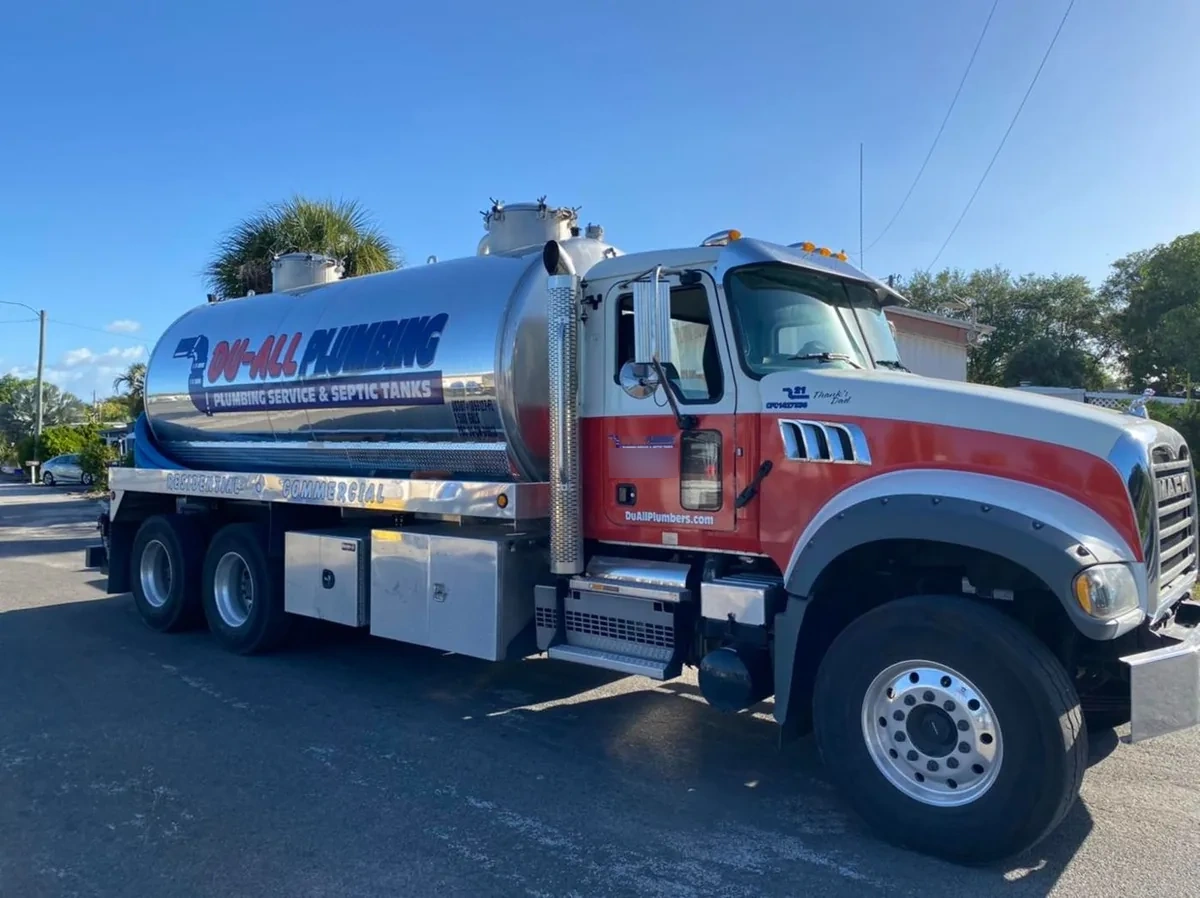
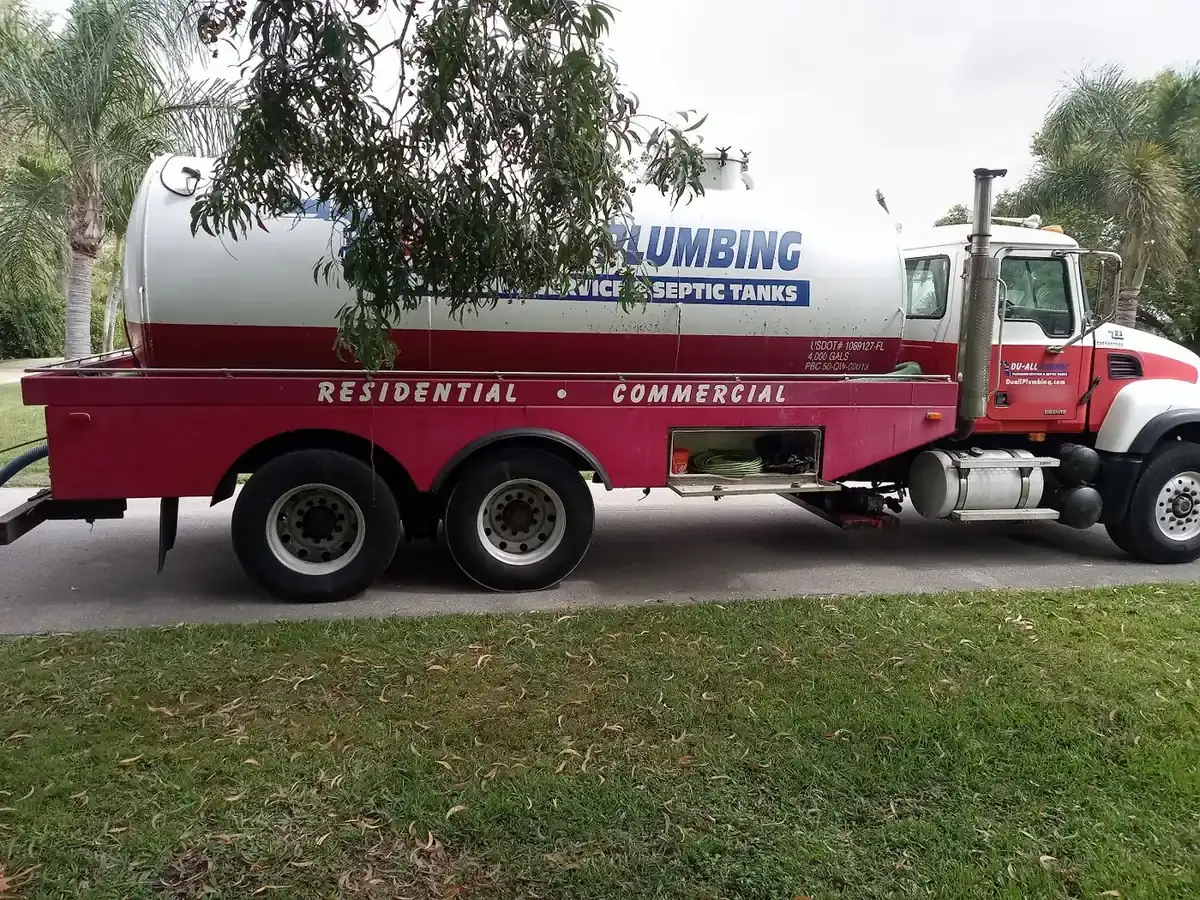
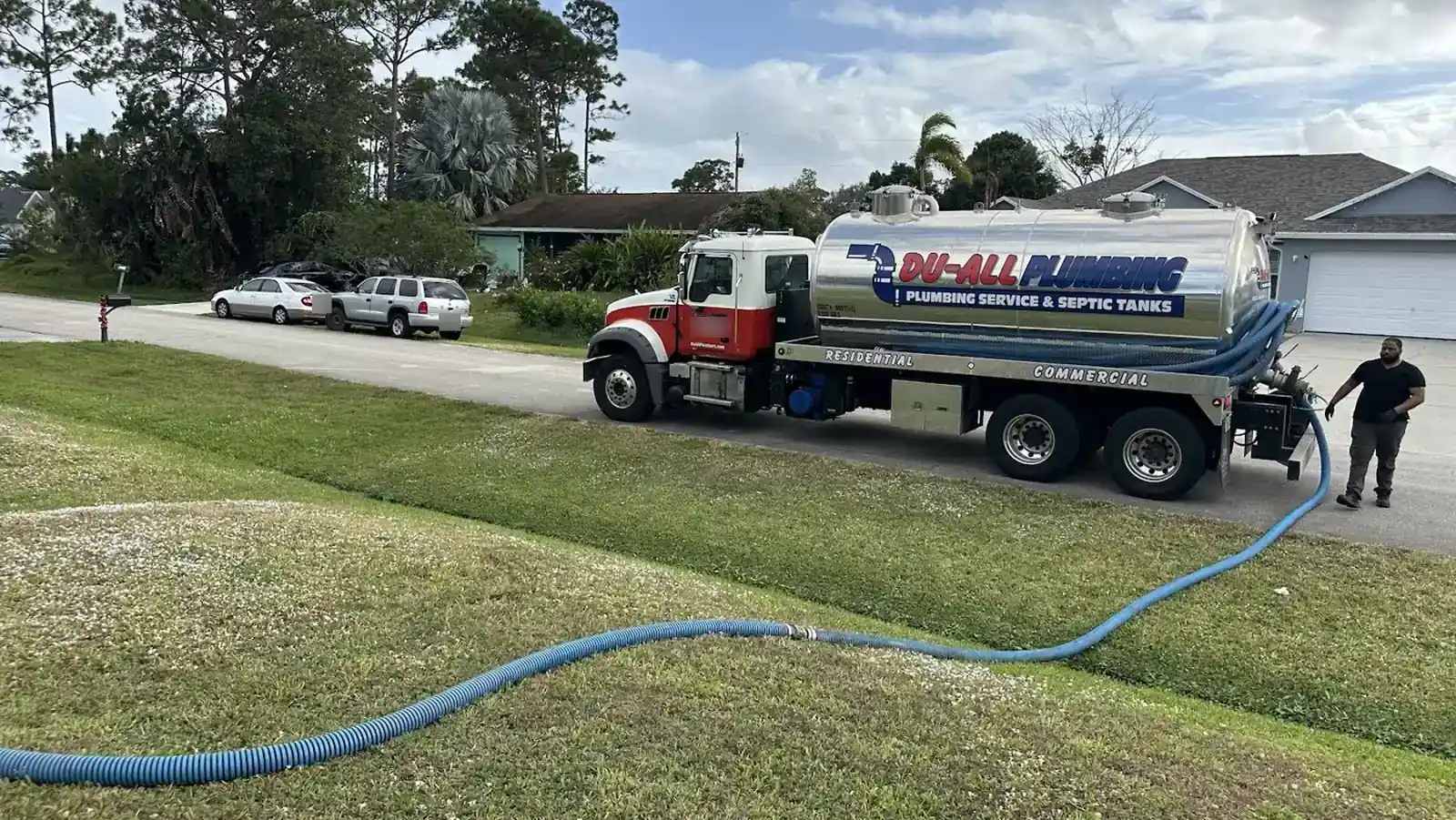
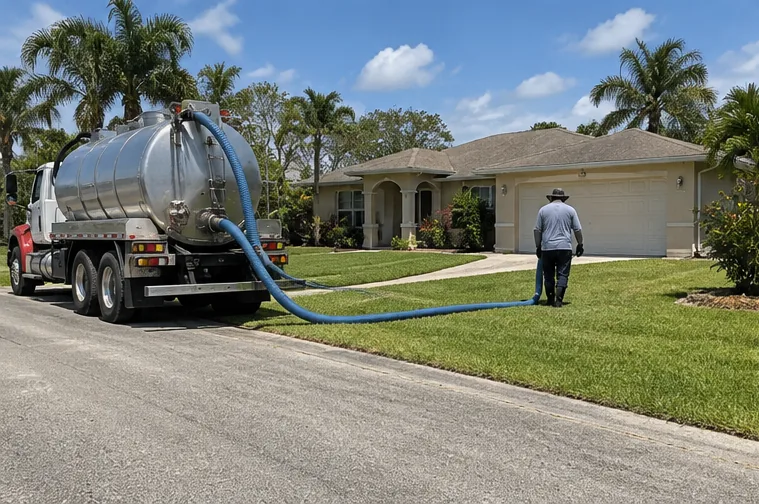
We confirm the address and locate the tank lid. Many Port St. Lucie homes sit on standard quarter-acre style lots, so the lid is often in the side or back yard. The tank is pumped with a vacuum truck to remove sludge, scum and liquid. With it open, the technician checks the baffles, any effluent filter and the tank's visible condition.
After pumping, the tank refills as the household uses water. That's expected. Pumping removes the solids that would otherwise move toward and clog the drainfield. If we see signs of a failing drainfield or a damaged component, we'll explain the repair options.
How often should a Port St. Lucie household schedule septic pumping?
EPA's general guidance is that an average household system be inspected at least every three years and pumped every three to five years. Tank size, the number of people in the home, water use and solids accumulation decide the real interval, and some alternative systems need more frequent service.
A growing household, a home office or long-term guests all add load. If the tank hasn't been serviced since you bought the house, start with a pump-out and inspection to set a baseline.
Practical prep for your septic appointment
A little preparation saves time on the day:
- Find the tank lid or riser, often in the side or back yard
- Unlock gates and secure dogs
- Keep the driveway clear for the hose
- Mention any conversion letters or plans from the City
- Describe slow drains, odors or soggy areas over the drainfield
Septic backup or sewer backup?
If your home is already on City sewer, a backup is a drain or lateral problem. A pump truck won't fix it. You need drain or sewer line service. If your home is on septic, a backup can mean a full tank or a struggling drainfield. Don't open the tank or try to clear sewage yourself. Tank gases are dangerous and sewage carries pathogens. Call and describe the symptoms, and we'll point you to the right service.
Rainy season and Port St. Lucie septic drainfields
Port St. Lucie's grid of canals and swales was built to move stormwater. During the wet season, heavy rain can leave the ground saturated for days. A healthy septic system usually copes. An older or overloaded drainfield may show it first: slow drains after storms, gurgling, or a soggy, smelly patch over the field.
If that happens, cut back on water use for a few days. Spread out laundry, take shorter showers and fix running toilets. Then schedule an inspection rather than waiting for a backup. Pumping won't fix a saturated drainfield on its own, but it shows how much sludge and scum have built up and whether solids have reached the outlet. Both are useful to know before deciding on repairs.
How does the Port St. Lucie conversion process affect septic owners?
The City's New Customers page lists what's needed to convert from well or septic to City service, including identification for every homeowner on the deed and payment of the applicable connection costs. That paperwork takes time, so plan around it.
Until the conversion is complete and the old tank is properly abandoned, keep maintaining the septic system. If you're unsure whether your street has City sewer available, the Utility Systems Department can tell you.
What affects septic tank pumping cost in Port St Lucie?
In Port St. Lucie, costs mostly depend on tank size, the time since the last pump-out, and whether the lid is buried under lawn or landscaping. Adding a riser after a dig-out can make future visits easier. Repairs found while the tank is open are explained and priced before any work. Call 772-238-6456 for current pricing at your address.
Where in Port St Lucie we take septic calls
We take septic calls from Port St Lucie-area addresses in ZIP codes 34952, 34953, 34983, 34984 and 34986. ZIP codes follow postal routes, not municipal boundaries, so some of these ZIPs also cover parts of neighboring cities or unincorporated areas, and your tax record decides the jurisdiction. Locally named areas include Northport Village, Palm Trails, Rosser Reserve, Sandpiper Bay, Southbend Lakes, Tradition and Torino. A neighborhood name or ZIP code doesn't tell you whether a home is on septic or sewer, so we confirm each address and how it's served before scheduling.
Septic help near Port St Lucie
For general background, see our septic tank service hub. Nearby, we also cover septic pumping in St Lucie West, septic pumping in Stuart and Palm City septic service. To check availability at your address, contact Du-All Plumbing or call 772-238-6456.
Before you call
Port St Lucie septic questions, answered
Does Port St. Lucie have a septic-to-sewer program?
Yes. The City's Septic to Sewer Conversion Program connects homes and businesses on septic to City wastewater service. It reports more than 11,000 residents have connected since 1999.
Who issues septic permits in Port St. Lucie?
The Florida Department of Health in St. Lucie County runs the onsite sewage program, which covers permitting and inspection of septic systems.
Is St. Lucie West served by the City's sewer utility?
No. St. Lucie West's water and wastewater are provided by the St. Lucie West Services District, a separate special district inside the city.
How often should I pump my Port St. Lucie septic tank?
EPA's general guidance is every three to five years. Your tank size, household size and water use set the actual schedule.
Where is Du-All's nearest office to Port St. Lucie?
Du-All's Palm City office is at 3442 SW Armellini Ave in Martin County. Call 772-238-6456 to confirm availability at your address.
What affects the cost of septic tank pumping in Port St Lucie?
Tank size, how long since the last pump-out, how hard the lid is to reach, whether digging is needed and any repairs found during the visit. Call 772-238-6456 with your address for current pricing.
Who issues septic permits for Port St Lucie properties?
Septic repair, modification and installation permits are handled by the Florida Department of Health in St. Lucie County. Routine pumping is maintenance, and we'll tell you if your situation looks likely to need a permit.
Other plumbing services in Port St Lucie
See all plumbing services in Port St Lucie for this city.
Nearby septic service
Septic pumping near Port St Lucie
Back to septic tank pumping, repair and installation, or browse every city on our locations page.
Local septic information sources
- cityofpsl.com (checked 2026-10-29)
- cityofpsl.com (checked 2026-10-29)
- cityofpsl.com (checked 2026-10-29)
- cityofpsl.com (checked 2026-10-29)
- cityofpsl.com (checked 2026-10-29)
- stlucie.floridahealth.gov (checked 2026-10-29)
- cityofpsl.com (checked 2026-10-29)
- cityofpsl.com (checked 2026-10-29)
- epa.gov (checked 2026-10-29)
- epa.gov (checked 2026-10-29)
- floridadep.gov (checked 2026-10-29)
Above ground. Below ground. Du-All.
Tell us about your Port St Lucie property, your septic tank and the problem you’re seeing.