Du-All offer
$30 off
Clearing any sink, toilet or main sewer line
Not valid with other offers. Not valid on prior service. Limit one coupon per service call.
Above ground. Below ground. Du-All.
Toilet repair for your Port St. Lucie home or business.
Du-All Plumbing provides toilet repair in Port St. Lucie.
Request service
Share your property address and the problem you’re seeing. A Du-All team member will call you to arrange service.
This request does not confirm an appointment. To speak with the team, call 772-238-6456.
 A+ rated by the Better Business BureauView our BBB profile →
4.6/5 on Google348 reviews · Lake Worth BeachRead Google reviews (opens in a new tab)
Port St. Lucie toilet repair, from tank parts to flanges
Quick answer
Du-All Plumbing provides toilet repair in Port St. Lucie. We fix running tanks, worn flappers and fill valves, leaking supply connections and loose or leaking bases, and we check whether a slow or backing-up toilet is a single fixture problem or a sign of trouble further down the line. Call 772-238-6456.
A running tank, a wobbly bowl or a toilet that clogs every week all have practical fixes. Du-All Plumbing repairs and replaces toilets across Port St. Lucie and explains what failed, what it takes to fix it, and whether the problem stops at the toilet.
A Port St. Lucie toilet problem may involve a flapper, a fill valve, a supply line or a wax seal. The exception is a toilet that drains slowly, gurgles or backs up, because then the question is whether the trouble is inside the toilet or further down the line. The answer depends on how the house drains, and in this city that varies. A City Utility Systems plan estimates about 12,264 septic tanks remained inside city limits in early 2026, even after more than 11,000 conversions to sewer since 1999.
So we start with a few questions on the phone. Is only one toilet affected, or do the tub and washer slow down too? Does your utility bill show a sewer charge? Is there a control panel on an outside wall? Homes connected through the City conversion program may have a small grinder station, and the City's welcome guide says a sewer problem on those systems triggers an alarm and a red light on that panel. If it is sounding, stop flushing and running water and call the City, because no toilet repair will fix a pump fault.
When only one toilet is slow and everything else drains normally, the problem is almost always in that toilet or its short branch line, and that is where we begin.
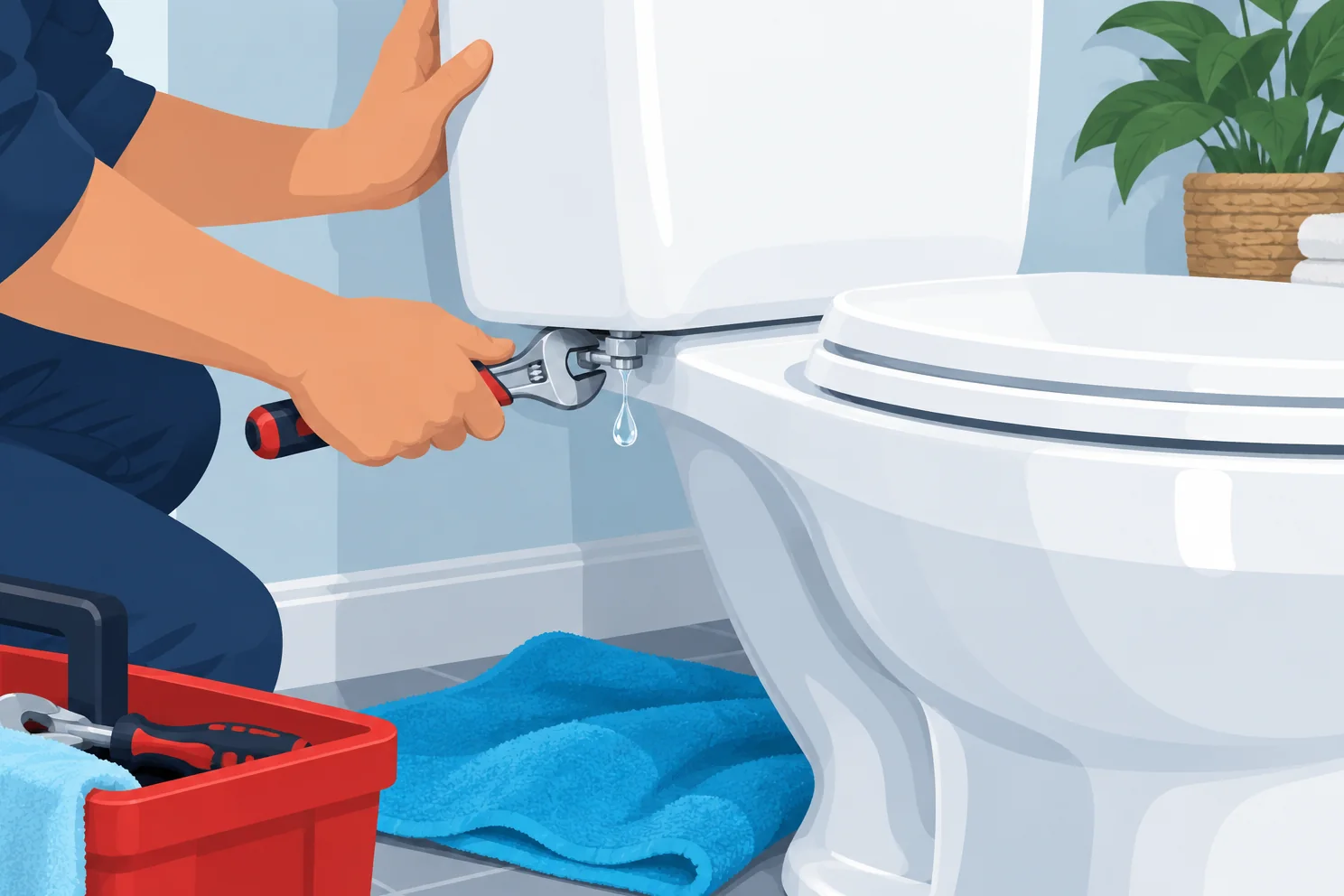
A tank that refills by itself every few minutes or hisses all night is wasting water. The City's own conservation page warns that a running toilet can waste a gallon of water in about 30 seconds, and because the water goes straight into the bowl there is no puddle to warn you. The usual causes are a flapper that no longer seals, a chain that is too short and holds the flapper slightly open, or a fill valve set so high that water spills into the overflow tube.
You can check the first two yourself. Lift the tank lid and look at the water level: it should sit below the top of the overflow tube. Then drop a toilet dye tablet into the tank, wait ten minutes without flushing, and look at the bowl. Color in the bowl shows tank water reaching the bowl, often through the flapper or flush valve seal; the exact faulty part still needs checking. Flush afterward so the dye does not stain. A clear bowl does not rule everything out, since some leaks are intermittent. If the tank still refills on its own, repeat the test and have the fill valve and flush valve checked.
The City's What Not to Flush list is short and blunt: only toilet paper and human waste. It names wipes of any kind, including those sold as flushable, along with dental floss, paper towels, diapers and cotton products. That advice matters twice over here. Wipes tangle in grinder pumps on converted homes, and in an onsite tank they linger instead of breaking down.
When a toilet clogs repeatedly, we look at what has been going down it before we look at replacing anything. A toilet that clogs with normal use may have a partial blockage in the trapway, such as a small toy or a wad of wipes, that a plunger moves but never clears. We remove the obstruction or pull the toilet to clear it from below. We do not use chemical drain cleaners in toilets, and we suggest you do not either. They rarely reach the clog, they can damage some fixtures, and they leave caustic water for whoever opens the line next.
Water that appears around the floor right after a flush, and nowhere else, usually means the seal between the toilet and the drain flange has failed. In a house built on a slab, that flange sits in the concrete and the toilet is held down by two closet bolts. If the toilet rocks even slightly, the wax ring can be crushed and lose its seal. Overtightening the bolts to stop the rocking often cracks the porcelain base instead, so please do not reach for a wrench.
A proper repair means lifting the toilet, cleaning off the old seal, checking that the flange is level, intact and fastened, and setting the toilet on a new seal with the right shims if the floor is uneven. If the flange is broken or sits well below a new tile floor, we repair or extend it rather than stacking wax rings. Water that appears with no flushing at all is a different problem, often a supply line or a cold tank sweating in humid weather, and our guide to why toilets sweat explains how to tell them apart.
Du-All offer
Clearing any sink, toilet or main sewer line
Not valid with other offers. Not valid on prior service. Limit one coupon per service call.
Du-All offer
Any new toilet
Not valid with other offers. Not valid on prior service. Limit one coupon per service call.
The City's conservation page notes that older toilets can use about seven gallons per flush, while newer standard models use about 1.6 gallons. EPA WaterSense labeled toilets go further, using 1.28 gallons per flush or less while still meeting performance testing. If your home still has an original fixture with a cracked tank, a bowl that never fully clears, or parts that are no longer made, replacement can make more sense than another round of repairs.
Before recommending a new toilet, we measure the rough-in, the distance from the finished wall to the center of the drain, because that decides which models fit without moving pipe. We also look at the supply valve, since an old stop that will not close fully should be replaced at the same time. Repair is still the right answer for many toilets. A flapper, fill valve or supply line costs far less than a new fixture, and we will tell you which side of that line your toilet falls on.
If a toilet is overflowing, stop flushing. Most toilets have a small oval handle on the wall or floor behind them; turn it clockwise to stop water to the tank, but only if it turns easily. Old stops can snap, so never force one with pliers. Lifting the tank lid and pushing the flapper down will also stop water entering the bowl.
If sewage is backing up into a tub or shower as well as the toilet, stop using water anywhere in the house. That points to a blockage beyond the toilet. Keep children and pets away from the water, avoid contact with it, and leave cleanup to people equipped for it. If the house drains to an onsite tank, it may need pumping or service, and we will explain what we found and arrange the appropriate service.
We work throughout the city, including Tradition, Torino, Sandpiper Bay, Southbend Lakes, Palm Trails, Northport Village and Rosser Reserve, across ZIP codes such as 34952, 34953, 34983, 34984 and 34986. Part of the St. Lucie West area receives water from the St. Lucie West Services District rather than the City, so a bill from either one is fine. If a toilet problem turns out to be a hidden supply leak instead, our Port St. Lucie leak detection team can trace it. See the full toilet problems guide, or contact Du-All to schedule.
Nearby, we also handle toilet repair in St. Lucie West, toilet repair in Stuart and toilet repair in Palm City.
Before you call
No. The City's welcome guide says the alarm panel on the side of a converted home signals a sewer system problem. Stop flushing and running water and contact Port St. Lucie Utility Systems before calling a plumber.
No. The City tells residents to flush only toilet paper and human waste and names wipes of any kind, including those labeled flushable.
Check your utility bill for a sewer charge. If there is none, the home likely uses a septic system. Conversion records with the City can also confirm it.
A hiss usually means the fill valve is running, either because the flapper leaks and the tank keeps refilling or because the valve itself is not shutting off. A dye test can show tank-to-bowl leakage; if it stays clear, the fill valve and an intermittent seal leak still need checking.
Often, yes. Modern WaterSense labeled toilets use 1.28 gallons or less. We measure the rough-in and check the shutoff valve before recommending a model.
Du-All lists a new toilet coupon and a line clearing coupon. Coupons cannot be combined and are limited to one per service call; ask us to confirm current terms when you book.
See all plumbing services in Port St. Lucie for this city.
Nearby toilet repair
Back to toilet problems, or browse every city on our locations page.
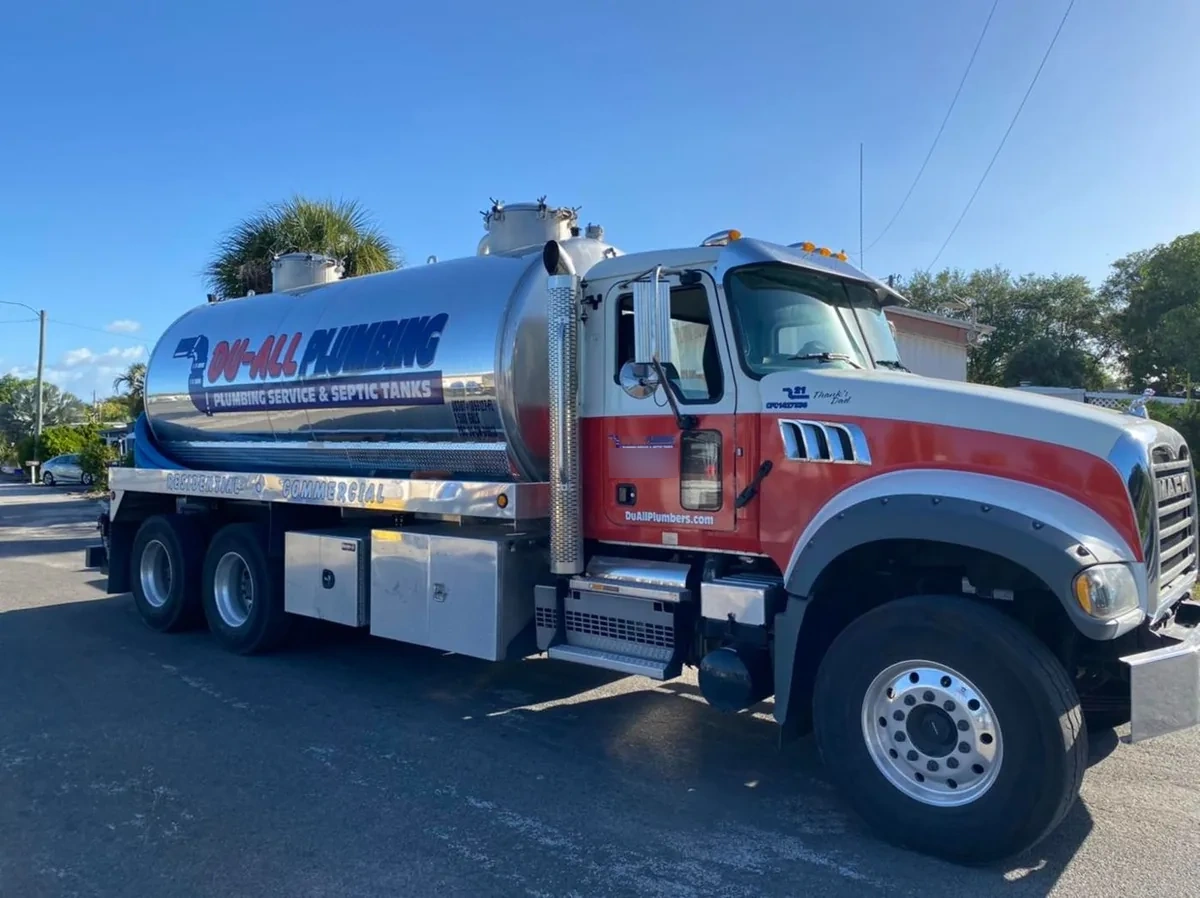
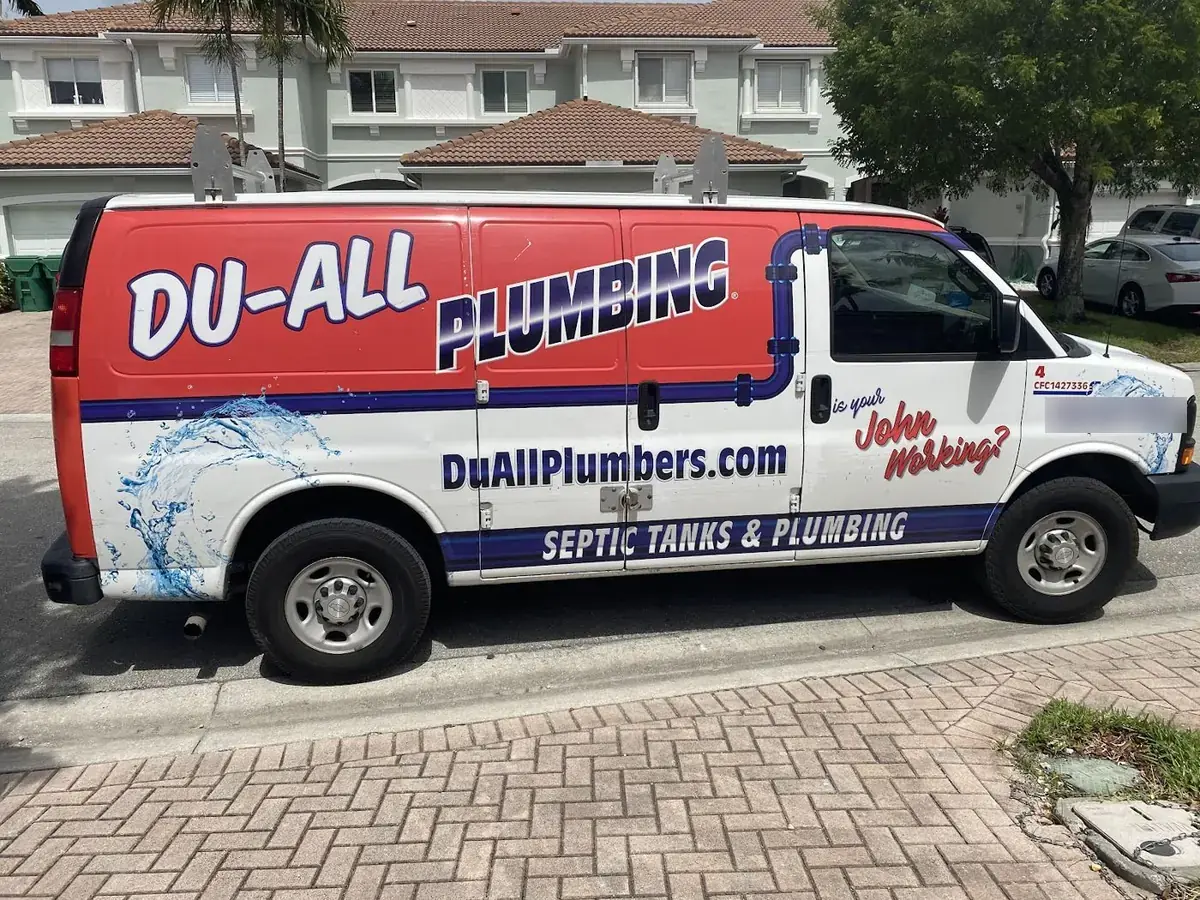
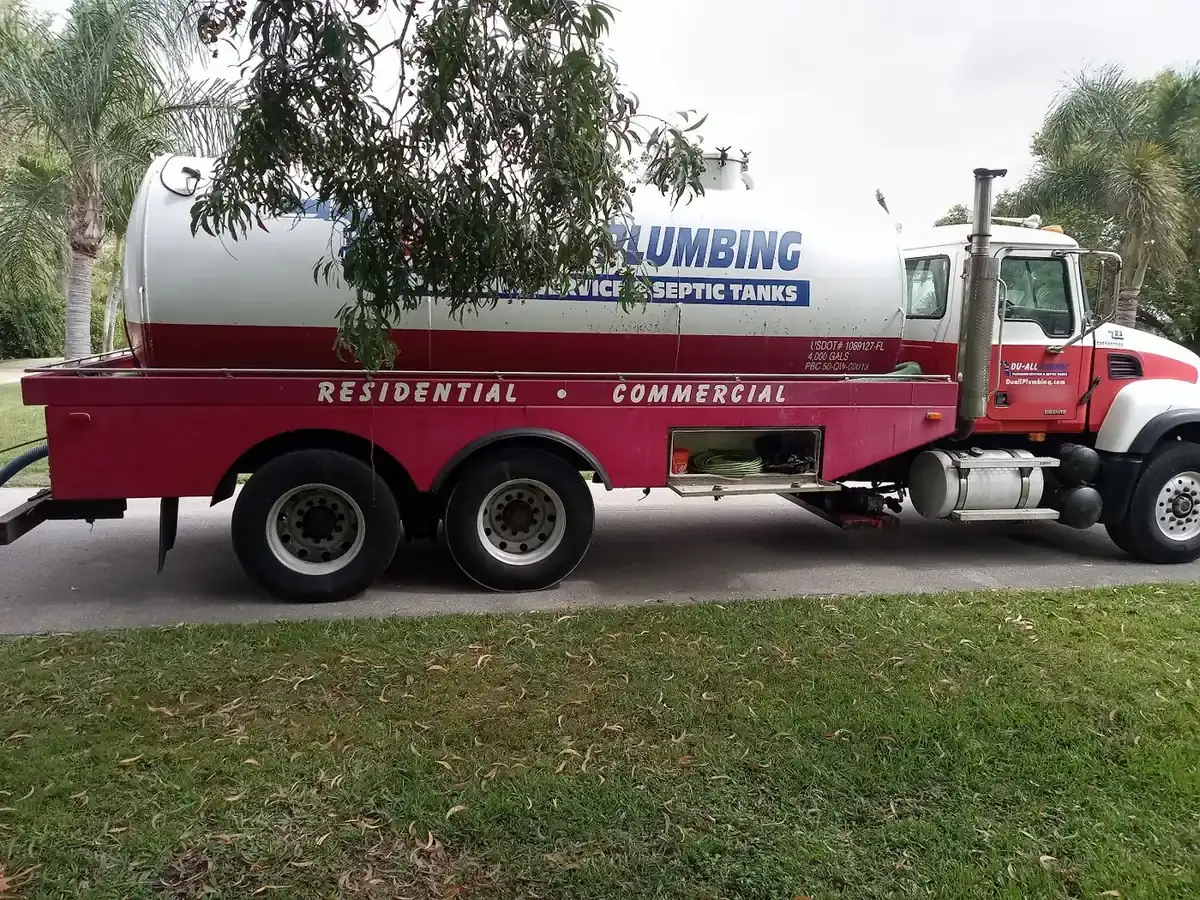
The page video and hero photo are shared Du-All site media, not footage of a specific job in this city.
Tell us about your Port St. Lucie property, which toilet is acting up and what you have noticed.
Not valid with other offers. Not valid on prior service. Limit one coupon per service call.
Du-All Social
See the crews, trucks and jobs from around Palm Beach and the Treasure Coast.
Lake Worth Beach office
514 S E Coast St, Lake Worth Beach, FL 33460
561-623-3111
Palm City office
3442 SW Armellini Ave, Palm City, FL 34990
772-238-6456