Du-All offer
$30 off
Clearing any sink, toilet or main sewer line
Not valid with other offers. Not valid on prior service. Limit one coupon per service call.
Above ground. Below ground. Du-All.
Toilet repair for your St. Lucie West home or business.
Du-All Plumbing provides toilet repair in St. Lucie West.
Request service
Share your property address and the problem you’re seeing. A Du-All team member will call you to arrange service.
This request does not confirm an appointment. To speak with the team, call 772-238-6456.
 A+ rated by the Better Business BureauView our BBB profile →
4.6/5 on Google348 reviews · Lake Worth BeachRead Google reviews (opens in a new tab)
Quieting running toilets in St. Lucie West homes
Quick answer
Du-All Plumbing provides toilet repair in St. Lucie West. We repair running and refilling tanks, replace flappers, fill valves and supply lines, reset leaking or rocking toilets, and help you decide when an old fixture should be replaced instead. Call 772-238-6456.
In St. Lucie West, a toilet that runs at night is often noticed on a phone before anyone hears it. Du-All Plumbing repairs and replaces toilets in homes and townhomes across the District and explains what we found in plain terms.
The St. Lucie West Services District, not the City of Port St. Lucie, supplies drinking water and sewer service inside its boundaries, roughly the area between Florida's Turnpike and I-95 north of Crosstown Parkway. Its customers can set up email or text leak and usage alerts through their online account, and the District publishes directions for reading its smart meters. That is a useful early warning, because a toilet that never quite stops filling is one possible cause of steady overnight flow.
An alert tells you water is moving through the meter. It does not tell you where. Before you assume the worst, walk the house at a quiet time and listen at each toilet. A faint hiss, a trickle you can see running down the inside of the bowl, or a tank that refills briefly every so often all point to the toilet. Irrigation is the other usual suspect, so check that no zone is running before you read the meter. If every toilet is silent and the meter keeps moving, the water is going somewhere else and you may need leak detection rather than toilet repair.
Once a toilet is the likely cause, the repair is usually small. The trick is getting the right part for that tank, because flappers and fill valves come in different sizes and a mismatched part keeps leaking.
EPA WaterSense says most toilet leaks come from old or worn flappers, the rubber seal at the bottom of the tank. A flapper that has warped or picked up mineral scale lets a thin stream slip into the bowl, and the fill valve tops the tank back up every so often. The way to confirm it is a dye test: add a dye tablet to the tank, wait ten minutes without flushing, then check the bowl. If color appears, water is leaking from the tank into the bowl, usually at the flapper or its seat. Flush when you are done.
A fill valve problem looks different. If the water level climbs until it pours into the overflow tube in the center of the tank, the valve is not shutting off at the right height. Sometimes adjusting the float fixes it. When the valve hisses, shuts off slowly, or will not hold its setting, we replace it. We match flapper size to the flush valve opening, since a two-inch flapper on a three-inch valve will never seal.
Water behind the bowl usually comes from one of three places. The supply line from the wall valve to the tank may be dripping at either nut, often because a braided line has aged or a plastic nut has cracked. The tank-to-bowl bolts and gasket may be seeping, which leaves water on the back of the bowl and the floor beneath it. Or the tank may simply be sweating on a humid day, which shows as beads of water across the whole outside of the tank rather than drips from one spot. Our page on toilet condensation covers that last case.
Dry everything with a towel, then put a dry paper towel under each connection and wait. The one that gets wet first is usually the source. Please do not tighten tank bolts or plastic supply nuts hard to stop a drip. Porcelain cracks under pressure and plastic threads strip. Replacing a supply line or tank gasket is quick work with the water shut off and the tank drained.
The District runs a water conservation rebate program for its own customers. According to its current application form, it applies to replacing toilets that use 3.5 gallons per flush or more, the application must be filed within 90 days of purchase with a receipt or an itemized plumber invoice, and the limit is two toilets per household for the life of the account. An inspection may be required, and remodels that need a building permit and new construction are excluded. Program terms can change, so read the current form before you buy, and know that Du-All has no role in approval.
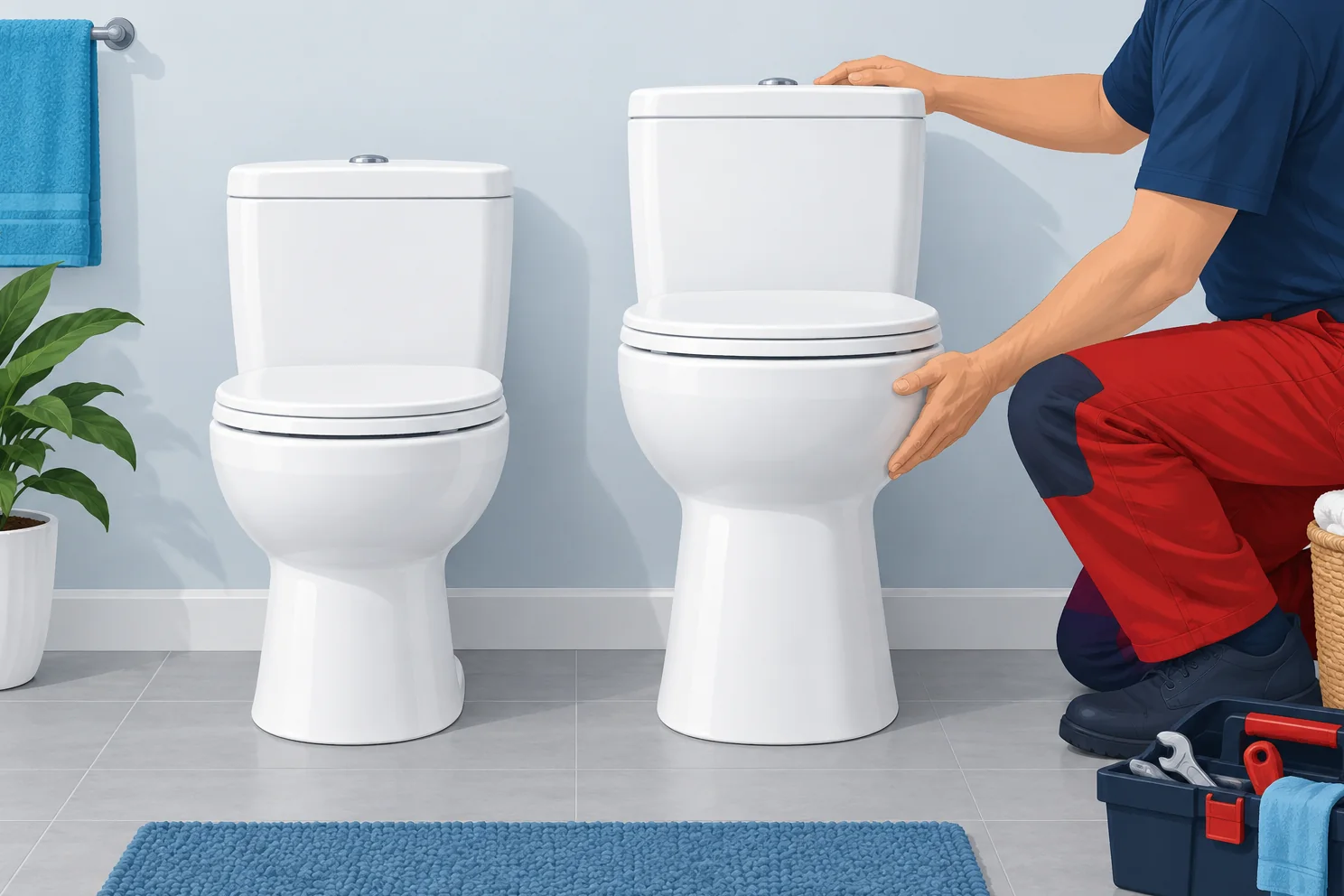
If you are replacing a toilet for any reason, the paperwork is simple to support. Keep the receipt, note the model of the new toilet, and if the old tank has the flush volume stamped inside, take a photo before it leaves the house. WaterSense labeled toilets use 1.28 gallons per flush or less while meeting performance testing. We measure the rough-in before you choose a model so the new toilet fits the existing drain.
Du-All offer
Clearing any sink, toilet or main sewer line
Not valid with other offers. Not valid on prior service. Limit one coupon per service call.
Du-All offer
Any new toilet
Not valid with other offers. Not valid on prior service. Limit one coupon per service call.
A toilet that moves when you sit on it has lost its firm connection to the floor. In slab homes the drain flange is set in concrete, and over time the closet bolts can loosen, the flange can crack, or a tile floor installed later can leave the flange sitting too low. A rocking toilet eventually breaks the wax seal, and that can let sewer gas or water escape at the base. A faint sewer smell near the toilet, or a stain on the floor that grows after flushing, is worth a call.
We lift the toilet, inspect and clean the flange, repair or extend it if needed, and reset the toilet on a new seal with shims where the floor is out of level. Caulking around the base can be done afterward on many installations, but caulk is not a fix for a broken seal underneath.
A single clogged toilet is usually a local blockage. When the toilet gurgles while the washing machine drains, or water comes up in a tub when you flush, the blockage is more likely in the shared line. Stop using water and do not keep flushing to test it. The District says its treatment plant screens remove wipes and plastics that should not enter the sewer, which is a reminder that those items cause trouble in home lines long before they reach the plant.
If wastewater has come up into the house, keep people and pets out of it and do not try to clean it up yourself. A line clearing visit, or a sewer service from the District if the blockage is on its side, is the next step.
We serve homes in ZIP 34986 throughout the District, including Lake Charles, Kings Isle, Cascades at St. Lucie West and Magnolia Lakes. Many of these are association communities, so let us know about gate access or any association rules for contractors when you book. If your toilet turns out not to be the source of the water use, our St. Lucie West leak detection service is the next step. Read more on our toilet problems page or contact us.
We also provide toilet repair in Port St. Lucie, toilet repair in Palm City and toilet repair in Stuart.
Before you call
It may be. A running toilet is a common cause of steady overnight flow, but irrigation and hidden leaks can trigger alerts too. Listen at each toilet and run a dye test before assuming.
No. The District's current form covers replacing toilets of 3.5 gallons per flush or more, within 90 days of purchase, up to two per account, and excludes permitted remodels and new construction. Check the current form first.
The flapper may be the wrong size for the flush valve, the chain may be too short, or the valve seat may be rough or scaled. We check all three.
Not always. A failed wax seal is common, but a dry floor drain or a venting problem can also cause odors. A rocking toilet makes the seal the first place to look.
Light snugging is fine, but hard tightening can crack the base. If the toilet still moves, the flange or seal needs attention.
See all plumbing services in St. Lucie West for this city.
Nearby toilet repair
Back to toilet problems, or browse every city on our locations page.
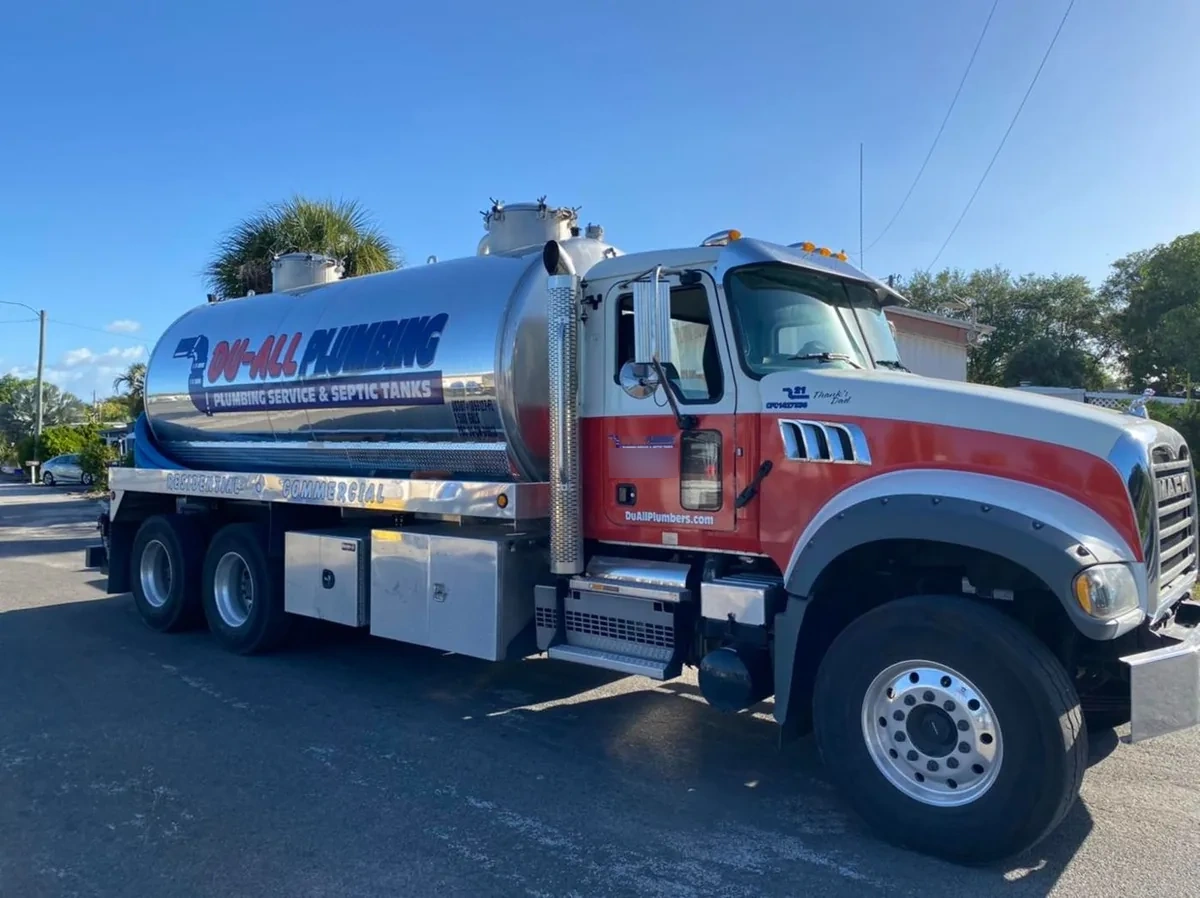
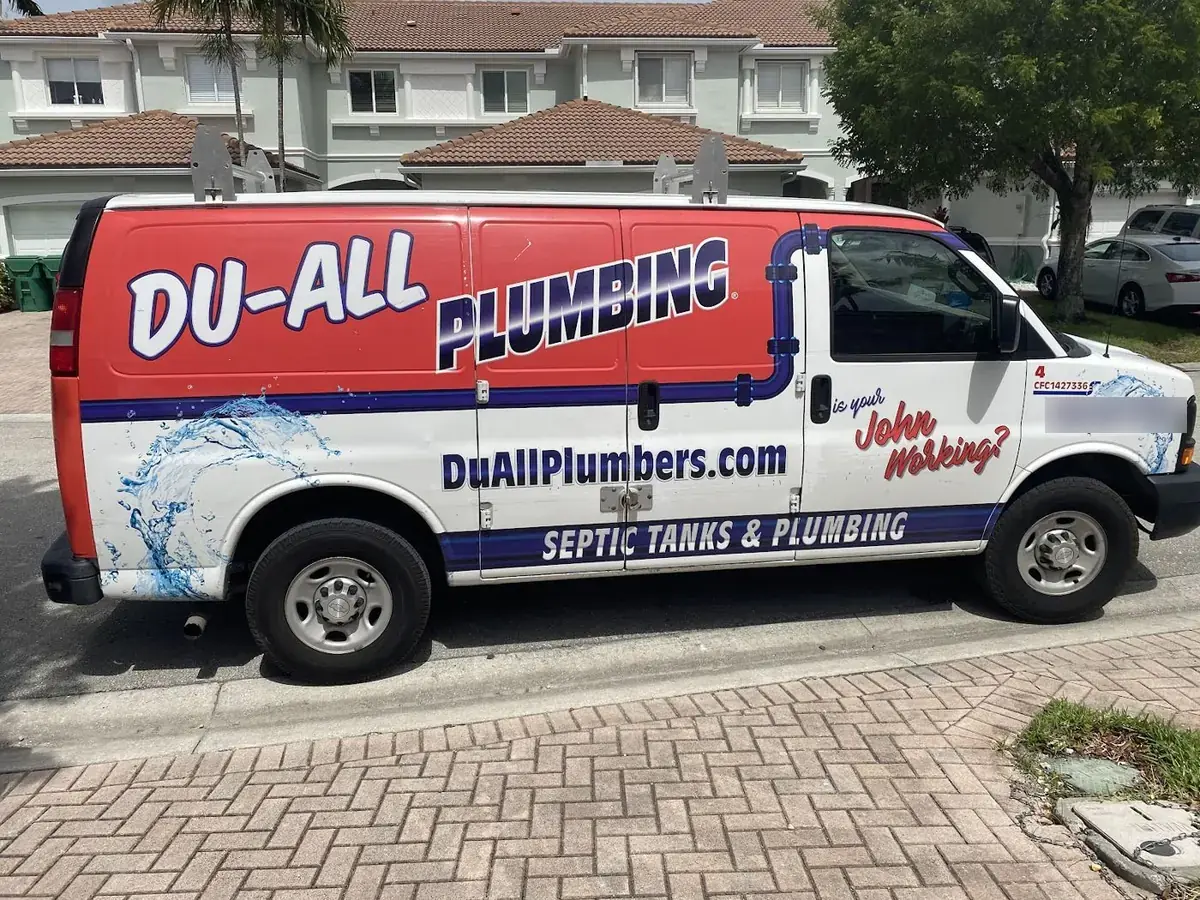
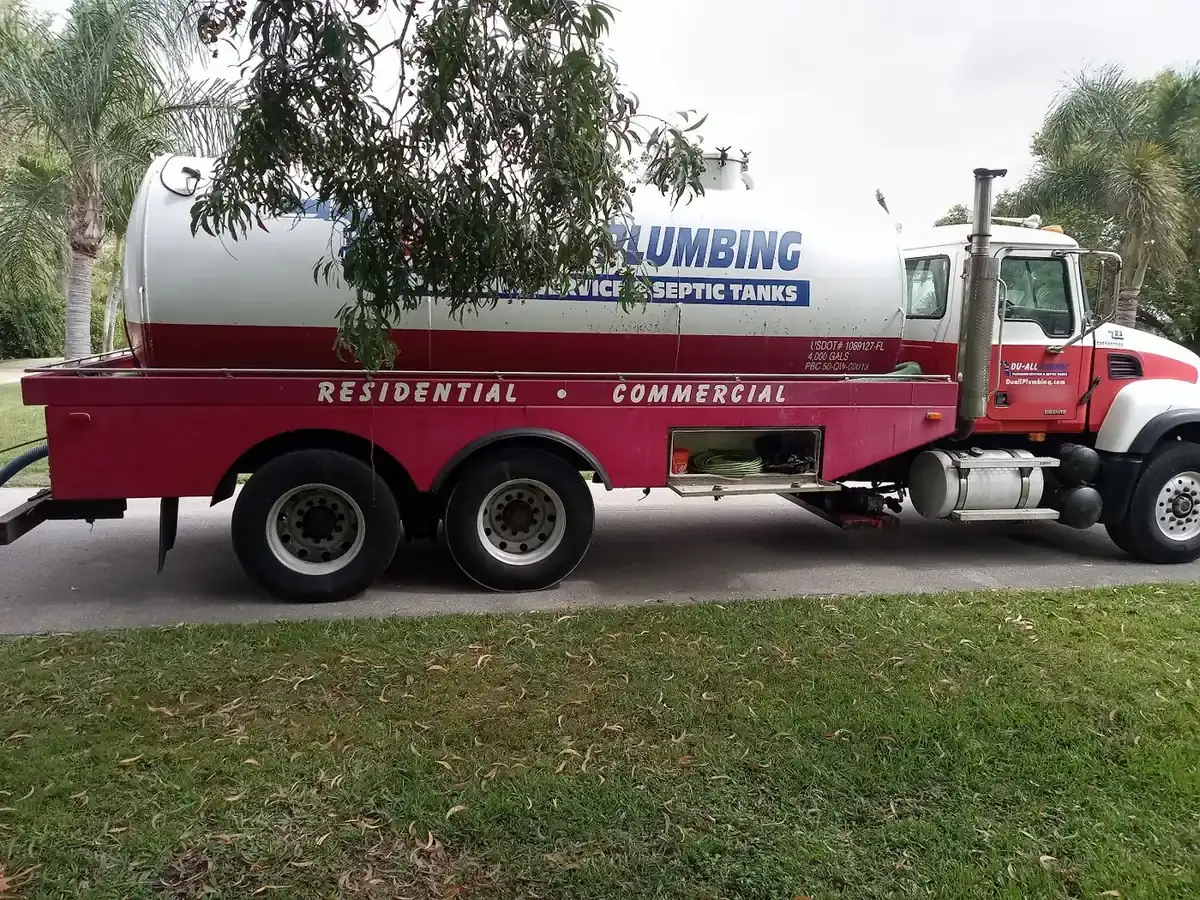
The page video and hero photo are shared Du-All site media, not footage of a specific job in this city.
Tell us about your St. Lucie West property, which toilet is acting up and what you have noticed.
Not valid with other offers. Not valid on prior service. Limit one coupon per service call.
Du-All Social
See the crews, trucks and jobs from around Palm Beach and the Treasure Coast.
Lake Worth Beach office
514 S E Coast St, Lake Worth Beach, FL 33460
561-623-3111
Palm City office
3442 SW Armellini Ave, Palm City, FL 34990
772-238-6456